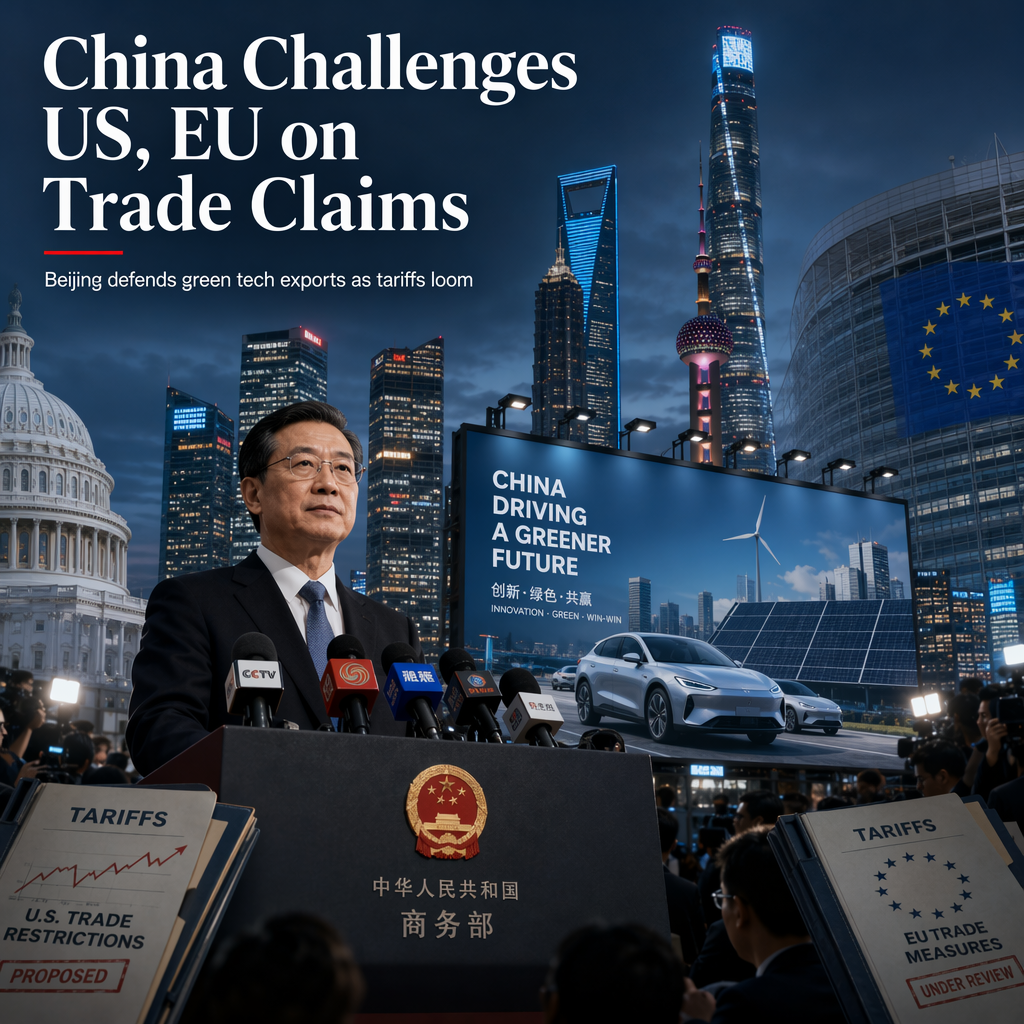
China has issued a comprehensive rebuttal to accusations from the United States and European Union that it is enabling industrial overcapacity, particularly in the automotive and green technology sectors, as both Western blocs prepare new tariffs and trade restrictions on Chinese imports [1]. The Chinese Ministry of Commerce argued that the so-called overcapacity issue is a result of global industrial transformation and not the consequence of any single country's policies [1]. The ministry emphasized that Chinese exports, especially in electric vehicles (EVs), batteries, and renewable energy equipment, are aligned with rising global demand, notably in emerging markets, rather than distorting international markets [1].
Addressing allegations of excessive government subsidies, the ministry referenced OECD data indicating that Chinese firms receive up to eight times more subsidies than their developed country counterparts, but maintained that these support measures are consistent with international rules and that other nations also provide significant backing to strategic industries [1]. The ministry called on the US and EU to pursue dialogue instead of protectionist measures such as tariffs and quotas, warning that trade restrictions would impede global recovery and harm consumers [1].
This statement comes in response to recent announcements by the US and Europe regarding new investigations and potential trade actions targeting Chinese EVs and other high-tech exports. The US has accused China of using state support to flood global markets with cheap goods, while the EU has warned of possible tariffs on Chinese-made cars [1]. China reiterated its commitment to open trade and innovation, urging all parties to uphold World Trade Organization principles and seek mutually beneficial solutions through dialogue [1].
No specific price levels, technical indicators, or market reactions were provided in the article [1].
CONCLUSION
China's rebuttal signals escalating trade tensions with the US and EU over industrial policy and export practices. The dispute centers on claims of overcapacity and government subsidies, with both sides calling for dialogue but preparing for potential trade restrictions. The situation poses significant implications for global trade and the automotive and green technology sectors.