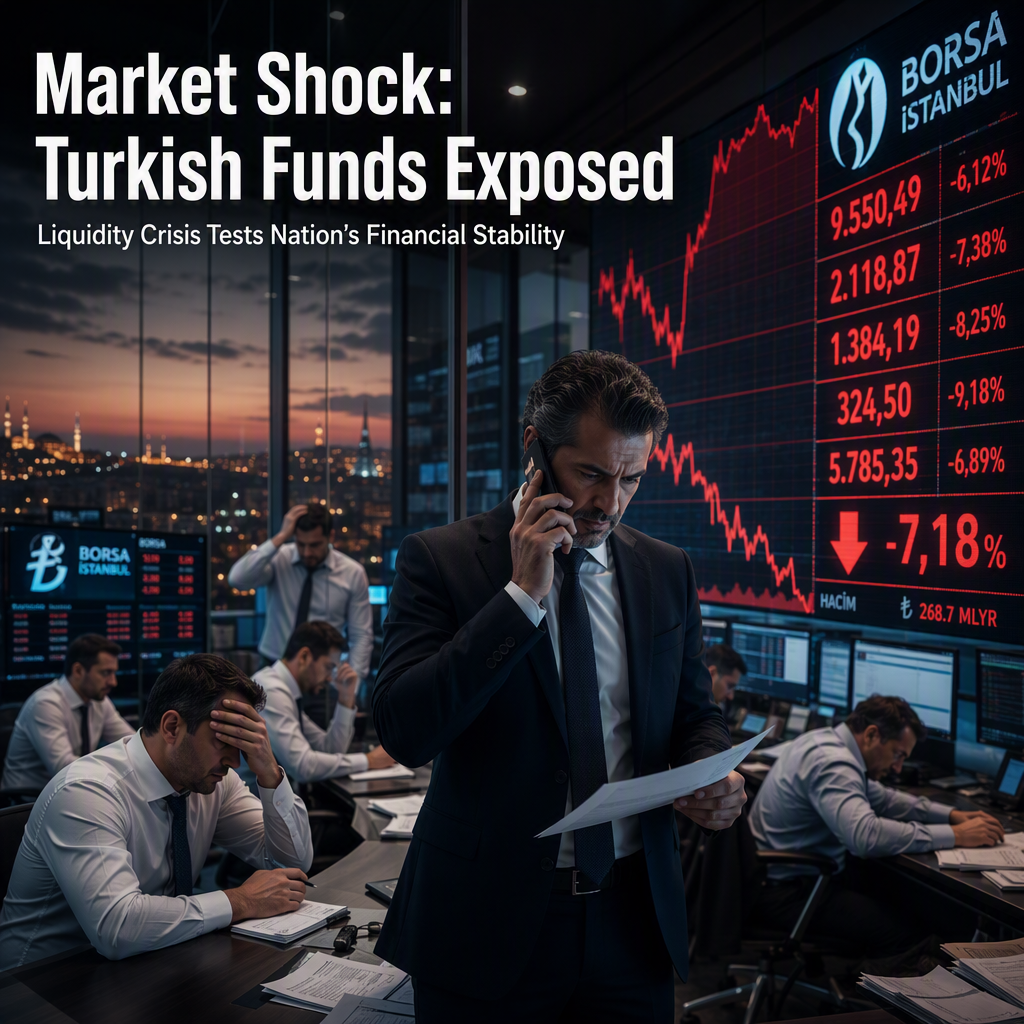
Turkey's stock market experienced significant turmoil last week as a liquidity crunch severely impacted investment funds, leading to a sharp selloff in equities and widespread investor panic. The crisis, which had been building due to underlying distortions in the Turkish financial system, prompted an unusually forceful intervention from regulators aiming to restore confidence and prevent further contagion within the market [1].
The liquidity crunch was intensified by large-scale redemptions from investment funds, which struggled to meet cash demands as asset values declined. This situation triggered forced selling, further depressing stock prices and amplifying market volatility. Market participants highlighted that the rapid pace and scale of redemptions caught many by surprise, revealing weaknesses in market infrastructure and preparedness [1].
Analysts pointed to longstanding concerns about asset-liability mismatches and valuation practices within some funds, noting that these issues had been developing for some time. The crisis has led to increased scrutiny of regulatory oversight and risk management practices in Turkey's investment fund sector. In response, authorities implemented temporary measures to support liquidity and stem further outflows, which helped stabilize the market in the short term. However, questions remain regarding the long-term health of Turkey's equity and fund markets [1].
The episode has sparked calls for more robust regulatory frameworks and improved transparency, as investors and market participants debate the appropriate balance between market growth and risk management in Turkey's evolving financial landscape. Many are now closely monitoring the market for further signs of stress [1].
CONCLUSION
The Turkish stock market's recent liquidity crisis has exposed significant vulnerabilities in the investment fund sector, prompting regulatory intervention and heightened scrutiny of market practices. While short-term stabilization measures have been implemented, ongoing concerns about risk management and regulatory oversight suggest that market confidence remains fragile.