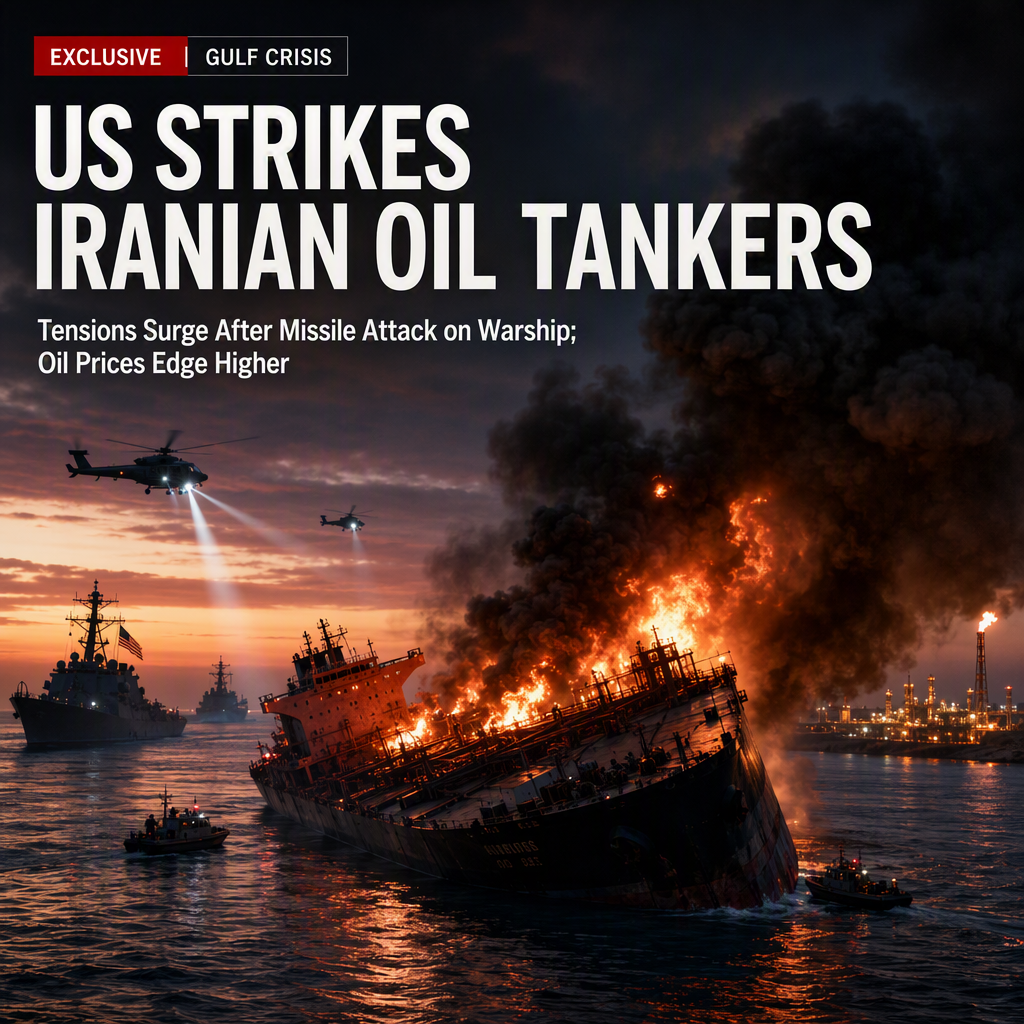
US forces have targeted multiple Iranian oil tankers associated with Iran’s Islamic Revolutionary Guard Corps (IRGC) in response to attempted missile attacks on a US warship, according to a US official cited by Bloomberg [1]. The strikes were carried out in the Gulf of Oman and near Iran’s Kharg Island, with US Central Command (CENTCOM) stating that crews were directed to abandon ship before the vessels were hit [1]. CENTCOM described the targeted tankers as part of a 'multibillion-dollar shadow network that funds the IRGC and its regional proxies' [1].
Following the US strikes, the IRGC issued a warning that ships in Kuwaiti and Bahraini ports hosting US forces could be targeted in retaliation for the attacks on Iranian oil tankers [1]. Additionally, Iran’s semi-official Mehr news agency reported explosions on Kharg Island, which is Iran’s main oil export facility [1].
In a related development, Iran-backed Houthi militants claimed responsibility for targeting Saudi Arabia’s 400,000 barrel-a-day Jazan refinery and other domestic market facilities [1].
Market reaction to these events was modest, with West Texas Intermediate (WTI) crude oil rising 0.13% on the day to $92.35 at the time of reporting [1]. No forward-looking statements or analyst opinions were provided in the article [1].
CONCLUSION
The US strikes on Iranian oil tankers and subsequent warnings from the IRGC have heightened tensions in the region, but the immediate market reaction has been limited, with only a slight increase in WTI crude oil prices. The situation remains fluid, with potential for further escalation depending on retaliatory actions.