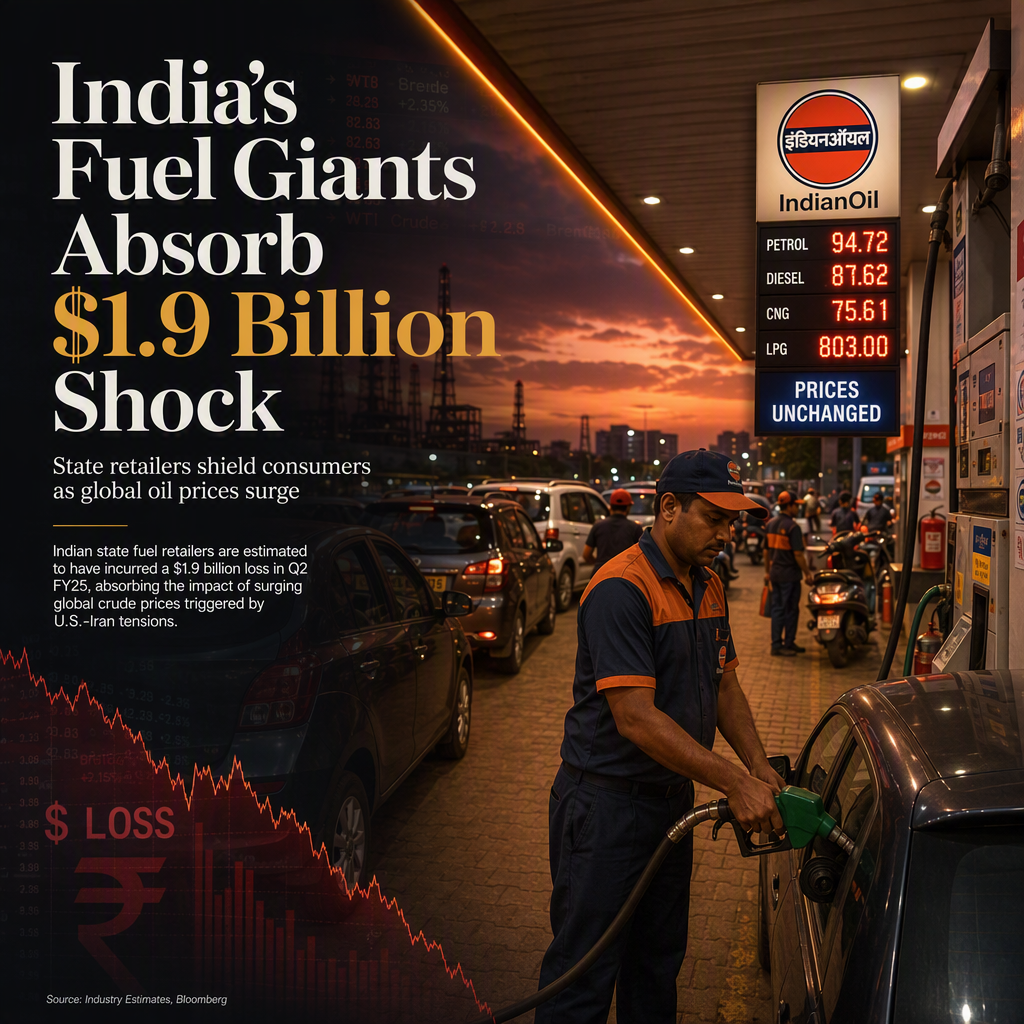
India's state-owned fuel retailers, which control approximately 90% of the domestic market, reported combined losses of about 181.49 billion rupees ($1.90 billion) for the quarter ending in June. These losses were incurred as the companies shielded customers from the full impact of the energy price shock resulting from the U.S.-Iran conflict, absorbing much of the increase in international oil prices rather than passing them on to consumers [1].
The oil marketing companies operate around 90,000 fuel retail outlets and typically adjust prices in tandem, effectively acting as government proxies to manage retail fuel prices. Despite the international market turmoil and higher input costs, sales of petrol and diesel have continued to rise in India [1].
The financial strain on these companies is a direct result of their role in buffering consumers from global energy shocks, leading to significant under-recoveries. The article notes that the companies' ability to align pricing with government policy means that increases in international oil prices are not fully reflected at the pump, exacerbating their losses [1].
While no specific market analysis or forward-looking statements are provided, the article highlights concerns about the sustainability of this approach, especially as fuel demand continues to grow. The ongoing losses may prompt future changes in government policy regarding energy pricing and subsidies, and market participants are expected to monitor any signals of shifts in retail pricing strategy or government support for these state-owned companies [1].
CONCLUSION
India's state fuel retailers are facing significant financial pressure, posting nearly $2 billion in losses as they shield consumers from global energy price shocks. The sustainability of this approach is in question, and future government policy changes on energy pricing and subsidies may be forthcoming. Market participants are likely to closely watch for any adjustments in pricing strategy or government support.