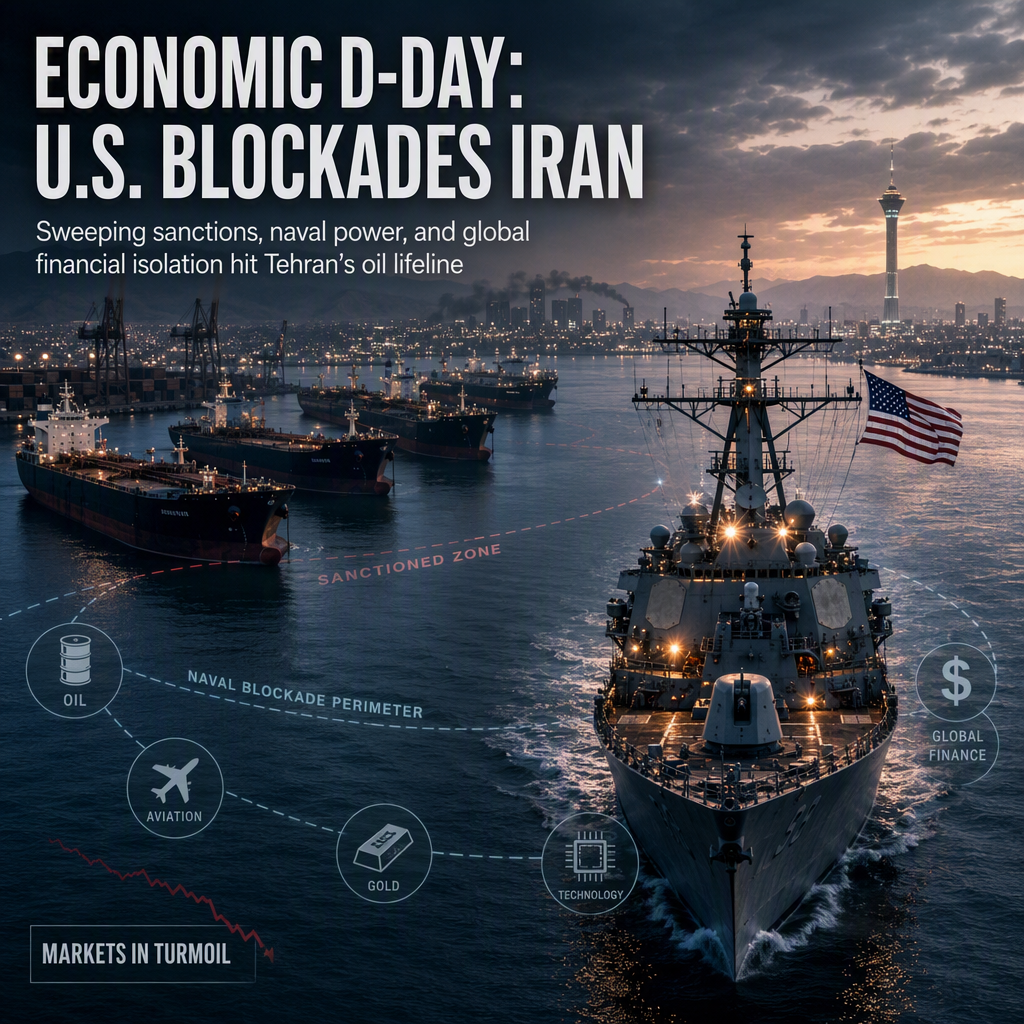
The U.S. administration has unveiled a new, aggressive economic campaign against Iran, described by Treasury Secretary Scott Bessent as an 'Economic D-Day.' Bessent warned that any financial institution aiding Iran will be removed from the U.S. dollar system, and emphasized that China is not exempt from U.S. sanctions if it continues to import Iranian crude oil [1]. The initiative, named Operation Economic Outcast, aims to sever Iran’s remaining economic connections in sectors such as shipping, aviation, technology, gold, and digital assets, with secondary sanctions threatened against foreign enablers. In its initial phase, about 60 individuals, entities, and vessels were targeted [1].
A key distinction from previous campaigns is the involvement of the U.S. Navy, which, according to AP reports, is now enforcing a blockade of Iranian ports. This military component is paired with financial pressure, making it even more difficult for Iran to finance, insure, and sell its oil [1]. The campaign has already impacted Iranian oil exports: shipments to China dropped to approximately 534,000 barrels per day in August, down from 823,000 in July and from a 2026 peak of roughly 1.58 million barrels per day. As a result, Chinese refiners are seeking alternative suppliers [1].
Iran’s economy is showing signs of severe distress. The Iranian currency has been battered, infrastructure damaged, and, according to Iran’s own Statistical Centre, annual inflation reached 88% in July, with food prices up 128% year-over-year. The regime is reportedly concerned that further economic hardship could spark renewed domestic unrest [1].
Historical context is provided by former Treasury Secretary Jack Lew, who testified that sanctions prior to the 2015 nuclear agreement cost Iran over $160 billion in oil revenue after 2012, with exports down 60% and the rial halved in value. However, these measures did not force Iranian capitulation but instead brought Tehran to the negotiating table, where Iran retained uranium enrichment capabilities in exchange for sanctions relief and inspections [1].
The article raises questions about the ultimate objectives and timeline of the campaign, and whether increased pressure will lead to Iranian surrender or simply force negotiations, as in the past [1].
CONCLUSION
The U.S. has escalated its economic pressure on Iran with a sweeping sanctions campaign and a naval blockade, significantly impacting Iranian oil exports and worsening domestic economic conditions. While the measures are making Iran poorer, historical precedent suggests they may lead to negotiations rather than outright surrender. The market impact is high, especially for energy markets and global supply chains.