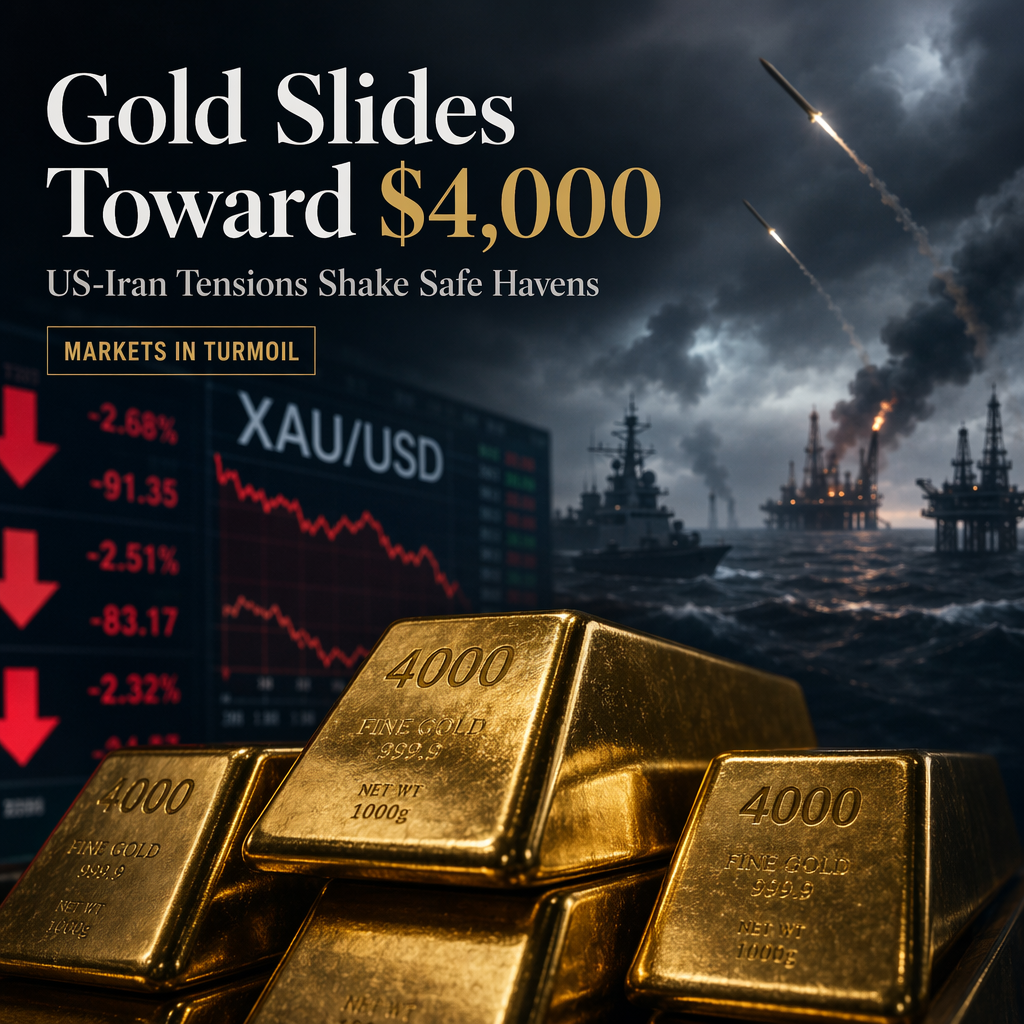
Gold prices (XAU/USD) fell to around $4,000 during early Asian trading hours on Monday, continuing to hover near this psychological level after a significant 14% loss in the second quarter (Q2), marking its worst quarterly performance since 2013 [1]. The decline in gold's value comes amid escalating hostilities between the United States and Iran, which have pushed oil prices higher and intensified inflation concerns [1].
Despite recent data showing signs of cooling in US consumer and producer inflation, the market remains pressured by rising oil prices and expectations that US interest rates will stay elevated for an extended period. This environment has diminished gold's appeal as a non-yielding asset, with traders now pricing in a 61.4% probability that the US Federal Reserve will hike rates in September, according to the CME FedWatch Tool [1].
The US has conducted its ninth consecutive night of airstrikes against Iran, with Washington stating that the latest strikes were intended to 'punish' Iran following the first US military deaths since the renewal of hostilities with the Islamic Republic, as reported by Bloomberg [1]. Iranian officials have indicated that the ceasefire between Washington and Tehran has effectively ended, raising the risk of further disruptions to vital energy flows through the region's narrow waterways [1].
Additionally, air raid sirens were reported across Bahrain after Iran launched a new wave of ballistic missiles and one-way attack drones targeting sites in Bahrain, Jordan, Kuwait, and Iraq. The prospect of a prolonged conflict in the Middle East could continue to exert selling pressure on gold in the near term [1].
CONCLUSION
Gold's sharp decline toward $4,000 reflects heightened geopolitical tensions and rising expectations for a US Federal Reserve rate hike. The combination of surging oil prices, persistent inflation fears, and the risk of prolonged Middle East conflict has undermined gold's safe-haven appeal. Market sentiment remains negative as traders anticipate tighter monetary policy and ongoing regional instability.