
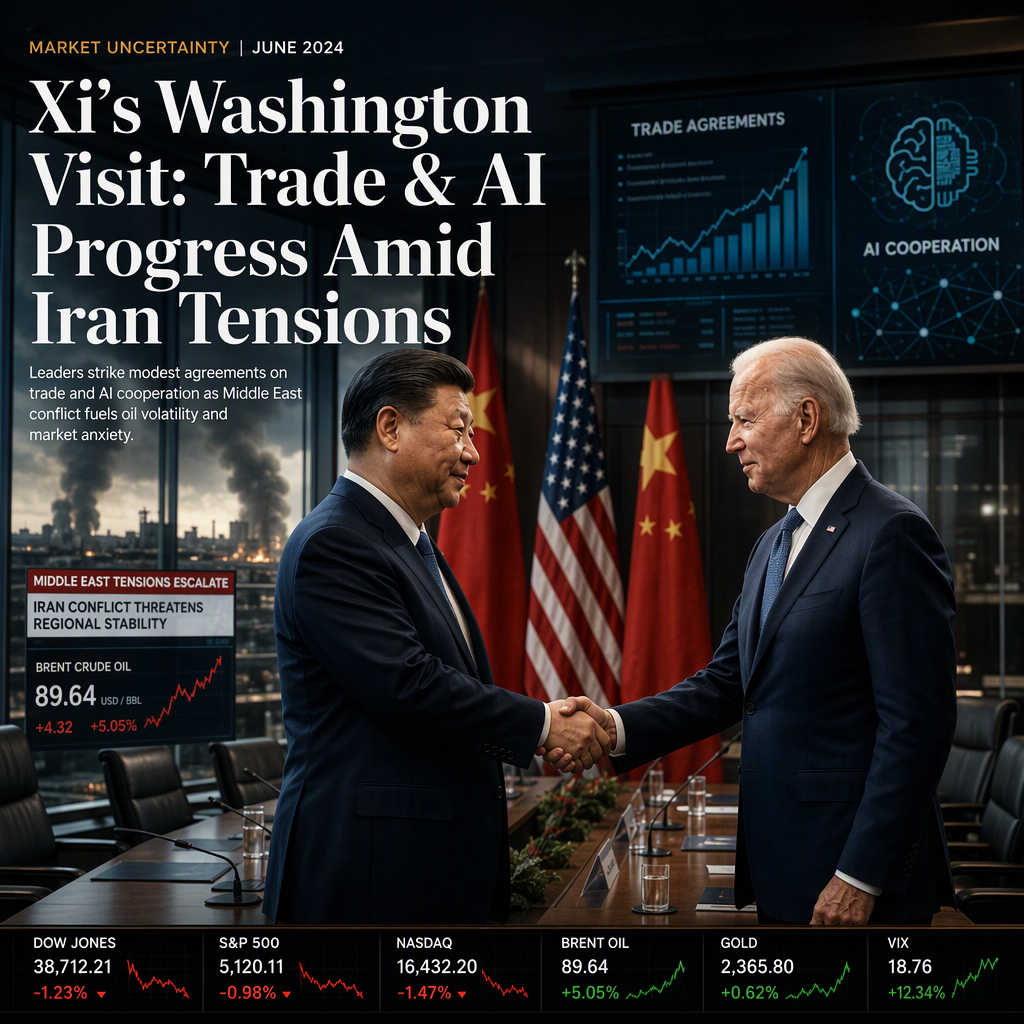
Chinese President Xi Jinping's recent state visit to Washington resulted in limited agreements between the U.S. and China, focusing on trade and artificial intelligence. The two countries agreed to reduce tariffs on $30 billion worth of goods and to initiate a dialogue on AI. The tariff reductions will affect U.S. exports such as agricultural goods, wood, and cosmetics, as well as U.S. imports including small appliances, toys, and decorations, according to a White House statement. However, the agreement did not include any concrete purchase commitments, and the extension of the trade truce was limited to two months, which fell short of analysts' expectations for at least a six-month extension [1].
Peter Alexander, managing director at Z-Ben Advisors, described the outcome as indicative of a 'fraught relationship where neither side is willing to give way, at least not at this juncture.' The summit also addressed the Middle East conflict, with both leaders agreeing that Iran should uphold its commitment not to develop nuclear weapons and that no country or entity should impose transit tolls on international waterways [1].
In parallel, Iranian Foreign Minister Abbas Araghchi stated that Tehran is prepared for a 'doomsday' war with the U.S. but remains open to diplomacy to avoid missing any opportunity for peace. Araghchi's comments followed his proposal to reopen the Strait of Hormuz and resume nuclear talks within seven days if Washington accepts Iran's terms. The ongoing conflict between the U.S. and Iran, which has persisted since late February, continues to constrain global oil supply and contribute to inflationary pressures [1].
Market reactions to these developments were immediate: stock futures slipped and oil prices edged higher as Treasury yields reached their highest levels since 2007. Investors are closely monitoring the situation as the new trading week begins, with heightened geopolitical risks influencing market sentiment [1].
CONCLUSION
Xi's visit to Washington produced incremental progress on trade and AI, but fell short of major breakthroughs or long-term commitments. Ongoing tensions with Iran and elevated Treasury yields have contributed to market caution, with investors remaining alert to further geopolitical developments.