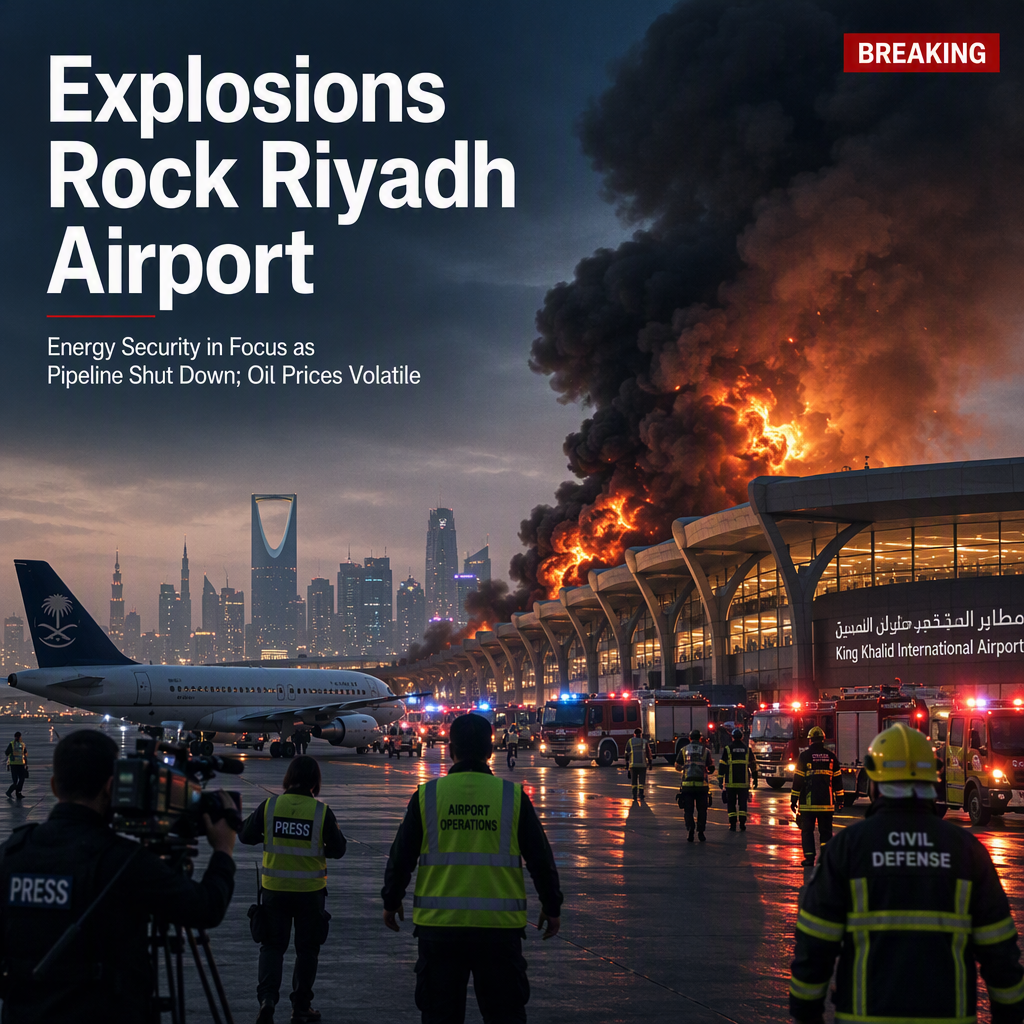
On September 19, 2026, Saudi Arabia issued alerts to its citizens following reports of explosions in the capital Riyadh, with a large plume of smoke and flames later observed near King Khalid International Airport. The cause of the incident remains unclear, and Saudi authorities have not provided further comment at this time [1]. The Directorate of Saudi Civil Defense initially issued early warning alerts, and Reuters reported hearing two booms in Riyadh before an all-clear was given.
The incident comes amid escalating attacks by Iran-backed Houthi forces in Yemen, who have recently launched a ground offensive around the Bab el-Mandeb Strait, a critical oil transit point, and seized Mokha and nearby islands [1]. In response to the heightened tensions, the U.S. administration under President Donald Trump approved a potential $24.3 billion sale of 48 Lockheed Martin F-35 warplanes and 49 Pratt & Whitney engines to Saudi Arabia, a move seen as a significant boost for the kingdom's defense capabilities [1].
Diplomatic efforts are ongoing, with Pakistan's Deputy Prime Minister and Foreign Minister Ishaq Dar emphasizing to his Iranian counterpart the importance of uninterrupted energy supplies and safe passage for ships, particularly for developing countries and global supply chains. The two diplomats plan to meet on the sidelines of the United Nations General Assembly in New York next week [1]. The U.S. State Department confirmed that a core Iranian delegation would be allowed to attend the meeting in accordance with its obligations as the UN host country [1].
Brent crude oil prices have surged 72% since the start of 2026 due to disruptions in energy supplies through the Strait of Hormuz. Saudi Arabia has attempted to reroute exports via its East-West pipeline to the Red Sea, but a drone attack originating from Iraq on September 11 damaged the pipeline, leading to its shutdown [1]. Despite these disruptions, crude prices fell for the third consecutive session on Friday, ending the week flat as the market anticipates that the East-West pipeline closure will not significantly impact overall supplies [1].
CONCLUSION
The explosions near Riyadh airport and ongoing regional hostilities have heightened concerns over energy security and supply disruptions. Despite a sharp rise in oil prices earlier in the year, the market appears to be stabilizing as traders assess the impact of Saudi infrastructure outages. The approval of a major U.S. arms sale to Saudi Arabia underscores the seriousness of the situation.