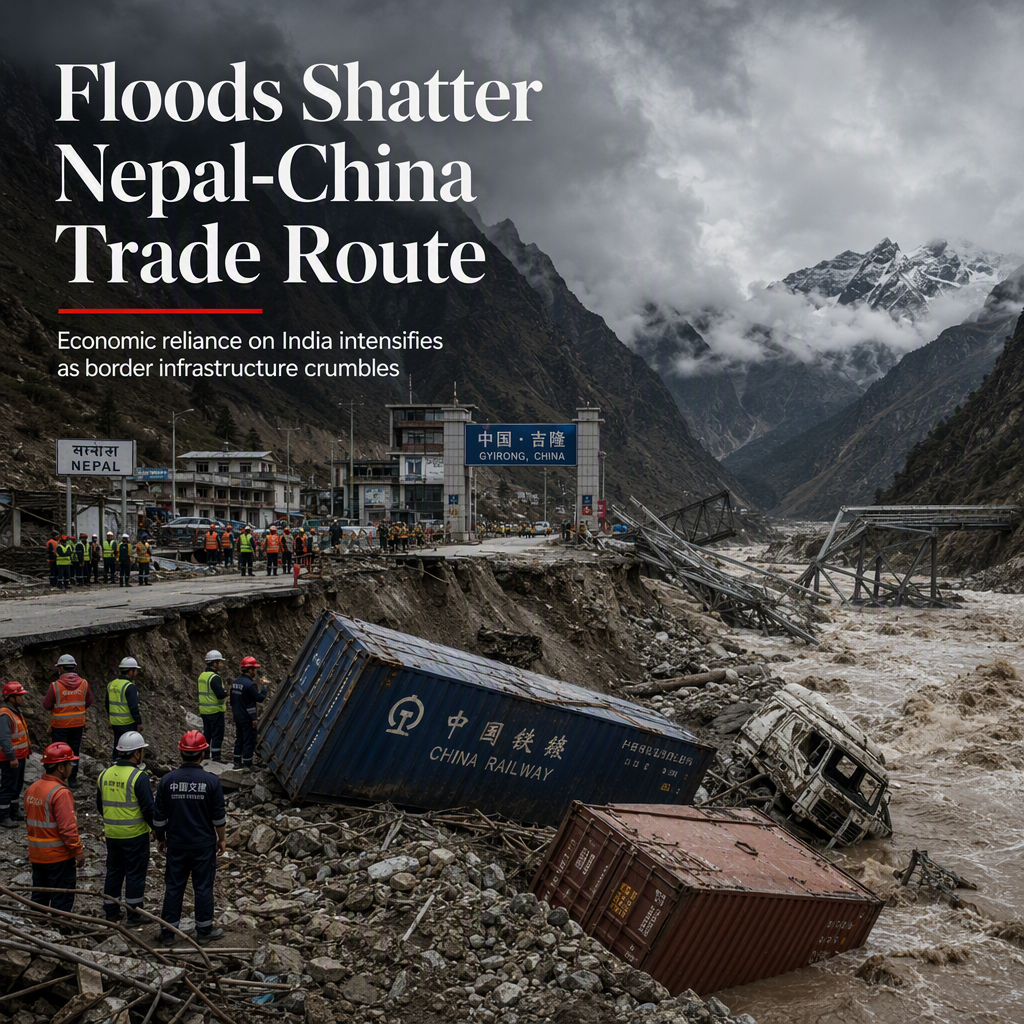
Catastrophic floods struck the Nepal-China border area near Gyirong, Tibet region, China, on August 26, 2026, devastating infrastructure critical to Nepal’s cross-border trade ambitions with China [1]. CCTV footage captured the destruction as a wall of mud and water swept through the valley, destroying buildings and highlighting the severity of the disaster [1]. This event has dealt a major setback to Nepal's decade-long effort to reduce its economic dependence on India by developing a reliable trade corridor with China [1].
Industry experts warn that reopening the gateway will require costly infrastructure investment, not only for repairs but also to future-proof the route against increasingly frequent natural disasters [1]. The main border crossing is now severely damaged, and trade flows with China are expected to be disrupted for an extended period [1]. A senior trade analyst in Kathmandu stated, "The floods have not only destroyed physical infrastructure but also shaken confidence in the northern trade route. It will take years and significant resources to restore the route, and in the meantime, Nepal will continue to depend on India" [1].
The disaster has entrenched Nepal’s reliance on India for imports and exports, undermining efforts to diversify economic links through the northern corridor [1]. Broader concerns have also been raised about the impact of climate change on Himalayan trade routes, as warming temperatures contribute to unpredictable weather patterns and increased flooding, posing ongoing risks to Nepal’s cross-border connectivity with China [1].
While no specific financial values, market analysis, or trading advice were provided, the sentiment among local business leaders is described as cautious, with uncertainty around future disruptions and the high cost of rebuilding [1]. Nepal’s trade strategy may need to be revisited, with a renewed focus on strengthening economic ties with India and exploring ways to mitigate climate-related risks to its northern border infrastructure [1].
CONCLUSION
The floods have severely damaged Nepal's main trade route with China, reinforcing its economic dependence on India and raising concerns about the vulnerability of Himalayan trade infrastructure to climate change. With costly repairs and long-term uncertainty ahead, Nepal may need to reconsider its trade diversification strategy and prioritize resilience against future natural disasters.