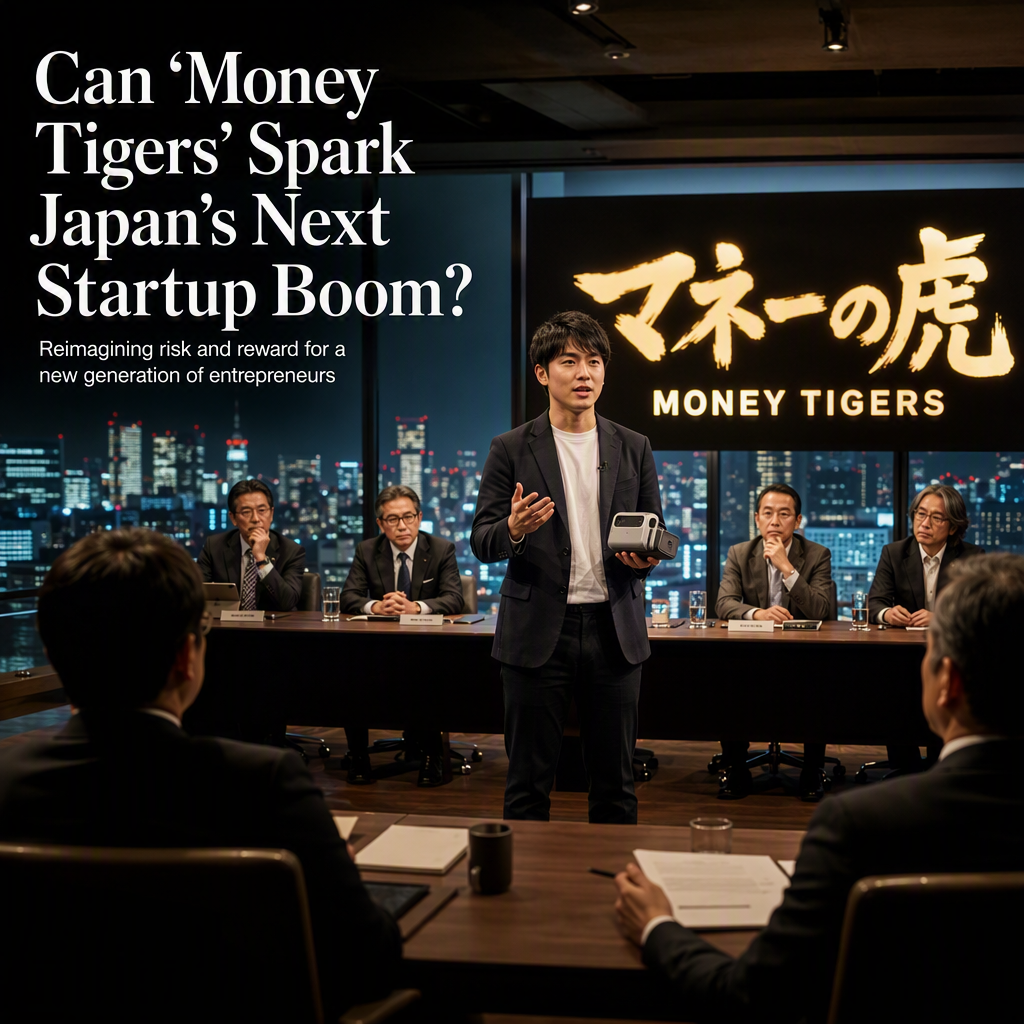
Japan is recognized as the originator of the reality TV show format that became 'Shark Tank,' with the original Japanese series titled 'Money Tigers,' where entrepreneurs pitched their ideas to a panel of investors for funding [1]. While the format has been exported globally and has played a significant role in popularizing entrepreneurship, especially in the U.S., Japan itself has not fully leveraged the show's cultural influence in its domestic market [1].
Despite a recent surge in venture capital investment and startup creation in Tokyo, Japan's broader entrepreneurial culture remains less developed compared to the U.S. or China [1]. In 2023, Japan accounted for just 2% of global venture capital investment, compared to 49% for the U.S. and 19% for China, according to market data [1]. Efforts by the Tokyo Stock Exchange to encourage startup IPOs and structural reforms to nurture new businesses have not fully overcome persistent risk aversion and social stigma toward failure, which continue to inhibit entrepreneurship in Japan [1].
The article argues that reintroducing a locally tailored version of 'Money Tigers' could help shift perceptions by showcasing the successes and struggles of real entrepreneurs, thereby demystifying the startup process and making it more accessible [1]. In the U.S., 'Shark Tank' has helped contestants secure over $100 million in funding and inspired millions to consider entrepreneurship [1]. A revitalized Japanese version could highlight the country's growing number of unicorns, feature female and regional founders, and address both social ventures and tech startups, helping to make entrepreneurship a more viable and respected career path [1].
As Japan aims to foster innovation-driven growth and diversify its economy, the article suggests that reinvigorating the cultural narrative around entrepreneurship through media like 'Money Tigers' is as important as financial or regulatory reforms [1].
CONCLUSION
Japan's underdeveloped entrepreneurial culture, despite recent progress, is seen as a barrier to innovation and economic diversification. Reviving 'Money Tigers' is proposed as a cultural catalyst to inspire more risk-taking and startup activity, complementing ongoing financial and regulatory reforms.