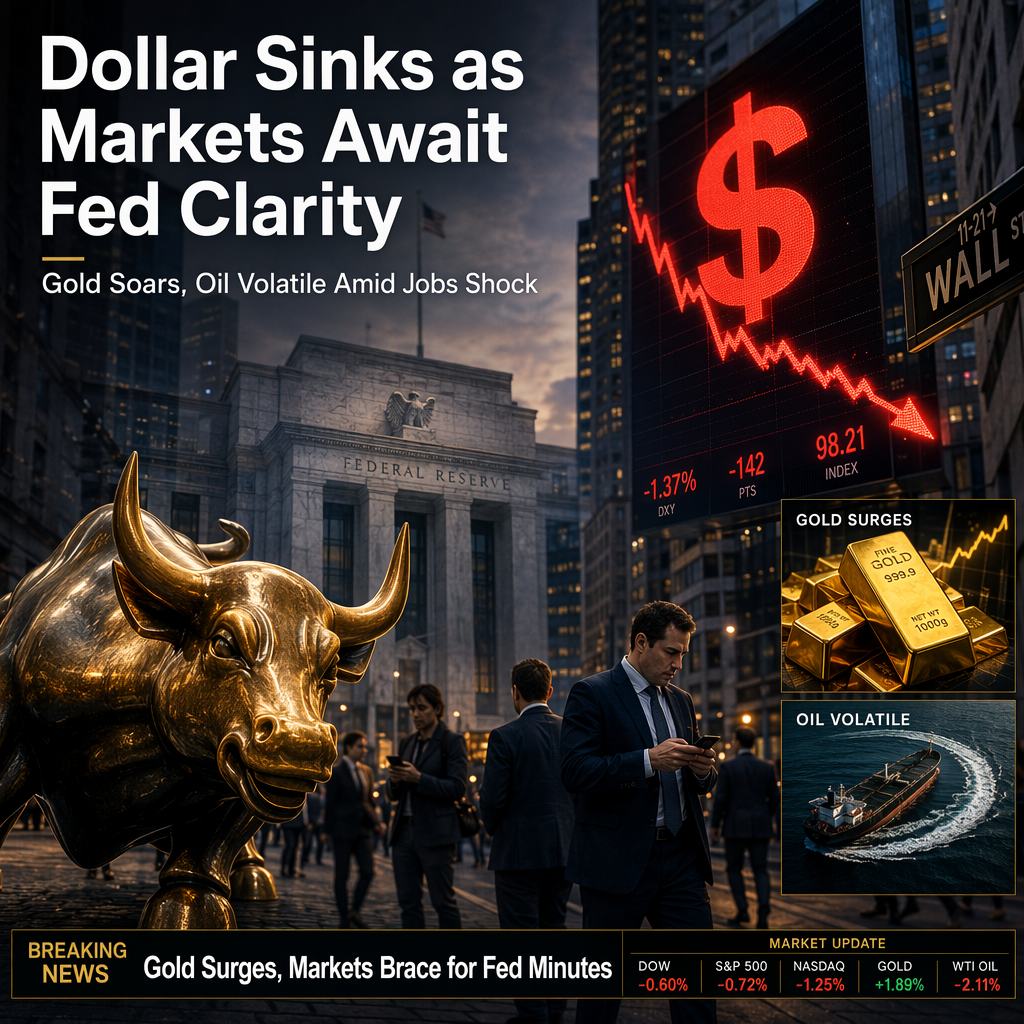
The U.S. labor market delivered a significant surprise as the latest jobs report showed only 57,000 payrolls added, falling well short of the forecasted 110,000. This disappointing data came on the heels of a dovish shift in tone from Federal Reserve Chair Warsh at the Sintra conference, which had already softened expectations for future rate hikes. As a result, the U.S. dollar declined to a two-week low, reflecting market concerns about the economic outlook and the Fed's policy trajectory. Gold prices surged toward $4,200, indicating increased demand for safe-haven assets, while the S&P 500 closed one of its strongest quarters in approximately six years. Bitcoin also rebounded, ending the period in positive territory [1].
Looking ahead, market participants are focused on the upcoming release of the Federal Reserve's June meeting minutes, scheduled for Wednesday. With a relatively light economic calendar and U.S. markets returning from a long weekend, the FOMC minutes are expected to be the main event that could influence market direction in the near term [1].
In commodities, the oil market experienced mixed developments over the weekend. OPEC+ ratified another quota increase, but this was offset by a series of tankers making unexplained U-turns in the Strait of Hormuz, adding uncertainty to the supply outlook [1].
Overall, the combination of weaker-than-expected U.S. employment data, dovish Fed commentary, and ongoing geopolitical developments in the oil market has created a complex environment for investors. The market's attention is now firmly on the Fed's upcoming minutes for further guidance [1].
CONCLUSION
The U.S. dollar's decline and gold's rally underscore heightened market uncertainty following a weak jobs report and dovish Fed signals. With the economic calendar light, investors are closely watching the FOMC minutes for clues on future monetary policy. The oil market remains volatile amid OPEC+ actions and geopolitical tensions.