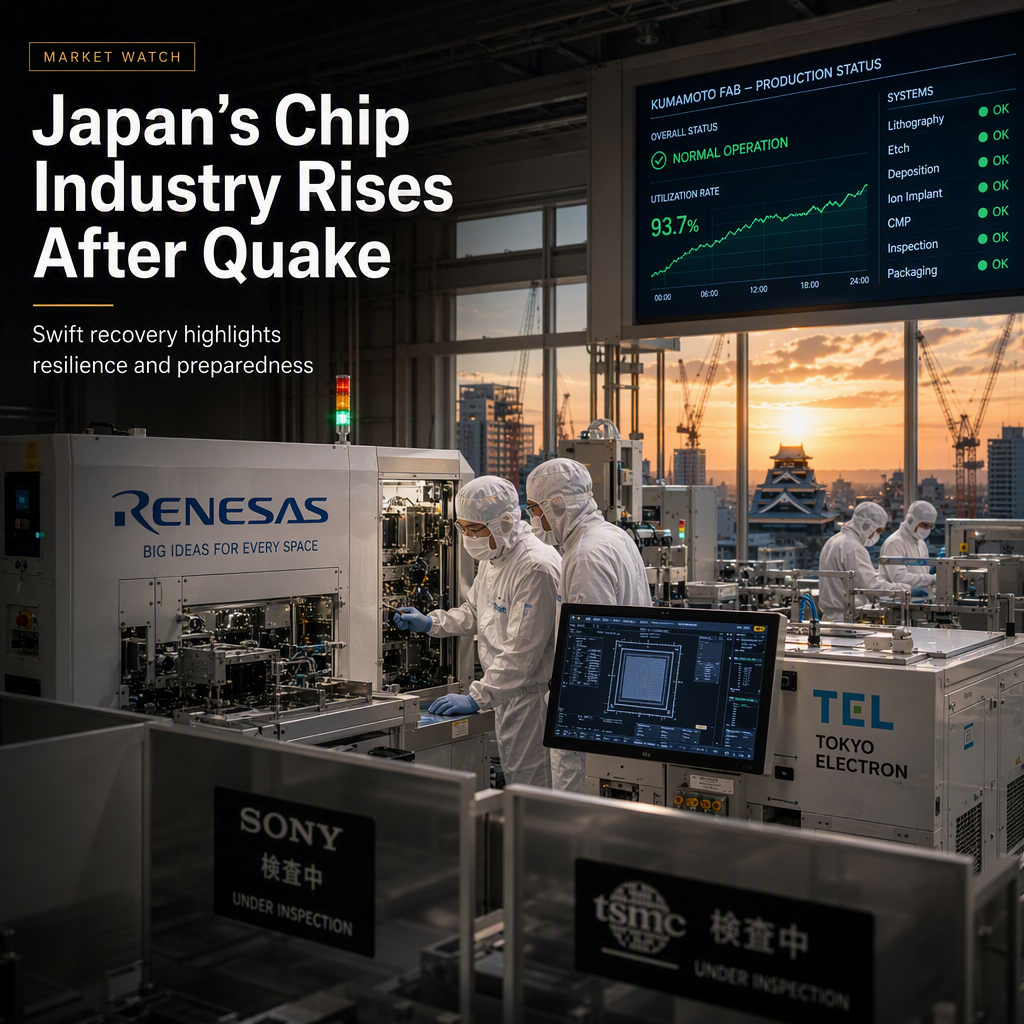
The Japanese chip industry is demonstrating resilience following the earthquake that struck the Kumamoto area on July 28, 2026. Key semiconductor facilities, including those operated by Renesas Electronics and Tokyo Electron, have already resumed some operations, reflecting the effectiveness of quake-resistant construction and disaster preparedness strategies implemented after previous disasters [1]. This rapid recovery is considered critical for maintaining stability in Japan's semiconductor supply chain, which is essential for both domestic and global electronics markets [1].
In contrast, Sony and TSMC facilities in the region have experienced more significant damage and require additional safety checks and repairs before they can return to full operations. This situation highlights the ongoing need for investment in quake-resistant technology and robust emergency response capabilities within the semiconductor manufacturing sector [1].
Market analysts view the swift restart of production at Renesas and Tokyo Electron as a positive indicator for the industry, suggesting that supply disruptions for downstream customers, such as automotive and electronics manufacturers, will be minimized. Despite the delays at Sony and TSMC, industry sentiment remains optimistic regarding the overall resilience and recovery speed of Japan's chip sector [1].
Financial markets have reacted cautiously, with shares of affected companies showing only minor fluctuations in early Tokyo trading. Investors are closely monitoring updates on Sony and TSMC's reopening timelines, given their significant roles in the global semiconductor market. Analysts emphasize that continued improvements in quake-resistant construction and disaster management are likely to bolster long-term stability and investor confidence in Japan's chip industry [1].
CONCLUSION
Japan's chip industry is recovering quickly from the Kumamoto earthquake, with Renesas and Tokyo Electron resuming operations and market sentiment remaining positive. While Sony and TSMC face longer delays, the sector's resilience and ongoing investments in disaster preparedness are expected to support long-term stability and confidence.