
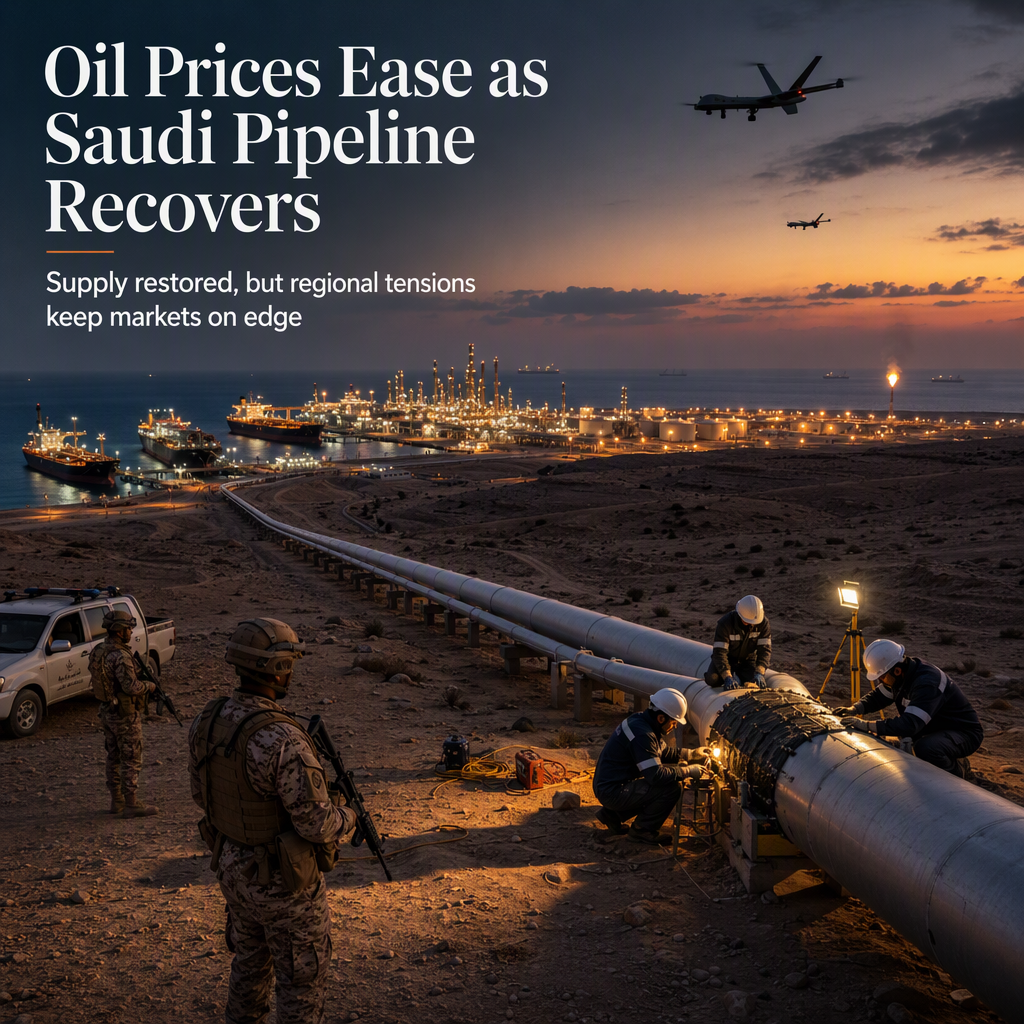
On September 28, 2026, crude oil prices pulled back from session highs after reports emerged that Saudi Arabia had ramped up flows through its critical East-West pipeline following repairs. Brent crude futures, the international benchmark, closed at $105.28 per barrel, up 96 cents, after reaching a session high of $108.83. U.S. West Texas Intermediate futures settled at $92.60, up 19 cents, after peaking at $96.54 earlier in the day [1]. According to sources familiar with the matter, Riyadh restored pipeline flows to approximately 3.5 million barrels per day, with export loadings resuming at the Red Sea port of Yanbu. The pipeline, which has a maximum capacity of 7 million bpd, had been shut down earlier in the month due to damage from a drone strike launched from Iraq [1].
Geopolitical tensions remain elevated, with the White House signaling openness to sanctions relief for Iran and the release of frozen funds if progress is made toward a nuclear deal. President Donald Trump reportedly rejected Iran's conditional offer to reopen the Strait of Hormuz and expects U.S. strikes on Iran to resume after the November midterm elections, according to unnamed U.S. officials cited by The Wall Street Journal. Trump confirmed to reporters that he had rejected Tehran's latest proposal [1]. Iranian Foreign Minister Abbas Araghchi offered to reopen the key shipping route and restart nuclear negotiations within seven days if the U.S. agreed to Tehran's conditions, which include ending U.S. "acts of aggression," lifting the naval blockade and economic warfare, and releasing Iranian assets [1].
The Saudi-led coalition in Yemen intercepted projectiles launched by Iran-backed Houthi rebels, further underscoring regional instability [1]. Energy market participants are pricing in a "clear and present danger" of renewed U.S.-Iran hostilities after the midterm elections, according to Cornelia Meyer, CEO of Meyer Resources. Trump previously stated that he expected the conflict, which began with U.S. and Israeli airstrikes on Iran on February 28, to conclude soon after the midterm elections, with oil prices subsequently declining [1].
CONCLUSION
Saudi Arabia's restoration of pipeline flows has eased immediate supply concerns, causing oil prices to retreat from recent highs. However, ongoing geopolitical tensions and uncertainty surrounding U.S.-Iran relations continue to weigh on market sentiment, with participants anticipating potential volatility after the midterm elections. The energy market remains cautious, reflecting both improved supply conditions and persistent risks.