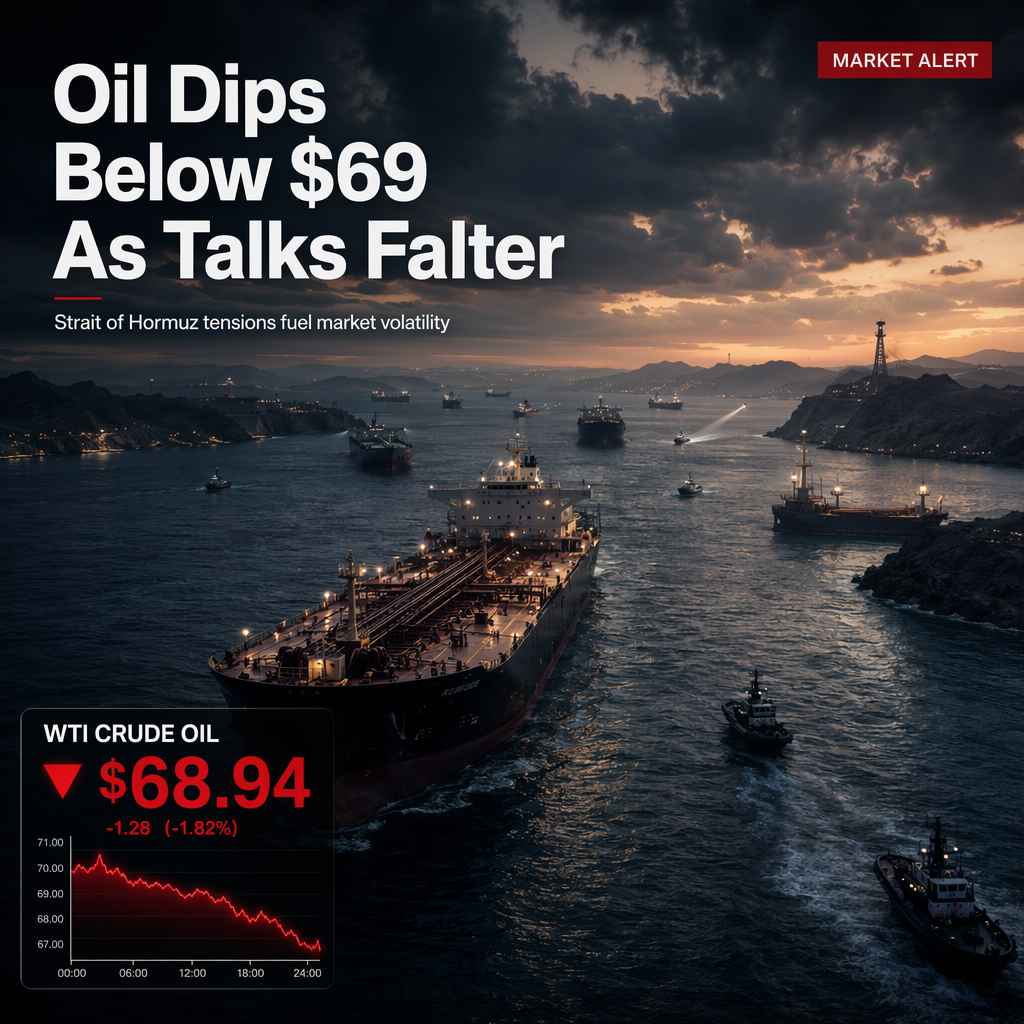
West Texas Intermediate (WTI) crude oil prices dropped below $69.00 per barrel on Wednesday, marking the first time in four months that the US oil benchmark has fallen to this level. This decline follows reports of a potential resumption of technical talks between the US and Iran, which have contributed to downward pressure on oil prices after WTI closed the second quarter with its sharpest decline since 2020 [1].
The situation surrounding US-Iran negotiations remains unclear. According to CNN, technical discussions between US and Iranian negotiators resumed on Wednesday, just one day after Tehran publicly rejected the possibility of direct talks with the US this week [1]. Iranian Foreign Ministry Spokesperson Esmail Baghaei stated that Iranian negotiators would instead meet with Qatari mediators to discuss provisions of a memorandum of understanding, including the issue of Iran’s restricted assets [1].
A key point of contention in the talks is the status of the Strait of Hormuz, a critical waterway for global oil shipments. Traffic through the strait remains significantly restricted compared to pre-war levels, with the US urging Iran to allow free passage for vessels. Iran, however, maintains its sovereignty over the strait. Iran’s top negotiator, Mohammad Bagher Ghalibaf, emphasized that the Strait of Hormuz is Iran’s “greatest instrument of power” and asserted that discussions about its future status will not occur until all provisions in the memorandum are fulfilled [1].
The ongoing uncertainty regarding US-Iran relations and the restricted flow through the Strait of Hormuz have heightened market volatility, contributing to the recent sharp decline in WTI oil prices. No forward-looking statements or analyst opinions were provided in the source article [1].
CONCLUSION
WTI oil prices have experienced a significant drop below $69 due to renewed uncertainty over US-Iran negotiations and ongoing tensions regarding the Strait of Hormuz. The market remains highly sensitive to developments in these talks, with restricted oil flows and unclear diplomatic progress driving volatility.