
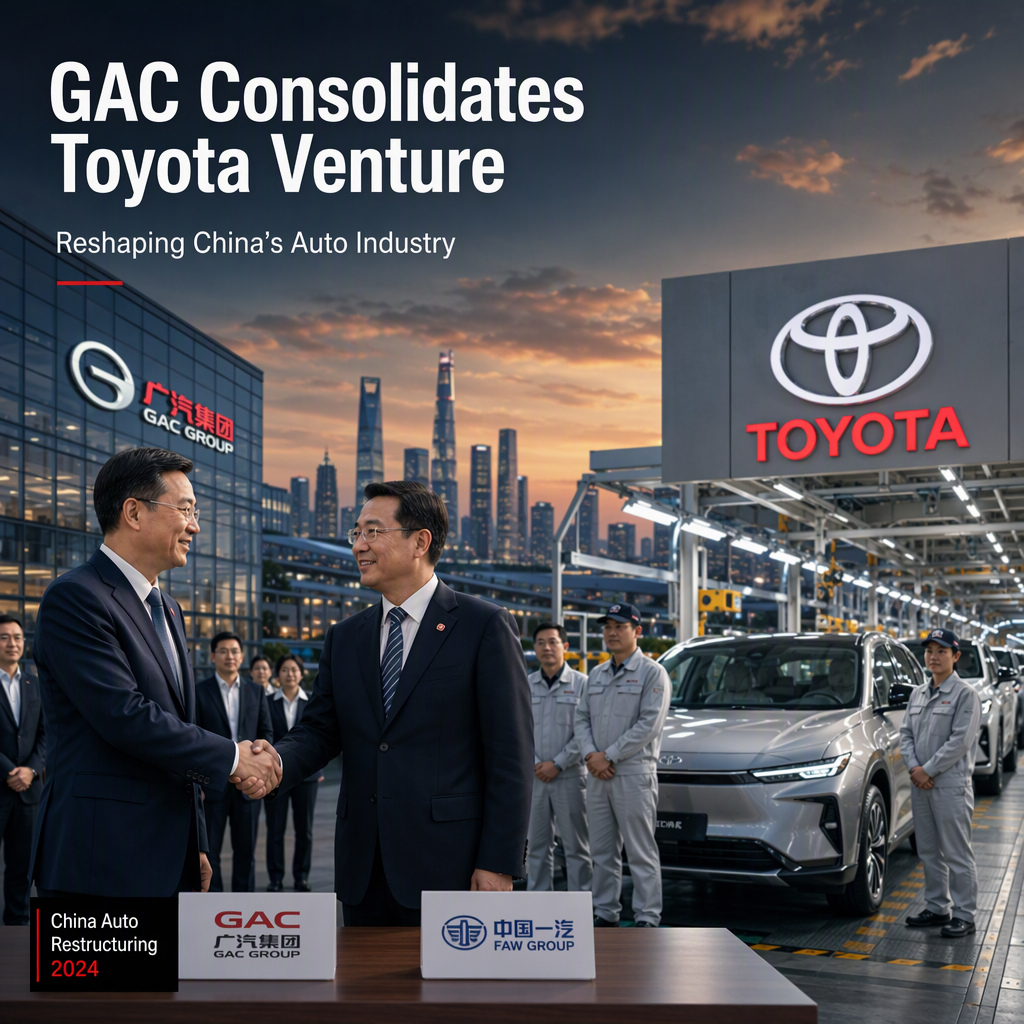
Guangzhou Automobile Group (GAC) has announced an agreement to acquire FAW Group's 50% stake in a joint venture with Toyota Motor, marking a significant restructuring move within China's automotive sector [1]. This deal will consolidate Toyota's China joint ventures under GAC, granting it full control of the venture previously shared with FAW Group [1]. The restructuring is part of a broader trend in China's auto industry, which is facing challenges such as overcapacity, intense competition, and government-driven consolidation efforts [1].
According to filings, FAW Group will become GAC's second-largest shareholder, indicating a strengthening of relationships among major state-backed auto companies [1]. GAC has struggled in recent quarters due to industry headwinds and a challenging market environment, and this acquisition is seen as a strategic step to streamline operations and enhance competitiveness [1]. A GAC spokesperson stated, "By integrating resources with FAW and Toyota, we can better position ourselves for the future of China's auto market, especially in the new energy vehicle segment" [1].
The move follows a wave of similar consolidations in the sector, as companies seek to address falling margins and adapt to the rapid shift toward electric and hybrid vehicles [1]. Industry analysts suggest that further consolidation is likely, with government encouragement for stronger players to emerge from the current shake-out [1].
Financial terms of the agreement were not disclosed, and market observers are closely monitoring for updates regarding the impact on Toyota's operations in China and GAC's financial performance [1].
CONCLUSION
GAC's acquisition of FAW's stake in the Toyota joint venture represents a strategic consolidation in China's auto industry, aimed at improving competitiveness and adapting to market challenges. While financial details remain undisclosed, the move is expected to strengthen GAC's position, particularly in the new energy vehicle segment. Market participants are awaiting further information on the operational and financial implications for both GAC and Toyota.