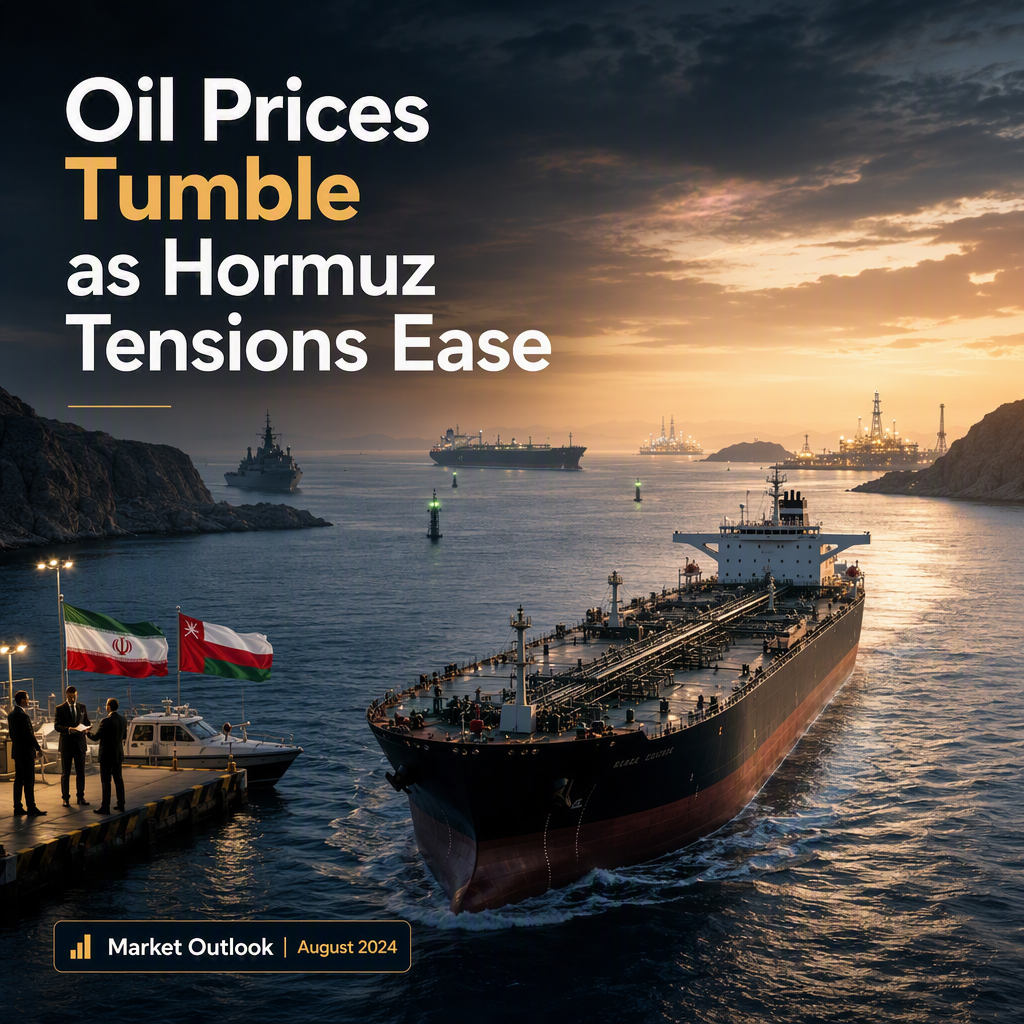
Crude oil prices experienced a significant decline, with West Texas Intermediate (WTI) dropping to around $79.50, marking a 9% fall from last week’s highs above $87.00, and Brent crude falling below $90 per barrel overnight. This downturn is attributed to diplomatic progress between Iran and Oman regarding the reopening of the Strait of Hormuz, a critical maritime corridor for global oil shipments. The Omani foreign minister expressed optimism that a temporary route through the strait would be announced soon, while Iran maintained that the US must lift its naval blockade of Iranian ports before allowing free transit through Hormuz. Technical talks between Iran and Oman are ongoing to define a permanent maritime corridor, and joint mine-clearing efforts are underway to improve tanker traffic safety [1][2].
Market participants have responded positively to these diplomatic developments, with supply concerns easing and fears of a broader Middle East escalation subsiding. Reports indicate that the US has opted for a less aggressive stance, stopping short of imposing secondary sanctions on countries trading with Iran, including China. Instead, the US introduced a new package of sanctions aimed at intensifying economic pressure on Iran, but these measures were perceived as softer than expected, reinforcing the market’s view that Washington is prioritizing diplomatic engagement over military action [1][2].
Strategists from Danske Bank and OCBC Bank highlighted that the US’s approach, coupled with the prospect of a negotiated temporary shipping corridor and ongoing diplomatic efforts, has materially improved the outlook for oil supply. Additionally, Pakistan’s Army Chief concluded a visit to Iran with reportedly constructive outcomes, and the US plans to return diplomats to embassies across the Middle East, signaling no expectation of imminent military escalation [2].
Investors are also awaiting the US Energy Information Administration’s (EIA) weekly Crude Oil Stocks Change report, which is expected to show a 1.9 million barrel buildup for the week of August 21, following a 4.4 million increase in the previous week. This would mark the fourth consecutive weekly increase in crude stocks, further alleviating concerns about an oil shortage in the near term [1].
Lower energy prices have contributed to softer US and European bond yields, with market attention now shifting to upcoming US core PCE data and the Jackson Hole symposium for further guidance on Federal Reserve inflation priorities [2].
CONCLUSION
Diplomatic progress between Iran and Oman regarding the Strait of Hormuz, combined with a less aggressive US sanctions approach, has led to a sharp decline in oil prices and eased supply concerns. The market is now focused on upcoming US economic data and central bank signals, with the improved outlook for oil shipments reducing the risk of further price spikes in the near term.