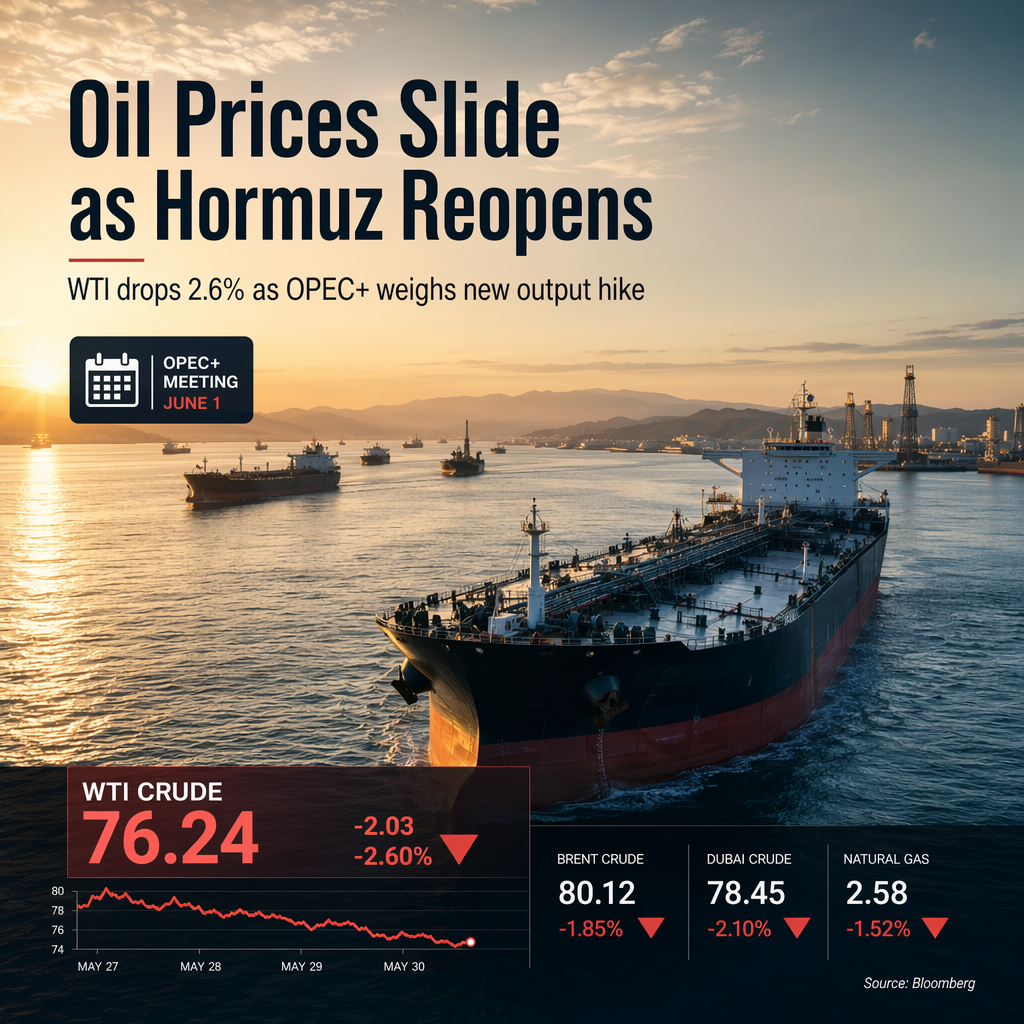
West Texas Intermediate (WTI) crude oil prices continued to decline on Wednesday, trading around $68.13 per barrel, marking a drop of nearly 2.60% for the day [1]. The downward pressure on prices was attributed to improving crude flows through the Strait of Hormuz, which have returned to levels seen before the US-Iran war, thereby reducing the geopolitical risk premium that had previously supported oil prices [1].
The US Energy Information Administration (EIA) reported a decrease in commercial crude oil inventories by 3.775 million barrels for the week ending June 26, representing the tenth consecutive weekly draw and bringing US crude stockpiles to their lowest level since September 2018 [1]. However, this drawdown was smaller than market expectations of a 5.1 million-barrel reduction and followed a larger 6.088 million-barrel decline in the previous week [1].
Despite the recent interim US-Iran peace agreement, a permanent deal has not yet been finalized, with ongoing disagreements over inspections of Iran's nuclear program and the management of the Strait of Hormuz. Tehran maintains that the waterway is under its sovereignty and seeks to impose transit tolls, while the United States insists on keeping the strait open for free commercial shipping [1].
Adding to the bearish sentiment, Reuters reported that OPEC+ is expected to approve another production increase at its upcoming meeting on Sunday. According to three sources, the alliance is likely to raise its output target by approximately 188,000 barrels per day in August, mirroring the increases announced for June and July [1].
CONCLUSION
WTI crude oil prices are under significant pressure due to recovering flows through the Strait of Hormuz and expectations of an OPEC+ production increase. Although US crude inventories have declined, the draw was smaller than anticipated, further weighing on market sentiment. The outlook remains bearish as supply concerns ease and geopolitical risks diminish.