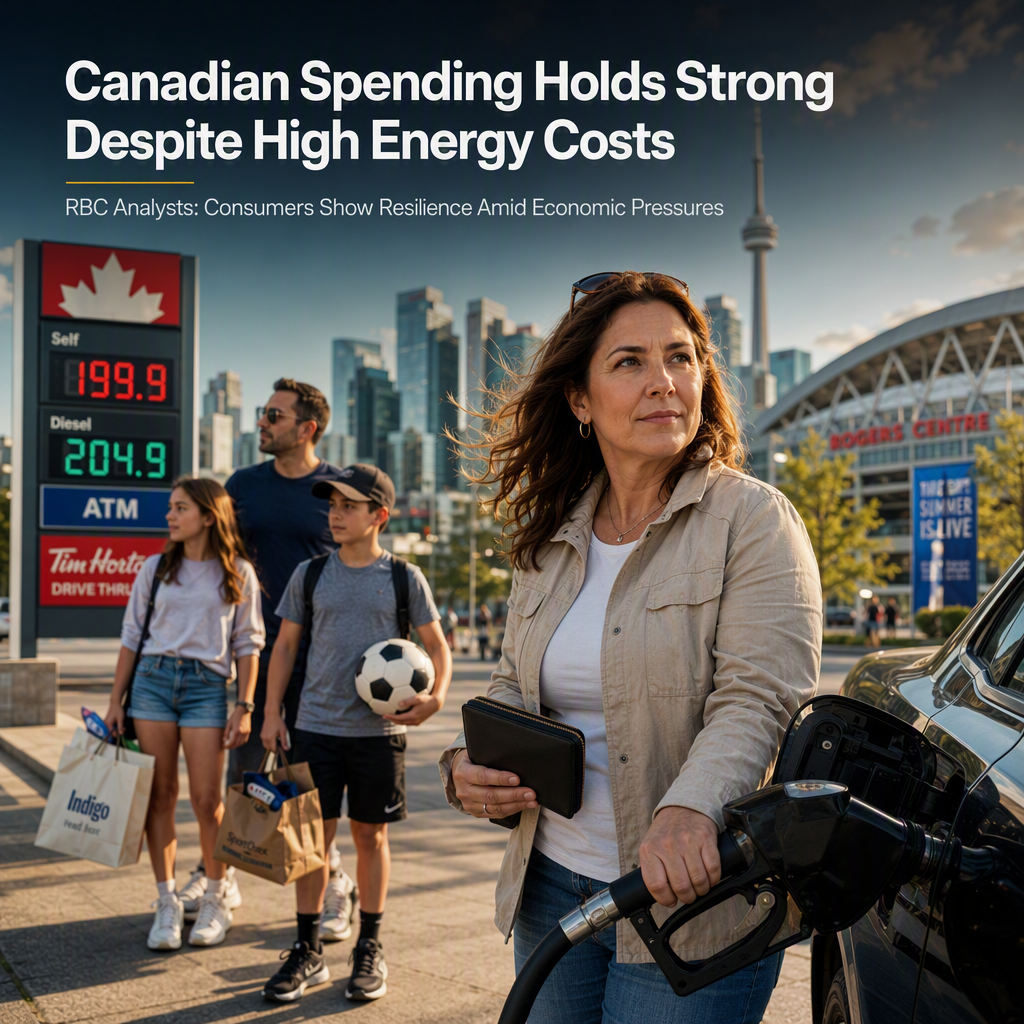
According to analysts Rachel Battaglia and Abbey Xu at Royal Bank of Canada (RBC), Canadian consumers maintained their spending levels in the second quarter, even as they faced weak real wage gains and increased energy costs [1]. The analysts note that fuel expenditures are consuming a larger portion of household budgets due to a spike in energy prices in early March, which has likely led Canadians to draw on savings or take on additional debt to sustain their consumption patterns [1].
Despite these pressures, spending on discretionary goods and services rebounded, with notable strength in areas such as sports-related activities, particularly during FIFA and other summer events [1]. Insolvency rates per capita remain below pre-pandemic levels, indicating that consumers still have some financial resilience to withstand current economic challenges [1].
RBC analysts express a cautiously optimistic outlook for Canadian consumption through 2026, citing improvements in the broader economy and the continued ability of consumers to manage higher costs without a significant rise in insolvencies [1].
CONCLUSION
Canadian consumers have demonstrated resilience by maintaining spending despite higher energy costs and weak wage growth. RBC analysts remain cautiously optimistic about consumption trends through 2026, supported by low insolvency rates and a strengthening economy.