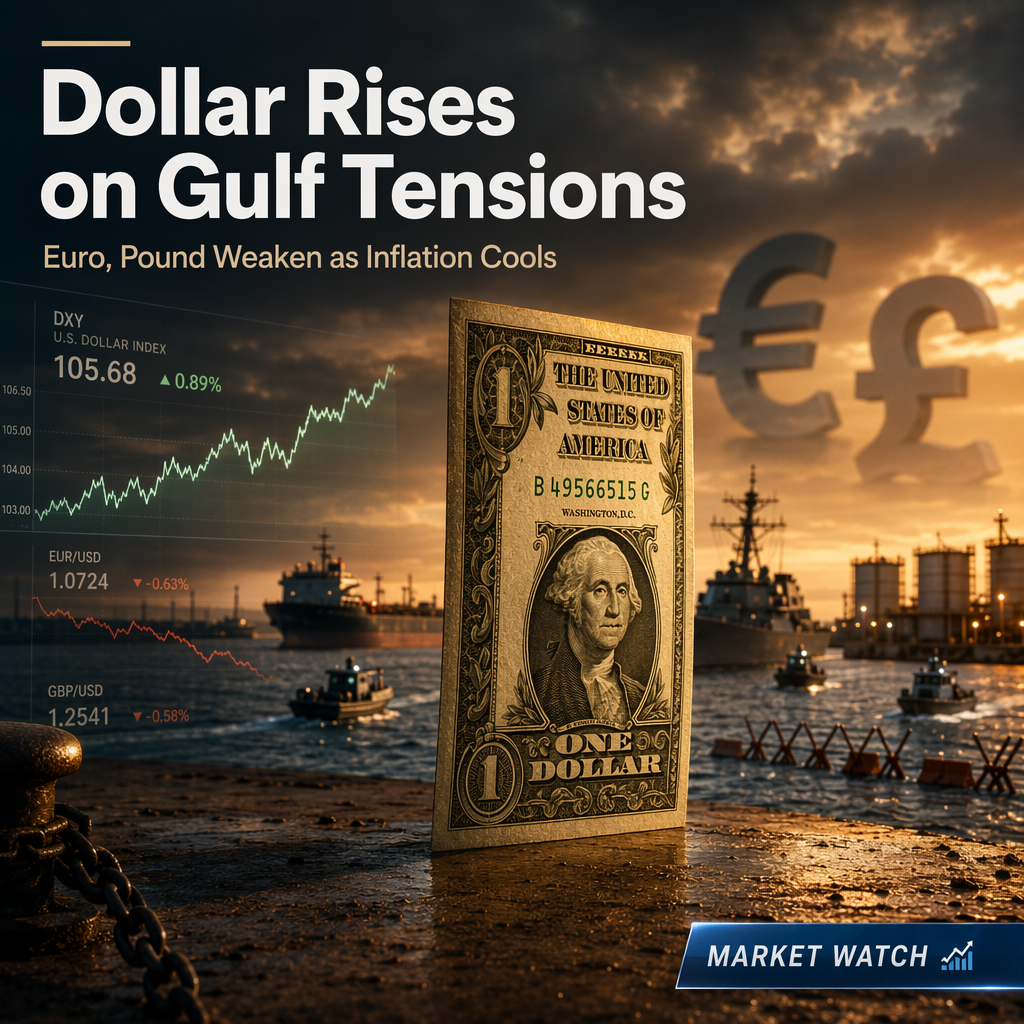
The US Dollar Index (DXY) rose approximately 0.2% toward 101.00, supported by higher US Treasury yields and escalating tensions in the Middle East, particularly between the United States and Iran, as well as a naval blockade announced by Yemen’s Iran-aligned Ansar Allah against Saudi Arabia. These developments have heightened concerns about Gulf and Red Sea shipping, global energy supplies, and regional water infrastructure, contributing to the Greenback's strength. The benchmark 10-year Treasury yield advanced toward 4.60% as higher energy prices revived concerns that inflation could remain elevated. However, recent cooler US inflation figures have reduced expectations of a Federal Reserve rate increase in July, which has limited the US Dollar’s advance [1].
Currency market data showed the US Dollar was strongest against the Swiss Franc, gaining 0.35%, and also posted gains against the Japanese Yen (0.32%), Euro (0.21%), and British Pound (0.11%). Conversely, the US Dollar weakened against the Canadian Dollar by 0.25%. The EUR/USD pair fell around 0.2% toward 1.1410, while GBP/USD declined around 0.1% toward 1.3430, reflecting broad US Dollar demand. Investors are closely watching upcoming European Central Bank data releases, including the Bank Lending Survey and ZEW indicators, with expectations for improved German and Eurozone economic sentiment. ECB policymaker Joachim Nagel is also scheduled to speak. In the UK, attention is on the labor market report, with average earnings excluding bonuses expected to remain at 3.4% for the three months to May [1].
Diplomatic contacts regarding the Middle East tensions remain active, but no concrete ceasefire agreement has been announced. The ongoing geopolitical risks and their impact on energy prices are key factors influencing currency movements and market sentiment [1].
CONCLUSION
The US Dollar strengthened on the back of rising Treasury yields and heightened geopolitical tensions in the Gulf, despite cooler inflation data tempering expectations for a near-term Fed rate hike. The Euro and Pound weakened as investors await key economic data from Europe and the UK. Market sentiment remains cautious, with ongoing attention to both geopolitical developments and central bank signals.