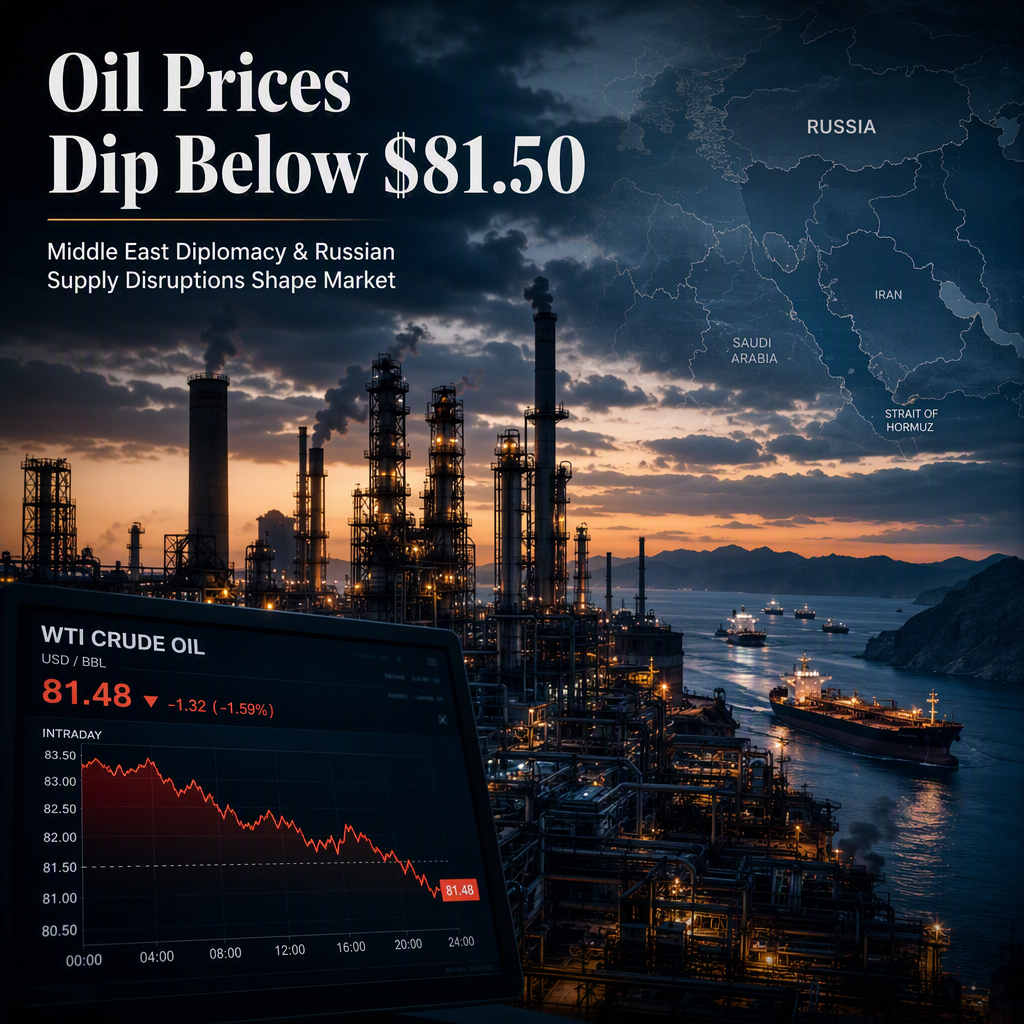
West Texas Intermediate (WTI) oil prices declined after modest gains the previous day, trading around $81.30 per barrel during Asian hours on Thursday [1]. The drop in crude prices was attributed to signs of diplomatic progress in the Middle East, specifically an agreement between Iran and Oman regarding each country’s share of the Strait of Hormuz’s waters and related revenues. However, Tehran indicated that reopening the crucial waterway would require more than just an agreement with Oman [1].
US President Donald Trump stated that 10 million barrels of oil had passed through the Strait of Hormuz on Tuesday and reiterated that mines in the waterway had been cleared [1]. Oil prices also faced downward pressure earlier in the week after new US economic sanctions on Iran were less aggressive than anticipated, as the White House refrained from imposing tougher measures on Iran’s trading partners [1].
Oil prices pared some early losses after official data from the Energy Information Administration (EIA) showed US crude inventories rose by only 95,000 barrels to 428.9 million barrels for the week ended August 21, significantly less than the 597,000-barrel build forecasted by analysts in a Reuters poll [1].
Adding to market tightness, supply disruptions and geopolitical tensions increased in Eastern Europe. Russia’s NORSI refinery, the country’s fourth-largest oil refinery and second-largest gasoline producer, suspended crude processing on Wednesday following a Ukrainian drone strike. Additionally, Bloomberg News reported that Russia is considering escalating ballistic missile strikes on Kyiv and critical infrastructure after peace negotiations stalled [1].
CONCLUSION
WTI oil prices slipped below $81.50 per barrel due to a combination of Middle East diplomatic developments, less severe US sanctions on Iran, and ongoing supply disruptions in Russia. While inventory data provided some support, geopolitical risks continue to influence market sentiment and price volatility.