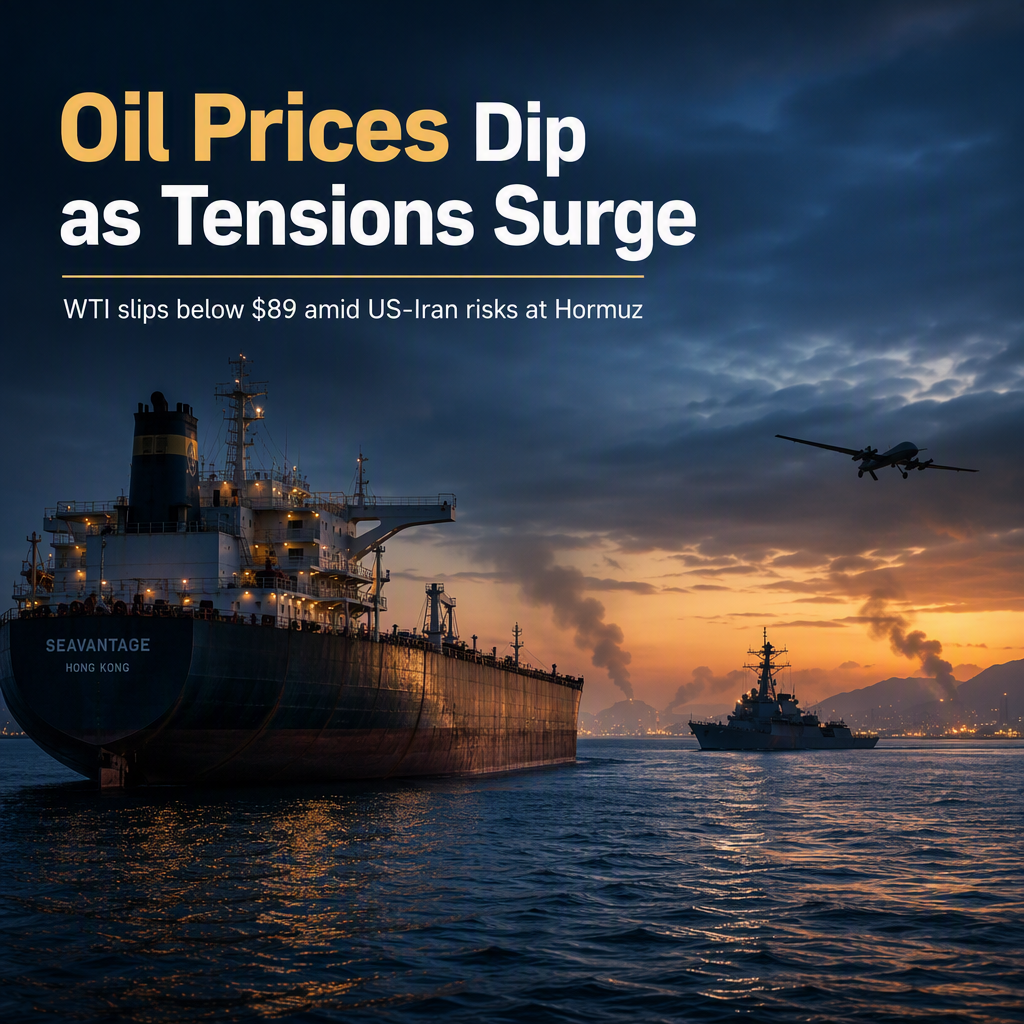
West Texas Intermediate (WTI) futures on NYMEX declined to near $88.65 during the European trading session on Friday, struggling to break above the $90 mark. This price movement comes amid renewed fears of escalating military aggression between the United States and Iran, following recent remarks from US President Donald Trump, who stated that renewed attacks between the two nations would not last 'too long,' but did not rule out the possibility of further military action against Iran [1].
The latest exchange of attacks began last weekend after a period of relative calm, triggered by US Central Command (CENTCOM) striking Iranian rocket launchers that were preparing to deploy mines into the Strait of Hormuz [1]. This has reignited concerns over the security of energy flows through the critical shipping route. Analysts at Deutsche Bank noted that the recent flare-up has led to fresh skepticism about the normalization of energy flows through the Strait of Hormuz, emphasizing ongoing regional supply risks [1].
Strategists at Commerzbank described the situation as 'highly fluid, with little evidence yet of a durable de-escalation' [1]. Similarly, TD Securities analysts highlighted the fragility of any non-concrete deal or short-term de-escalation, stressing that Iran is not backing away from controlling the Strait, which keeps the probability of further escalation high as the US facilitates ship passages through the Omani route [1].
Overall, market experts agree that US-Iran tensions are far from over, and the risk to oil supply through the Strait of Hormuz remains elevated, contributing to the current selling pressure on WTI futures [1].
CONCLUSION
WTI oil prices are under pressure as renewed US-Iran tensions raise concerns about supply disruptions in the Strait of Hormuz. Analysts see little evidence of a lasting de-escalation, suggesting that market volatility and risk premiums may persist in the near term.