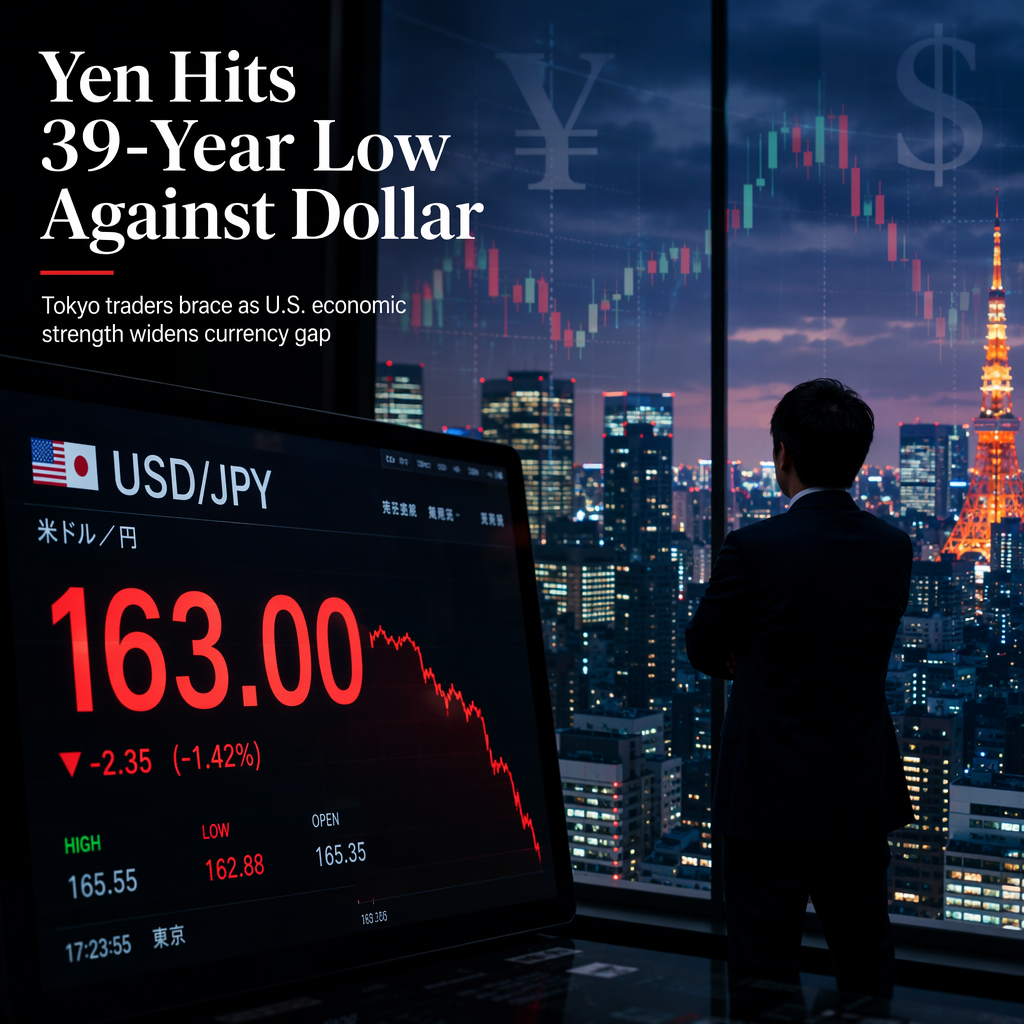
On July 22, 2026, the Japanese yen weakened sharply on the Tokyo foreign exchange market, with the exchange rate temporarily dropping to the 163 yen per U.S. dollar range. This marks the lowest level for the yen in approximately 39 and a half years, dating back to December 1986 [1]. Market participants attribute this significant depreciation to stronger-than-expected U.S. economic indicators, which have heightened expectations for further interest rate hikes in the United States [1].
As a result, the widening interest rate differential between Japan and the United States has prompted increased selling of the yen and buying of the dollar, accelerating the yen's decline [1]. The market is now closely watching future developments in U.S. monetary policy as well as potential responses from the Bank of Japan. There is a growing sense of caution regarding whether the yen's weakening trend will persist [1].
Market voices cited in the article emphasize ongoing vigilance, with attention focused on both American financial policy decisions and the Japanese central bank's actions, as these factors are expected to influence the currency's trajectory going forward [1].
CONCLUSION
The yen's sharp decline to a 39-year low against the dollar reflects market reactions to robust U.S. economic data and expectations of higher U.S. interest rates. Investors remain cautious, closely monitoring future monetary policy moves in both the U.S. and Japan for further direction.