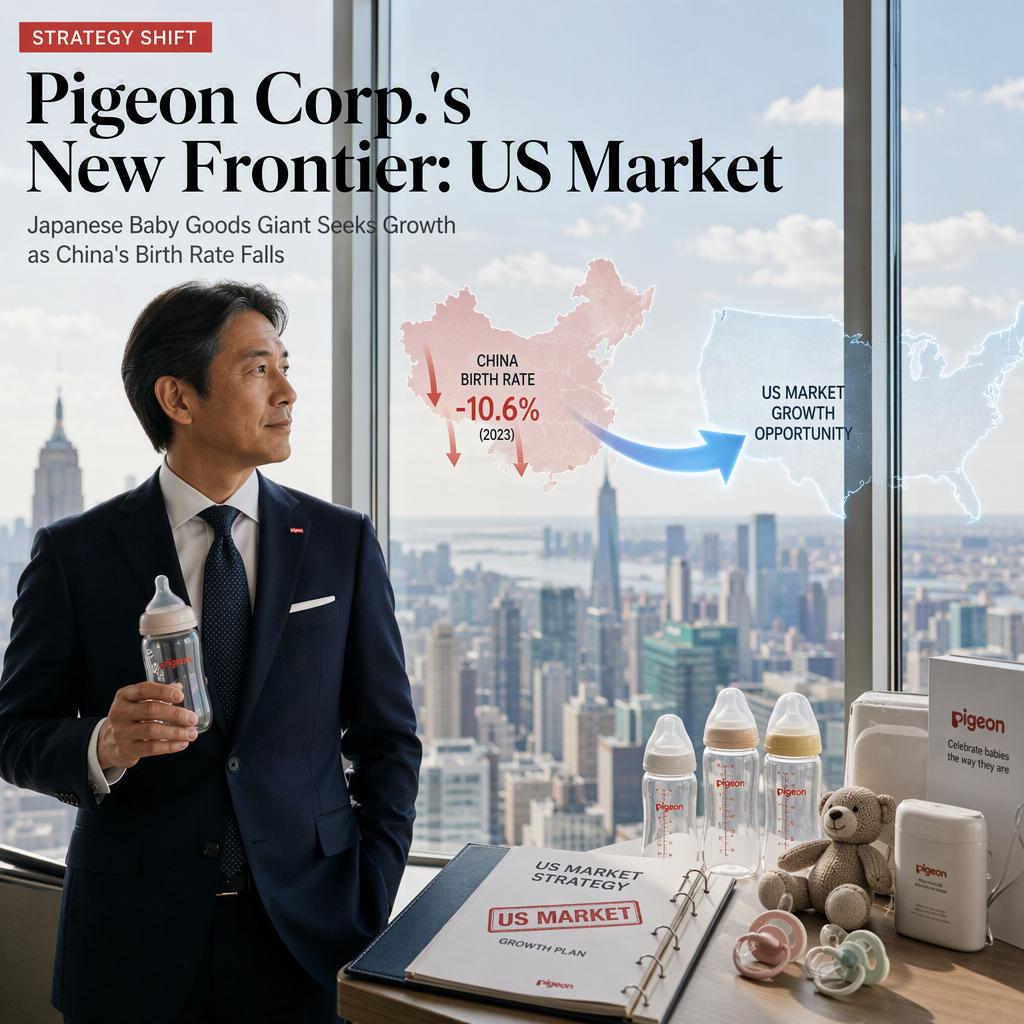
Japan's Pigeon Corp., a leading baby goods manufacturer, is redirecting its growth strategy toward the United States as it faces demographic challenges in China, its largest market [1]. Since entering China in 2002, Pigeon's operating profit from the country has grown to account for more than 60% of its total earnings, underscoring China's critical role in the company's financial performance [1]. However, with China's birth rate hitting a record low, Pigeon is seeking new growth engines to offset the impact of this demographic decline and maintain its growth trajectory [1].
CEO Ryo Yano has identified the US as the 'new China' for Pigeon, citing the American market's stable birth rate and strong demand for premium baby products as key opportunities [1]. To capitalize on this potential, Pigeon is investing in local marketing, forging distribution partnerships, and developing products tailored to American consumers [1]. The company aims to leverage its reputation for quality and scientific research, which has already resonated with parents in Japan and China, to build its brand in the US [1].
This strategic pivot reflects broader challenges faced by Japanese consumer goods companies that have relied heavily on China's once-booming market, as shifting demographics and falling birth rates threaten future earnings [1]. Analysts are expected to closely monitor Pigeon's progress in the US for signs of market share gains and improved financial performance outside China, as the outcome could serve as a bellwether for other Japanese brands confronting similar headwinds [1].
CONCLUSION
Pigeon Corp.'s shift toward the US market highlights the company's proactive response to declining birth rates in China, its largest market. The success of this strategy will be closely watched by analysts and may influence the approach of other Japanese consumer goods companies facing similar demographic challenges.