
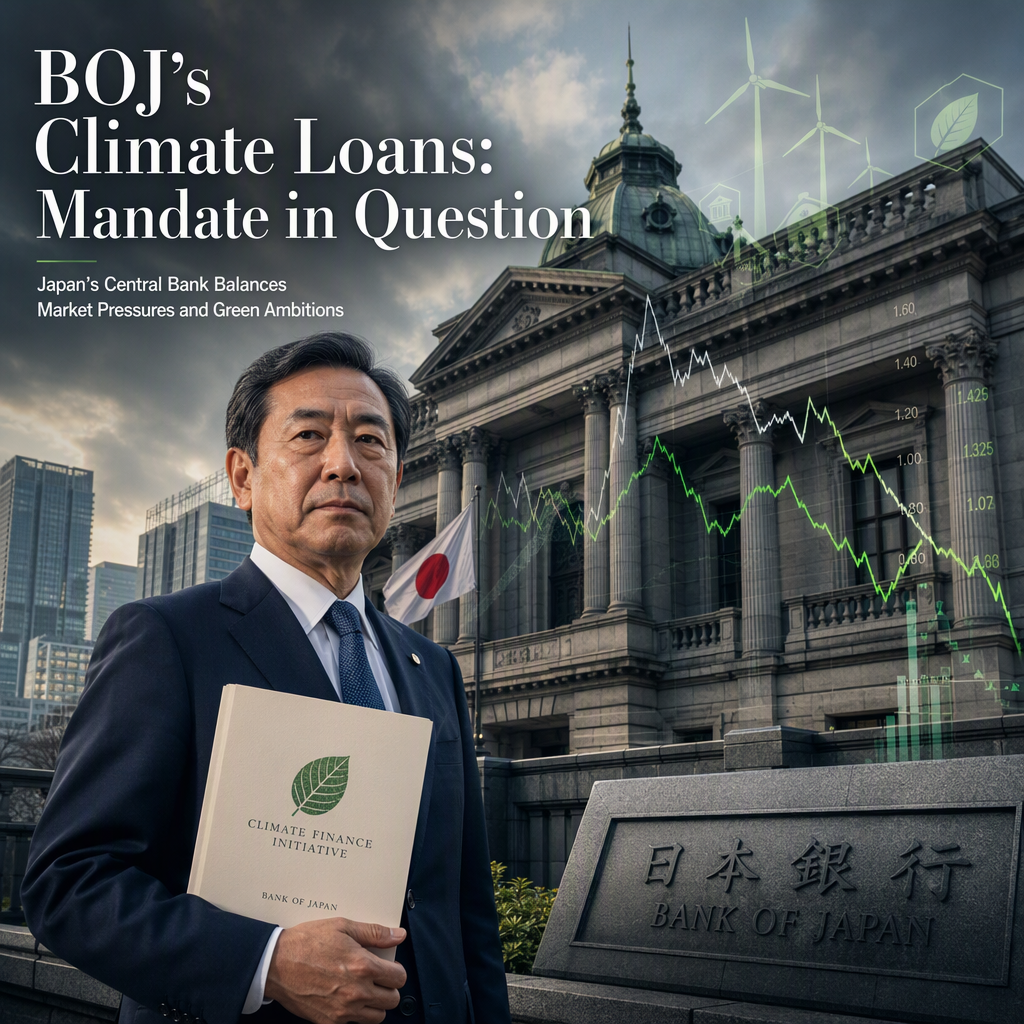
The Bank of Japan (BOJ) is increasing its climate change-linked lending, even as it faces immediate challenges such as the yen's historic weakness and soaring bond yields [1]. This expansion comes amid ongoing debate regarding the appropriate role of central banks in supporting efforts to tackle global warming, with some stakeholders calling for more proactive measures while others caution against overstepping traditional mandates focused on price stability and economic growth [1].
The BOJ's actions are being closely watched by investors and policymakers, especially as other central banks worldwide grapple with similar questions about the extent of their support for climate-related initiatives [1]. The demands for stricter criteria on green lending highlight the tension between environmental objectives and the core responsibilities of central banks [1].
The timing of the BOJ's expansion of climate-related loans is notable, as it coincides with pressures from currency markets and rising yields, placing the central bank in a delicate position as it seeks to balance its policy objectives with growing expectations to address climate risks [1]. Key financial data, market analysis, and technical insights on the BOJ's climate-linked lending programs, as well as the criteria for green loans and their potential impact on broader financial stability and market sentiment, are being closely monitored [1].
CONCLUSION
The Bank of Japan's move to expand climate-linked lending reflects a growing focus on environmental risks within central banking, even as it navigates significant market pressures. Investors and policymakers are closely observing the BOJ's approach, given its potential implications for financial stability and the evolving debate over central bank mandates. The market impact is medium, with sentiment slightly positive due to increased attention on climate initiatives.