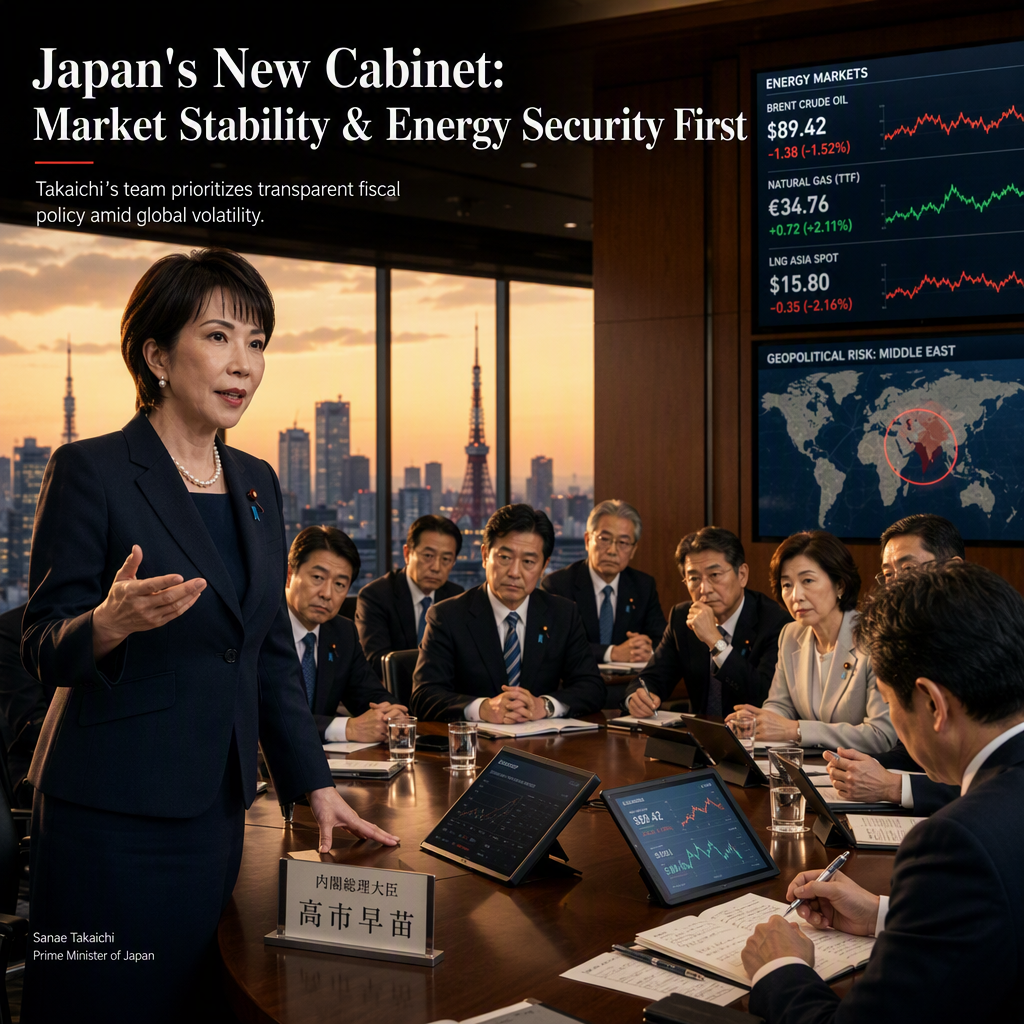
Japanese Prime Minister Sanae Takaichi has instructed her newly reshuffled cabinet to intensify efforts in engaging with financial markets and addressing energy procurement challenges, particularly in light of rising tensions and uncertainties in the Middle East that could affect global energy prices and Japan's market stability [1]. Following the cabinet reshuffling on September 17, Takaichi emphasized the need for 'transparent and consistent' communication regarding fiscal policy, underscoring the importance of clear messaging to market participants [1].
The Prime Minister's directives include maintaining stability and predictability in fiscal policy, with a focus on monitoring market reactions closely and keeping open channels with financial stakeholders to bolster confidence in Japan's fiscal and economic management [1]. Takaichi stated, "Our cabinet must communicate transparently and consistently with financial markets," highlighting the administration's commitment to investor confidence and safeguarding Japan’s economic interests amid global volatility [1].
The new cabinet is expected to prioritize fiscal discipline and energy security, with ministers urged to implement policies that support market stability and address energy-related risks [1]. While no specific trading advice or technical chart analysis was provided, Takaichi's instructions signal a market-sensitive approach, with increased attention to price levels and energy procurement issues [1].
CONCLUSION
Prime Minister Takaichi's call for transparent fiscal communication and heightened focus on energy security reflects a proactive stance toward market stability amid global uncertainties. The cabinet's market-sensitive approach is expected to support investor confidence and address risks related to energy procurement. Overall, the reshuffle signals medium market impact, with a cautiously positive sentiment for Japan's economic outlook.