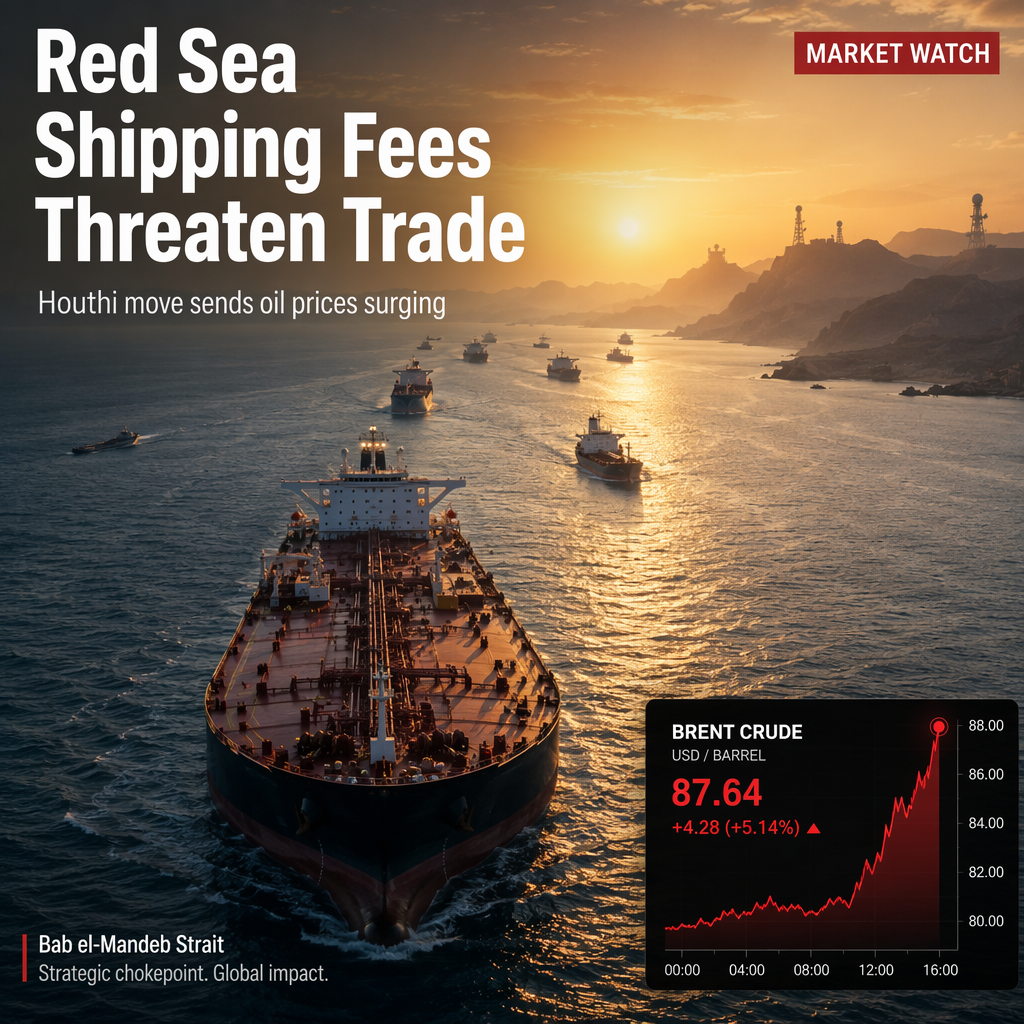
Yemen’s Iran-backed Houthi rebels are reportedly considering the introduction of fees for commercial ships passing through the southern Red Sea, according to a Reuters report cited by FXStreet on Wednesday [1]. This potential move follows the Houthis' declaration of a naval blockade on Saudi Arabia just one week prior [1]. Houthi officials are said to be evaluating the imposition of fees on most maritime traffic traversing the Bab el-Mandeb strait, a critical gateway connecting the southern Red Sea with the Gulf of Aden [1]. No specific timeline for the implementation of these fees has been provided at this stage [1].
The stated objectives behind the proposed fees are to normalize the practice of charging for passage through international waterways and to increase pressure on the United States [1]. The news has had an immediate impact on energy markets, with crude oil prices attracting buyers following the headlines [1]. At the time of reporting, West Texas Intermediate (WTI) crude oil was up 6.33% on the day, trading at $83.32 per barrel [1].
The Bab el-Mandeb strait is a strategic chokepoint for global shipping, and any disruption or additional cost imposed on vessels passing through could have significant implications for international trade and energy markets [1]. The market reaction, as evidenced by the sharp rise in WTI prices, reflects concerns over potential supply disruptions and increased shipping costs [1].
No forward-looking statements or analyst opinions were provided in the article regarding the likelihood of the fees being implemented or their potential long-term impact [1].
CONCLUSION
The Houthis' consideration of fees for ships in the Red Sea has already triggered a notable increase in oil prices, highlighting market sensitivity to geopolitical developments in key shipping lanes. While no implementation timeline has been set, the situation remains fluid and could further impact global energy markets if the proposed measures are enacted.