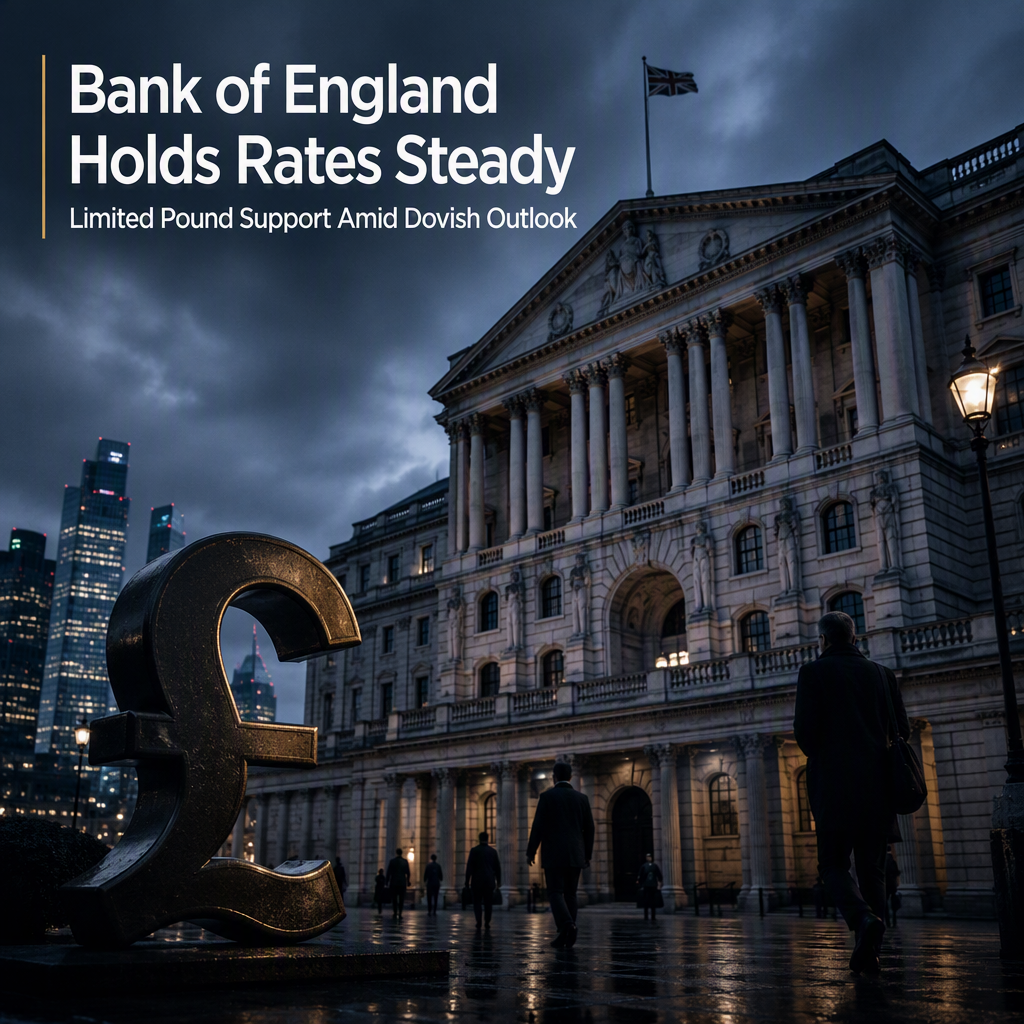
The Bank of England (BoE) decided to keep interest rates unchanged, with the Monetary Policy Committee voting 6–3 in favor of holding rates steady. Notably, the vote was closer than anticipated, as three members, including Catherine Mann—who is noted for her volatile voting record—supported a rate hike [1]. Despite the closer vote, the BoE refrained from signaling any future rate increases. Governor Andrew Bailey emphasized during the press conference that 'no one should leave this room thinking that the BoE is edging towards a hike' [1].
Commerzbank’s Michael Pfister highlighted that the BoE is likely to delay any rate hikes for as long as possible. Furthermore, policymakers indicated that if the conflict in the Middle East were to end, the focus could quickly shift back to rate cuts [1]. This stance suggests that the British Pound is receiving limited support from monetary policy, as expectations for rate hikes have been further reduced following the decision [1].
Market participants have already priced out a few basis points of rate hike expectations, but there remains significant room for further adjustments. The overall implication is that those hoping for monetary policy to bolster the pound may be disappointed, given the BoE’s cautious and potentially dovish outlook [1].
CONCLUSION
The Bank of England’s decision to keep rates unchanged, combined with its reluctance to signal future hikes, has left the British Pound with limited policy support. Market expectations for rate hikes have diminished, and the outlook remains cautious, with the possibility of rate cuts returning to focus if geopolitical tensions ease.