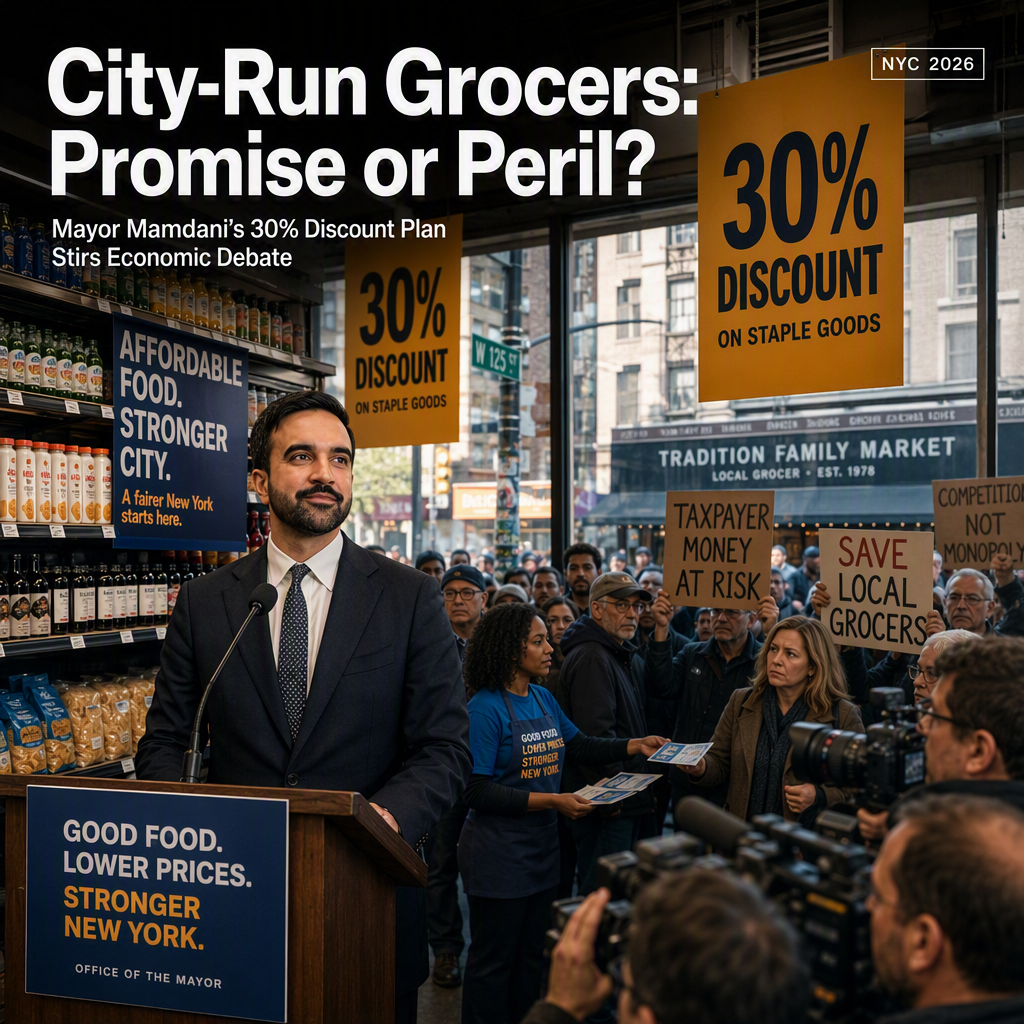
On July 27, 2026, New York City Mayor Zohran Mamdani announced a new initiative to open city-run grocery stores that will offer 'essential' products at a 30% discount compared to private grocery retailers [1]. The announcement was made during a press conference, where Mamdani emphasized the goal of making groceries more affordable for New Yorkers [1].
The plan has drawn sharp criticism from experts, who argue that the grocery industry operates on razor-thin profit margins of approximately 2%, making a 30% discount financially unsustainable without significant taxpayer subsidies [1]. The article notes that even if the city-run stores were managed as efficiently as leading private chains like Aldi or Walmart, the city would still lose at least 28 cents on every dollar of sales, with the expectation that actual losses could be even higher due to less efficient government management [1].
Critics warn that these losses would ultimately be covered by taxpayers, who already face some of the highest tax rates in the nation [1]. There are also concerns that the city-run stores, benefiting from property tax exemptions and unlimited subsidies, would undercut private grocers, potentially driving them out of business or discouraging new store openings [1]. The article raises additional questions about the potential for abuse, such as individuals purchasing discounted groceries for resale, and the challenges of enforcing purchase limits without discriminatory practices [1].
Drawing parallels to New York's city-run transit system (MTA), which reportedly loses $11.7 billion a year and requires substantial taxpayer subsidies, the article suggests that the grocery plan could become a similar financial burden [1]. If losses mount and taxpayers grow weary of subsidizing the program, there may be calls to cut subsidies, which could lead to reduced quality or availability of products in the city-run stores [1].
CONCLUSION
Mayor Mamdani's city-run grocery initiative aims to make essential products more affordable but faces significant criticism over its financial viability and potential impact on private grocers. Experts warn that the plan could result in substantial taxpayer losses and market disruption, drawing comparisons to other heavily subsidized city-run enterprises. The market takeaway is one of skepticism and concern regarding the sustainability and broader economic implications of the proposal.