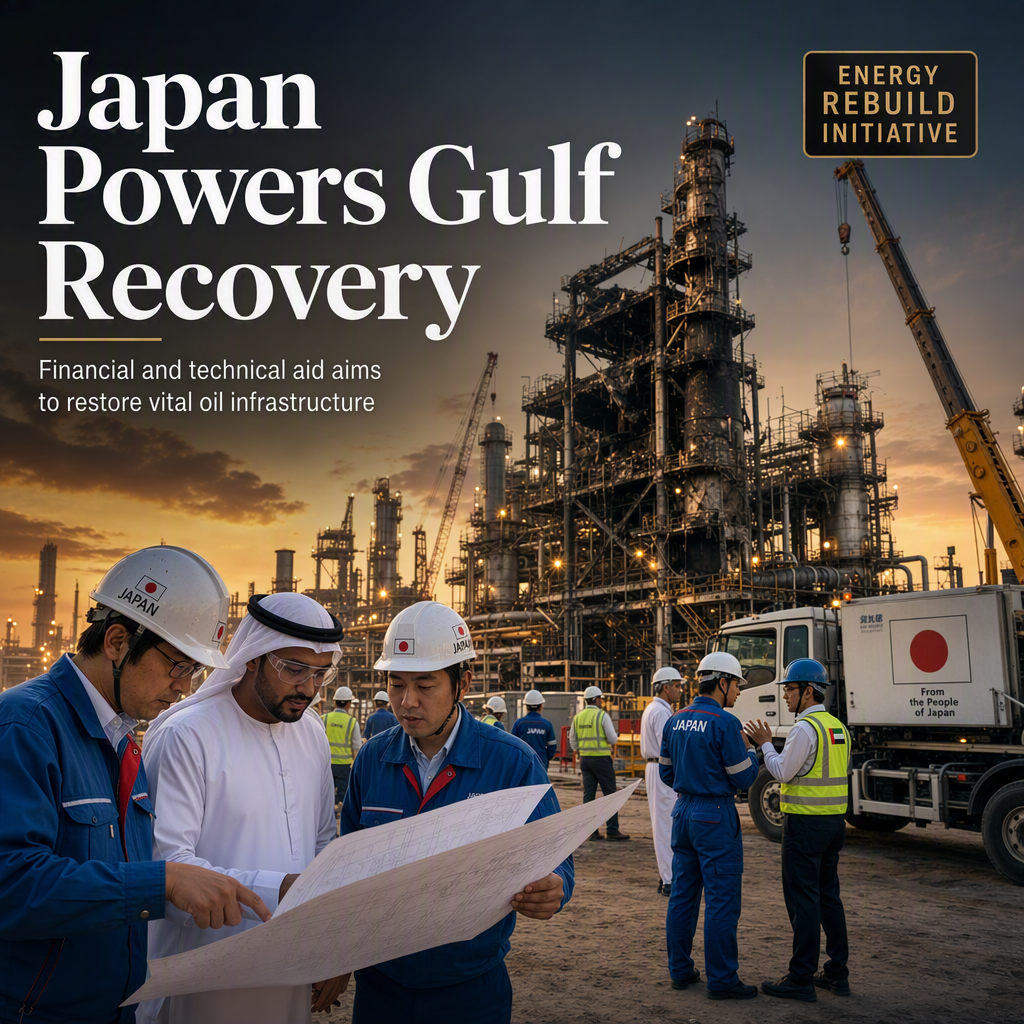
Japan has announced plans to provide financial and technical support to Persian Gulf countries as they begin to rebuild infrastructure damaged during the U.S.-Iran war, with a particular focus on restoring petroleum production facilities in the United Arab Emirates that were affected by the conflict [1]. The Japanese government is expected to prioritize assistance for the reconstruction of oil and power facilities, which are considered essential for the global energy supply chain [1].
This initiative is driven by Japan's need to safeguard its own energy security, given its significant dependence on Middle Eastern oil imports [1]. The support may encompass the rebuilding of damaged refineries, pipelines, and electrical grids in Gulf nations impacted by the war [1]. The move comes amid heightened concerns over disruptions to energy supplies and increased volatility in global oil markets, which have been exacerbated by repeated attacks on infrastructure during the conflict [1].
No specific financial figures or timelines for the support have been disclosed at this stage. The Japanese government is currently coordinating with local authorities and international partners to assess the scale of investment and technical expertise required for the recovery efforts [1]. A government official stated, "Japan is committed to supporting the recovery of critical infrastructure in the Gulf to help stabilize the energy market and promote regional resilience" [1].
Market analysts cited in the article suggest that prompt Japanese support could help mitigate upward pressure on oil prices and reduce the risk of further supply shocks, provided that reconstruction efforts proceed efficiently [1].
CONCLUSION
Japan's commitment to supporting infrastructure recovery in Gulf nations is aimed at stabilizing the energy market and ensuring steady oil supplies. While no financial details or timelines have been released, analysts believe that timely Japanese involvement could help ease oil price volatility and supply risks.