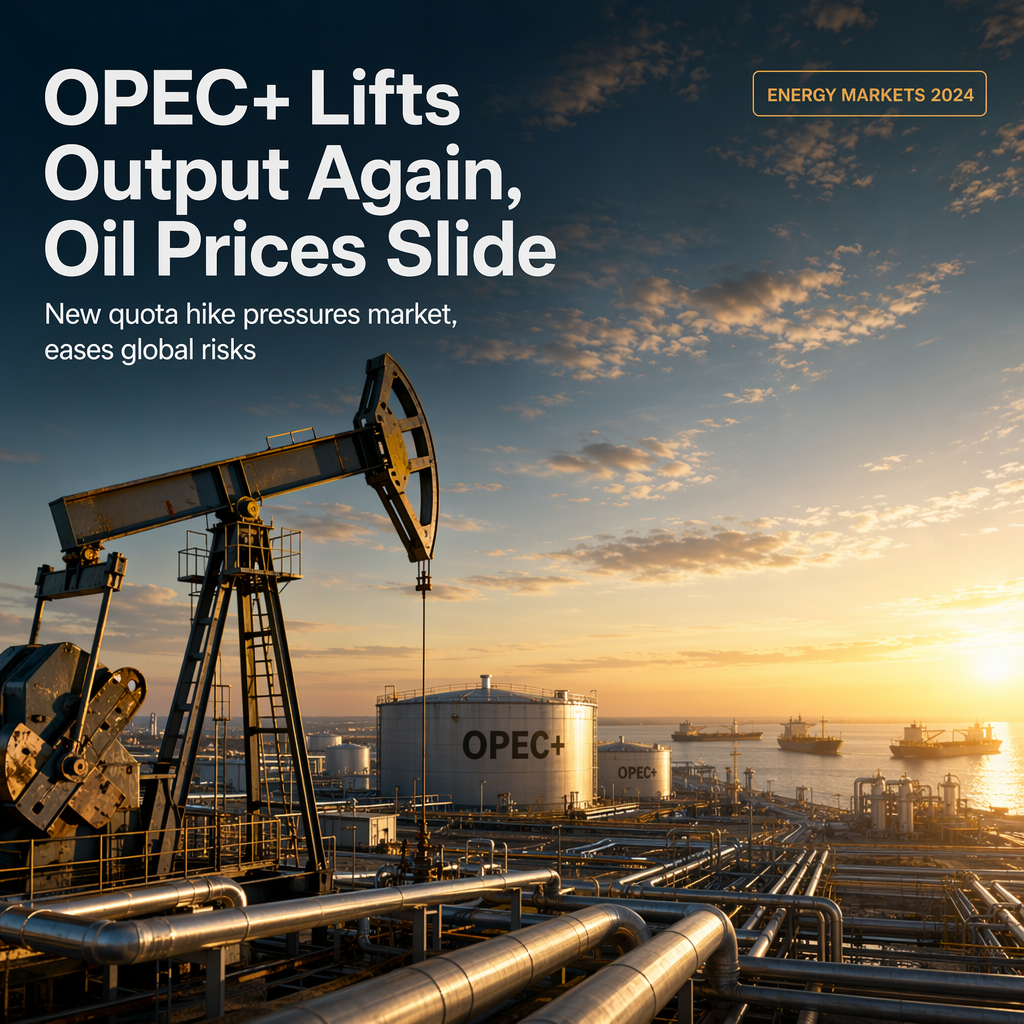
OPEC+ has ratified an additional production quota increase of 188,000 barrels per day (bpd) for August, continuing its strategy of gradual supply normalization and exerting further downward pressure on both Brent and WTI crude prices [1]. This latest adjustment extends the phased unwinding of production curbs that were initially implemented a few years ago, bringing the total quota increase since the onset of the war to 940,000 bpd, which is nearly 1% of global oil demand [1]. The decision coincides with Gulf exporters restoring shipments following an interim peace pact, contributing to a sharp decline in Brent prices from wartime highs to approximately $72 per barrel [1].
According to BNY’s Geoff Yu, if these lower oil prices persist, they could alleviate a significant macroeconomic headwind for risk assets and bolster expectations that major central banks will lean toward easier monetary policy rather than renewed tightening [1]. The OPEC+ alliance, however, now faces challenges related to maintaining unity, defending market share, and mitigating the risk of a future global supply glut [1].
No specific market reactions or analyst forecasts beyond these points are provided in the source article.
CONCLUSION
OPEC+'s decision to increase production quotas is adding to the downward pressure on oil prices, which could ease macroeconomic risks and influence central banks toward more accommodative policies. However, the alliance must navigate internal pressures and the potential for oversupply in the global market.