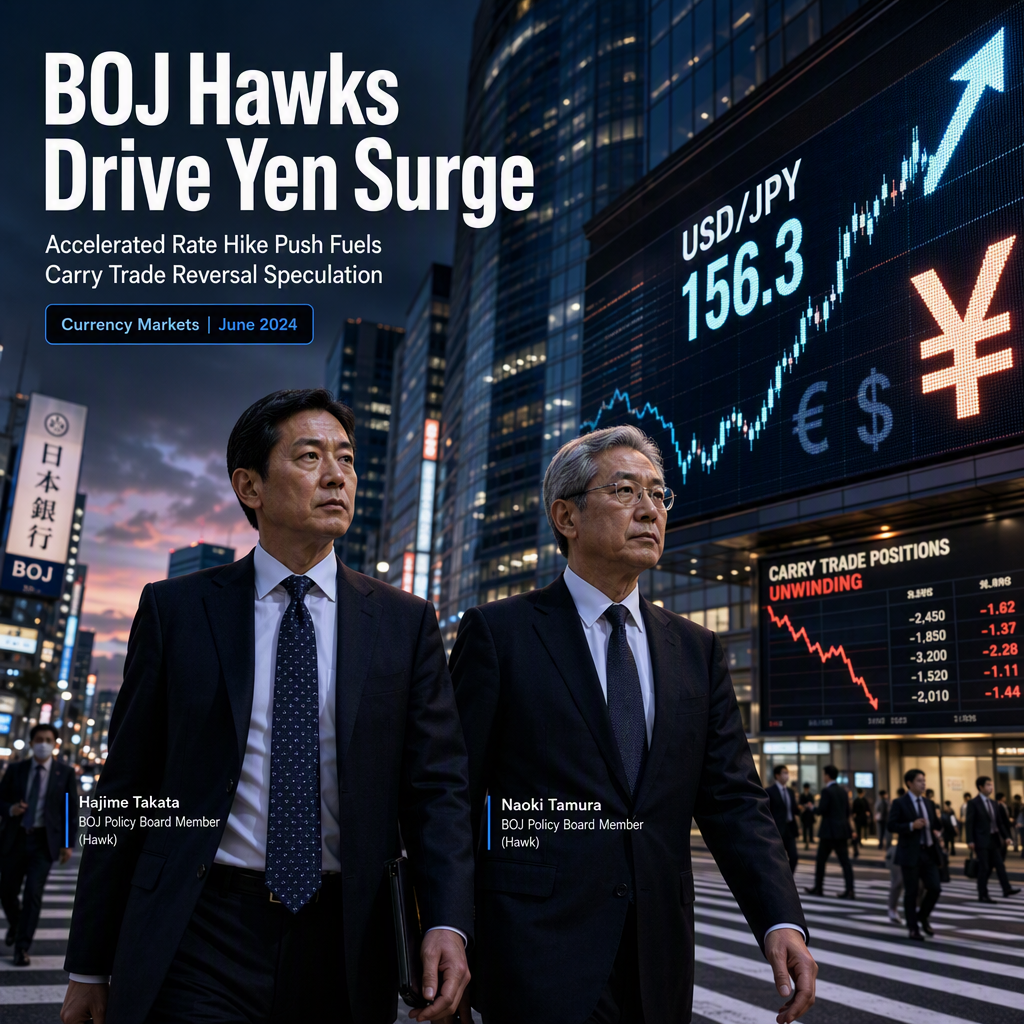
Two hawkish members of the Bank of Japan's (BOJ) monetary policy board, Hajime Takata and Naoki Tamura, are intensifying their calls for accelerated interest rate hikes as their terms approach expiration in July 2027 [1]. Both have publicly highlighted the risks of persistent inflation and are urging the BOJ to move more quickly in normalizing its ultra-loose monetary policy [1]. This push comes amid speculation that Prime Minister may favor dovish candidates for their replacements, increasing the urgency for these hawks to influence policy before their departure [1].
Market expectations for further BOJ tightening have contributed to a notable appreciation of the yen, which recently reached a one-month high of 155 to the US dollar, with trading observed in the 155-157 range and a specific level of 156.3 reported on Friday afternoon [1][2]. This strengthening has fueled speculation about a potential reversal of the carry trade, where investors had previously borrowed yen to invest in higher-yielding currencies [2]. Technical analysts are closely monitoring the yen for breakout moves, with resistance and support levels identified between 155 and 158 to the dollar [1][2].
The BOJ has kept rate hikes on the table for every meeting, including the upcoming one this month, and market participants are closely watching for further signals [1][2]. Rising Japanese yields are beginning to impact the US market and influence global capital flows, while Japanese banks are reconsidering mortgage strategies in response to higher rates [1]. Additionally, Japan's pension fund activities are under scrutiny, with a rare August meeting increasing the likelihood of increased yen asset buying [2].
Market sentiment is shifting towards expecting further rate hikes, and any hint of accelerated BOJ action could prompt additional yen buying, especially from large institutional investors such as pension funds [2]. The sharp appreciation in the yen and speculation around BOJ policy actions have heightened expectations for increased volatility in the currency markets, particularly regarding the potential unwinding of yen-funded carry trades [2].
CONCLUSION
The BOJ's hawkish board members are intensifying their push for faster rate hikes, contributing to a surge in the yen and speculation about a reversal of the carry trade. Market participants are closely watching upcoming BOJ meetings and policy signals, with expectations for increased volatility and further yen strength if aggressive tightening materializes.