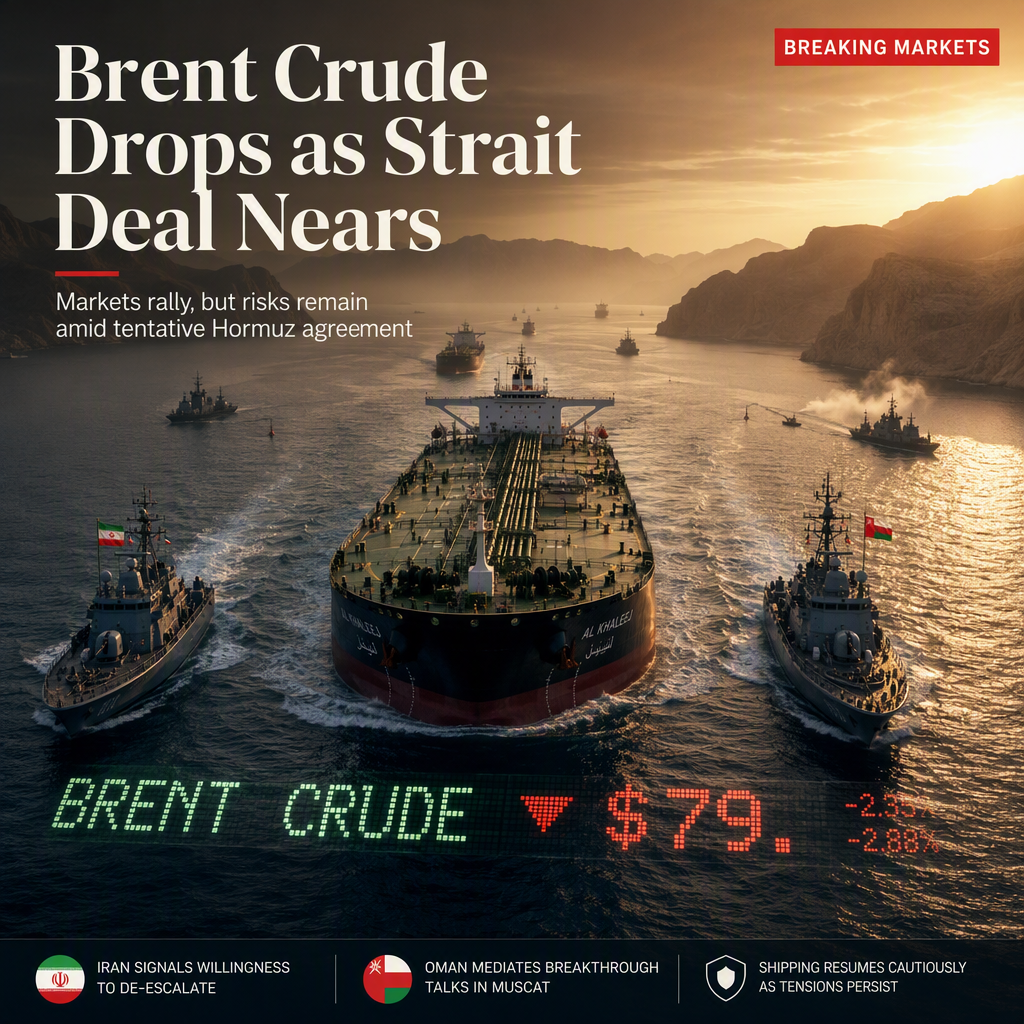
Brent crude oil futures declined to approximately $79 per barrel following reports that the United States, Iran, and Oman are close to reaching a temporary agreement to reopen the Strait of Hormuz, according to Rabobank’s Global Daily note [1]. The structure of this proposed 60-day arrangement is said to resemble a previous deal that ultimately collapsed after renewed attacks on shipping vessels, highlighting ongoing risks and uncertainties in the region [1].
The reported deal, as cited by Axios and referenced by Rabobank, would establish an inbound shipping route through Iranian waters and an outbound route via Oman, while all parties work to clear mines from the central part of the strait. Notably, no tolls or fees would be charged during the 60-day period covered by the agreement [1]. This arrangement is designed to prevent further escalation in the region, but Rabobank notes that it does not address the underlying issues permanently [1].
Market reactions to the news were immediate: Brent futures dropped to $79 per barrel, and equity markets responded positively, with the S&P 500 reaching a new record high [1]. Rabobank analysts caution, however, that the deal remains tentative and could be derailed by further attacks or political developments. The bank also suggests that President Trump may soon face a choice between accepting a deal on Iran’s terms or escalating tensions, which could lead to renewed volatility in the coming weeks [1].
CONCLUSION
Brent crude prices fell and equity markets rallied on hopes of a temporary deal to reopen the Strait of Hormuz, but Rabobank warns that significant risks remain. The 60-day agreement offers only a short-term solution, and the potential for renewed escalation continues to cast uncertainty over oil markets.