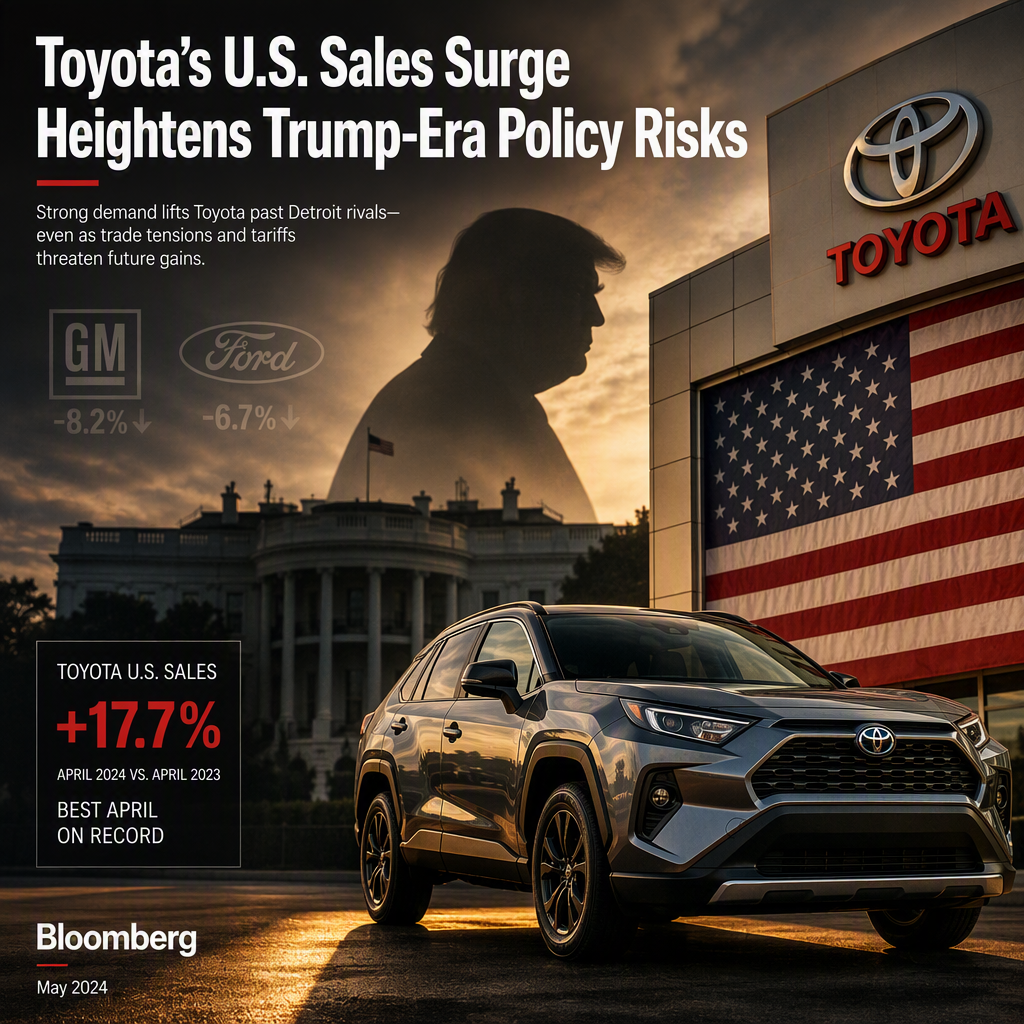
Toyota Motor has increased its U.S. sales volume for the April-June quarter, setting it apart from competitors General Motors (GM) and Ford, both of which experienced declines in the same period [1]. This growing reliance on the U.S. market has made Toyota's earnings more sensitive to American policy changes, particularly under President Donald Trump [1].
A key risk highlighted is the potential for changes to the United States-Mexico-Canada Agreement (USMCA), which could add $1,200 in costs per vehicle for Toyota [1]. The article notes that Toyota's exposure to the U.S. market makes it vulnerable to tariffs or regulatory changes that may target imported vehicles or foreign automakers [1].
No specific market reactions, analyst opinions, or forward-looking statements beyond the risks associated with U.S. policy shifts were provided in the article [1].
CONCLUSION
Toyota's increased U.S. sales have strengthened its earnings but also heightened its vulnerability to policy changes under President Trump. The potential for higher costs due to USMCA renegotiations or new tariffs poses a significant risk to the automaker's profitability.