
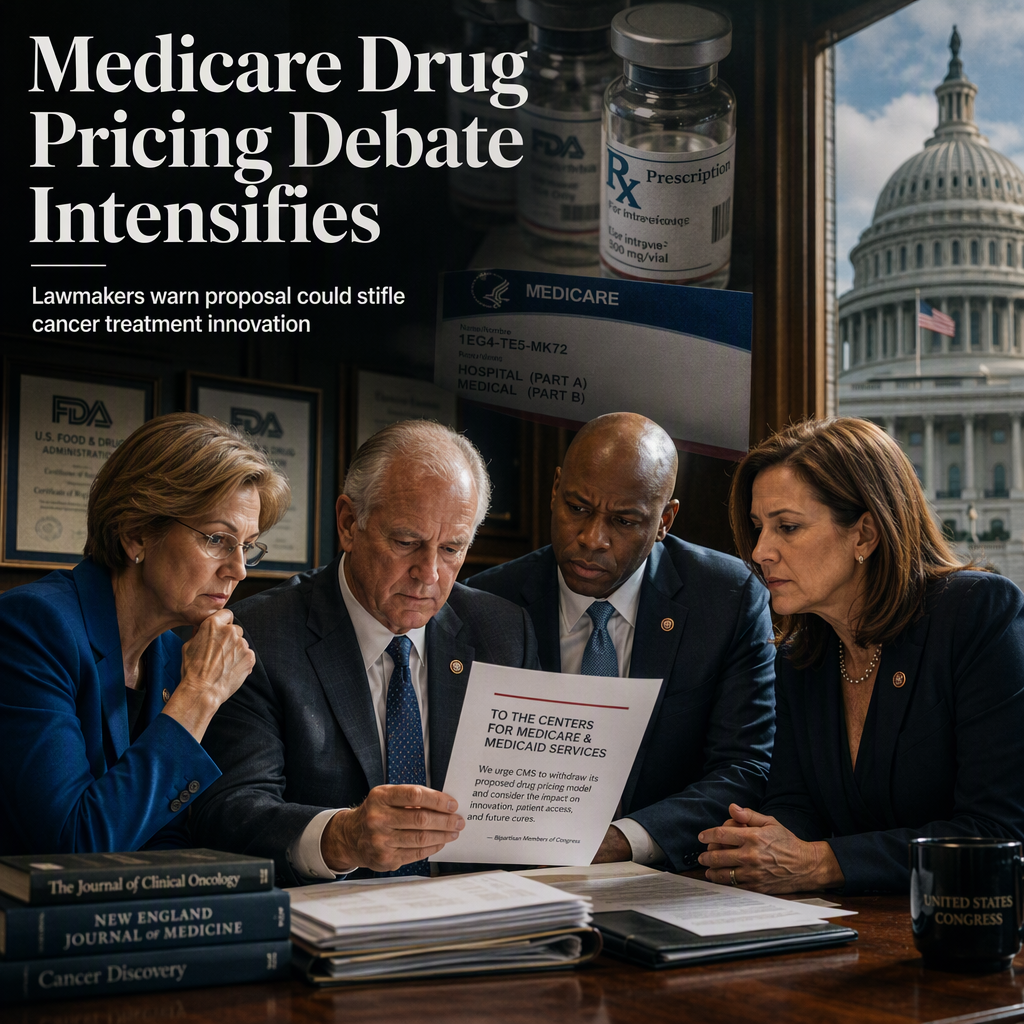
A bipartisan group of more than 50 lawmakers has called on the Centers for Medicare & Medicaid Services (CMS) to withdraw a proposed fixed-dose combination policy tied to the Medicare Drug Price Negotiation Program, which was created under the Inflation Reduction Act signed into law by President Joe Biden in 2022 [1]. The Trump administration introduced the policy in June as part of the program's implementation [1].
The lawmakers, in a letter dated September 21, argued that the proposal could discourage the development of improved cancer treatments by subjecting newer versions of existing drugs to Medicare price negotiations much sooner after Food and Drug Administration (FDA) approval [1]. They contend that this would reduce incentives for drugmakers to innovate and could harm patient access to advanced therapies, particularly those that make treatment faster and more accessible, such as new cancer immunotherapies that allow for quick injections instead of lengthy infusions [1].
CMS, on the other hand, stated that the proposal aims to prevent drugmakers from circumventing or delaying negotiated Medicare prices by making only limited changes to existing drugs and introducing them as new products [1]. The lawmakers countered that the FDA already treats these therapies as separate medicines, requiring distinct clinical trials and approvals, and argued that CMS should do the same under the negotiation program [1].
Additionally, the lawmakers noted that CMS actuaries have not demonstrated that the policy would result in meaningful savings for taxpayers [1]. They urged CMS to remove the fixed-dose combination proposal from the final rule, emphasizing the need for policies that expand access to lifesaving care and reward medical innovation [1].
CONCLUSION
The bipartisan pushback highlights significant concerns that the proposed CMS policy could stifle innovation and limit patient access to advanced therapies, with lawmakers urging its withdrawal. The outcome of this debate could impact future incentives for drug development and the structure of Medicare drug pricing.