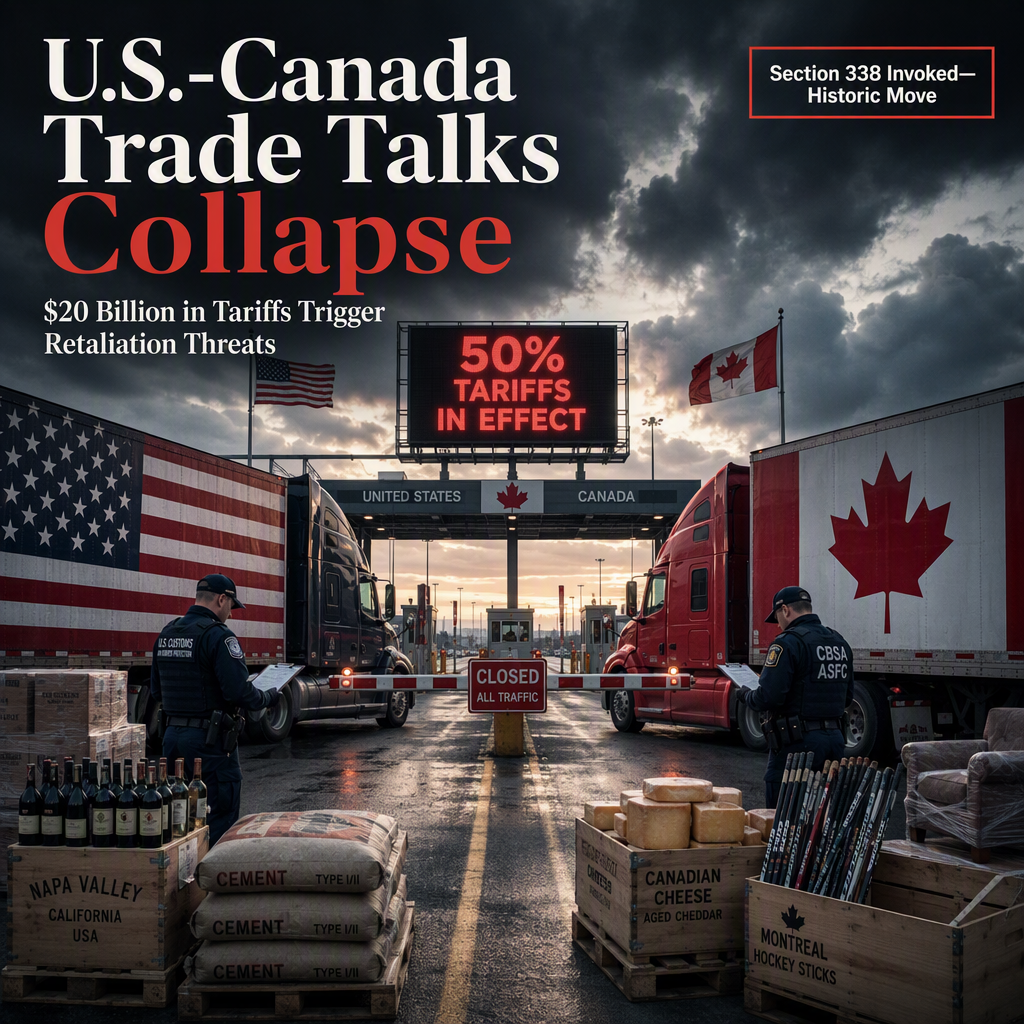
On August 22, 2026, trade negotiations between the United States and Canada collapsed, resulting in the imposition of new tariffs by the Trump administration on approximately $20 billion worth of Canadian imports. The affected goods include wine, furniture, dairy products, cement, clothing, fishing rods, and hockey equipment [1]. The tariffs, set at 50%, were enacted under Section 338 of the Tariff Act of 1930, a provision not used since 1949, following accusations of trade discrimination against U.S. products and industries such as motor vehicles, alcohol, and dairy [1].
Canadian Prime Minister Mark Carney responded by vowing to retaliate 'dollar for dollar' against the U.S. tariffs, emphasizing that last-minute changes in the U.S. proposed terms were 'unfair, uneconomic, and called into question the reliability of any deal.' Carney stated that despite progress in negotiations, the outcome did not meet Canadian objectives [1]. U.S. Trade Representative Jamieson Greer claimed that Canada declined to finalize the deal under terms agreed earlier in the week, despite the U.S. offering significant tariff reductions on steel, aluminum, autos, and lumber. Greer also accused Canada of maintaining prolonged retaliation, including prohibitions on certain American goods and services [1].
The breakdown in talks and subsequent tariffs add further strain to the already tense U.S.-Canada relationship, which had been complicated by ongoing negotiations regarding the trilateral USMCA trade pact with Mexico [1]. Market implications are significant, given the scale of affected goods and the potential for reciprocal tariffs, which could disrupt supply chains and impact industries on both sides of the border [1].
No forward-looking statements or analyst opinions were provided in the article, but the explicit threat of Canadian retaliation and the historic use of Section 338 suggest heightened uncertainty and volatility in cross-border trade relations [1].
CONCLUSION
The collapse of U.S.-Canada trade talks has resulted in the immediate imposition of substantial tariffs and promises of reciprocal action from Canada. With $20 billion in goods affected and both sides blaming each other, the event signals a sharp escalation in trade tensions and poses significant risks to industries and supply chains in both countries.