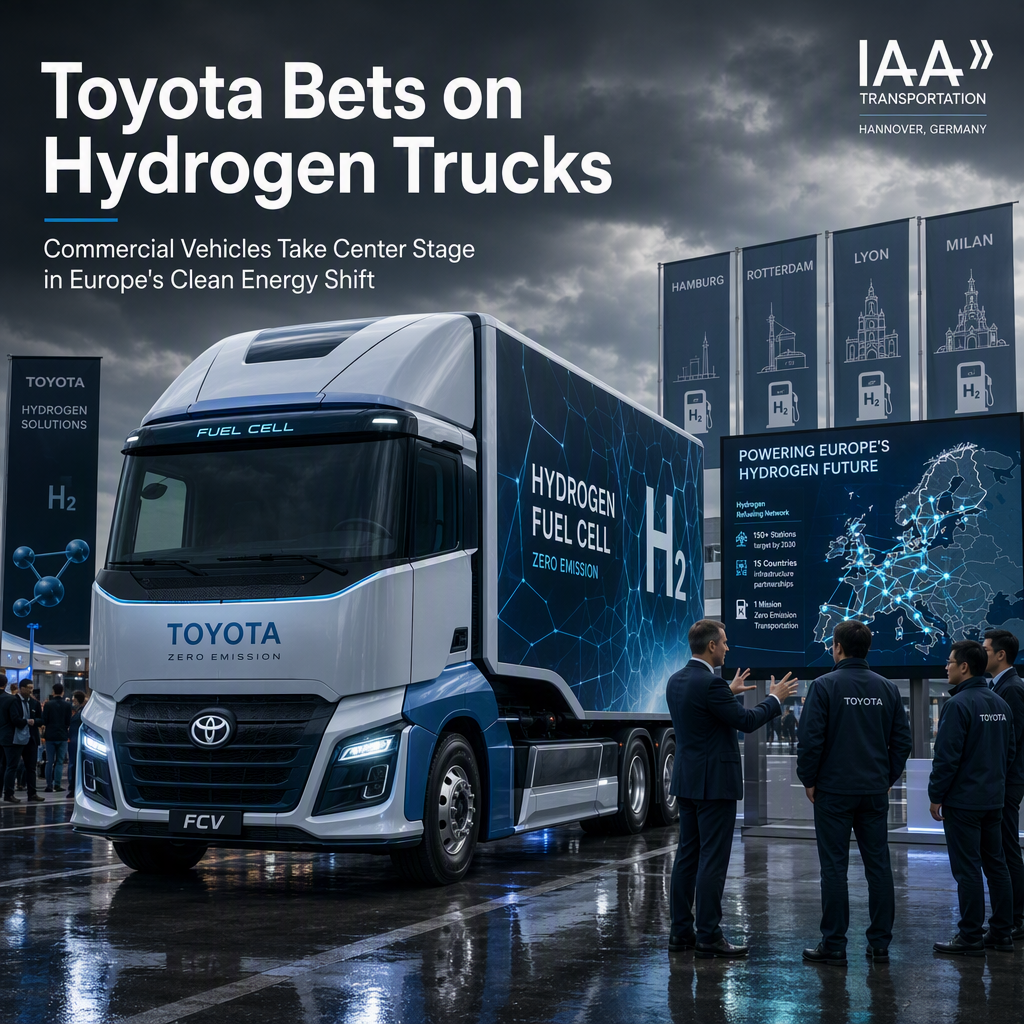
Toyota Motor showcased its updated hydrogen fuel cell vehicle strategy at the IAA Transportation 2026 trade show in Hanover, Germany, with a particular emphasis on commercial vehicles such as trucks and fleets [1]. The automaker presented a prototype hydrogen fuel cell Hilux pickup truck, signaling a strategic pivot away from passenger vehicles, which have seen slower adoption rates than anticipated due to high hydrogen prices, limited refueling infrastructure, and a negative feedback loop affecting the broader industry [1].
Toyota's new approach targets logistics companies and fleet operators, aiming to drive higher volume usage of hydrogen vehicles. The company believes that commercial vehicles, especially trucks with higher mileage and operational demands, are better positioned to benefit from hydrogen fuel cell technology [1]. By increasing commercial vehicle uptake, Toyota hopes to reduce hydrogen costs and stimulate investment in refueling infrastructure, potentially paving the way for passenger vehicle adoption in the future [1].
At the event, Toyota executives called for collaborative efforts between industry stakeholders and government bodies to improve hydrogen infrastructure and lower costs. A spokesperson stated, "We see commercial vehicles as the key to unlocking the hydrogen ecosystem in Europe. If we can demonstrate reliability and cost-effectiveness at scale, passenger vehicles may follow" [1].
While the article did not provide specific financial figures, investment levels, or projected market volumes, it noted that Toyota's strategy aligns with broader market analysis identifying commercial fleets as a primary driver for hydrogen adoption in the near term. The company is also closely monitoring regulatory developments and incentive programs in Europe that could support this transition [1]. Market sentiment is cautiously optimistic, with Toyota focusing on leveraging commercial vehicle demand to overcome current hydrogen cost barriers [1].
CONCLUSION
Toyota's strategic shift toward commercial hydrogen vehicles in Europe reflects a pragmatic response to industry challenges, aiming to break the cycle of high costs and low infrastructure investment. While financial details remain undisclosed, the company's focus on fleets and collaborative efforts signals cautious optimism for hydrogen adoption. The market takeaway is that commercial vehicles may be the catalyst for broader hydrogen ecosystem development in Europe.