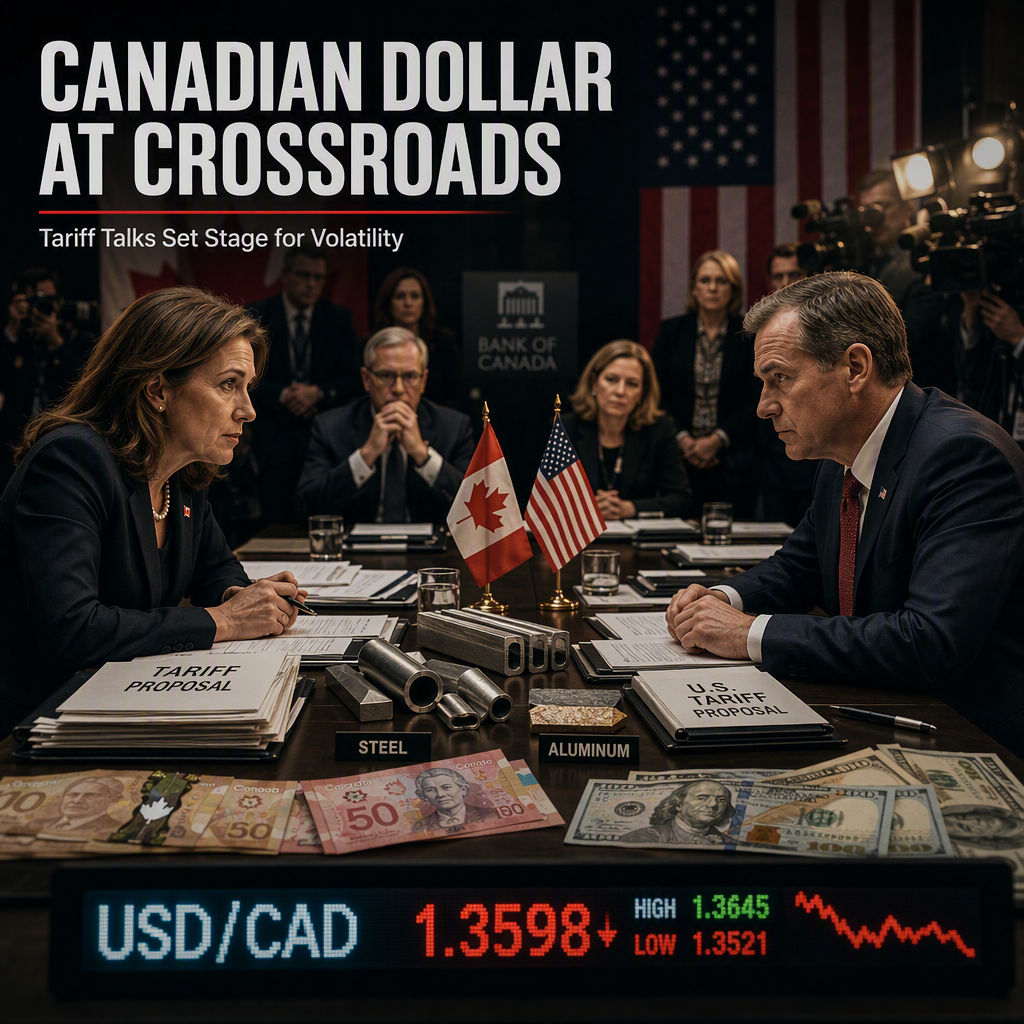
TD Securities strategists highlight that ongoing Section 338 tariff negotiations between the US and Canada present a binary risk for the Canadian Dollar (CAD) and the USD/CAD currency pair, with a critical deadline approaching on Saturday [1]. Both sides are reportedly close to a deal that would reduce steel and aluminum tariffs to 25% and auto tariffs to 15%, which would lower policy-implied tariff rates by 1.5% and potentially lift Canadian GDP by 0.1-0.2 percentage points by the end of 2027 [1].
Despite the potential for a deal, TD Securities notes that the Bank of Canada is expected to proceed cautiously, even if an agreement is reached by the deadline. The central bank will likely wait for more data on the impact of lower tariffs, which is not expected until November, and is projected to keep rates on hold through 2026 before considering a hike in January [1].
Recent movements in USD/CAD have been driven primarily by broader US dollar trends, including softer US economic data, reduced expectations for near-term Federal Reserve hikes, and concerns about increased Treasury activity in financial markets, all of which have weighed on the dollar [1]. More resilient Canadian economic data has provided marginal support to the CAD, while headlines related to trade and tariffs have caused two-way volatility in the currency pair rather than a sustained trend [1].
TD Securities emphasizes that while a trade deal would be modestly positive for the CAD by reducing some tariff risk premium, the upside is likely limited. Tariffs would remain in place, USMCA uncertainty would persist, and Canada's longer-term negotiating position would see little improvement. The strategists warn that the greater risk lies in a breakdown of talks, which they believe is underpriced and could trigger a sharp move higher in USD/CAD due to increased policy uncertainty [1].
CONCLUSION
The Canadian Dollar's near-term path is highly sensitive to the outcome of Section 338 tariff negotiations, with a deal offering limited upside and a breakdown posing significant downside risk. Market participants should remain alert to headline-driven volatility as the Saturday deadline approaches, with the Bank of Canada expected to maintain a cautious stance regardless of the outcome.