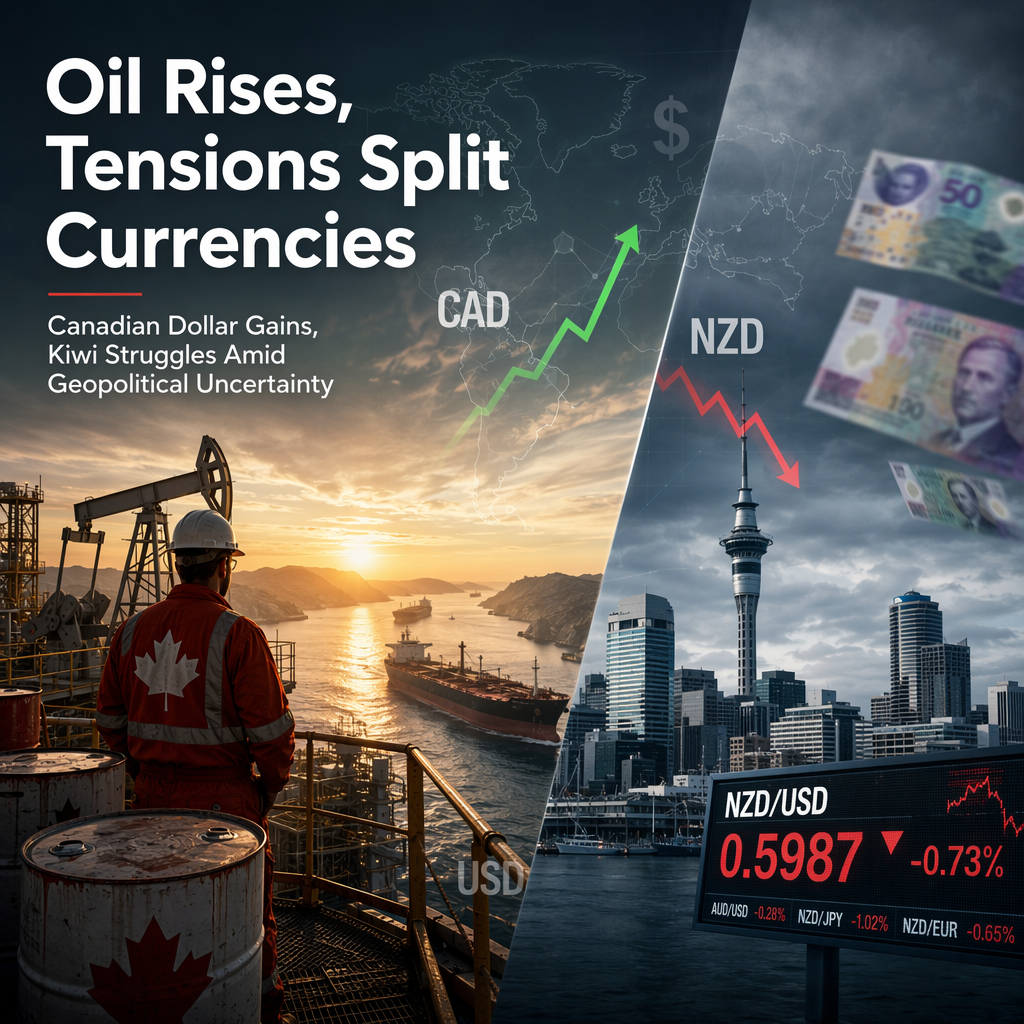
On Wednesday, the Canadian Dollar (CAD) found support from rising oil prices and a mildly softer US Dollar (USD), helping it snap a two-day losing streak. The USD/CAD pair traded around 1.4085, down 0.16% on the day, as West Texas Intermediate (WTI) oil hovered near $86.00, its highest level since June 11. The increase in oil prices was attributed to ongoing fighting in the Middle East, which has disrupted shipping through the Strait of Hormuz and raised fresh supply concerns in the Red Sea due to threats from Yemen’s Ansar Allah. US President Donald Trump issued a warning to Iran, threatening strikes on the country's infrastructure if Tehran targets vessels in the Strait of Hormuz. The US Dollar Index (DXY) traded around 101.12, down 0.08% on the day, as traders awaited the July 28-29 Federal Open Market Committee (FOMC) meeting. The probability of a July Fed rate hike rose to 28% from 10% a week ago, while the odds for a September hike stood at 69%. The Bank of Canada left its policy rate unchanged at 2.25% in July and reiterated its readiness to adjust rates if needed. TD Securities noted that new US Section 338 tariffs on Canada pose a headwind for CAD, but expects the Loonie to move toward 1.39 by year-end and eventually retrace lower to 1.39 by year-end 2026. On the day, the Canadian Dollar was strongest against the New Zealand Dollar, gaining 0.33% [1].
In contrast, the New Zealand Dollar (NZD) weakened, with NZD/USD trading around 0.5815, down 0.16% on the day. This decline occurred despite New Zealand's annual inflation accelerating to 4.1% in the second quarter, above both market expectations of 4% and the Reserve Bank of New Zealand's (RBNZ) forecast of 3.9%. The RBNZ had raised its Official Cash Rate (OCR) by 25 basis points to 2.50% at its July 8 meeting and signaled further increases were likely. Strategists at BBH highlighted that the swaps curve is pricing in 60 basis points of hikes by year-end and a total of 100 basis points over the next twelve months, potentially bringing the OCR to 3.50%. TD Securities expects the RBNZ to hike again in September. However, risk aversion stemming from escalating US-Iran tensions overshadowed the hawkish RBNZ outlook, as investors favored the US Dollar and reduced exposure to risk-sensitive currencies like the NZD. President Trump's warning to Iran heightened fears of broader conflict and energy supply disruptions, further supporting safe-haven demand for the USD. The CME FedWatch tool indicated that markets expect the Federal Reserve to keep rates unchanged at its next meeting, but maintain a tighter policy stance over the longer term [2].
The contrasting performances of the CAD and NZD highlight the impact of commodity price movements and geopolitical risks on currency markets. While the CAD benefited from higher oil prices and a softer USD, the NZD struggled despite strong domestic inflation data, as global risk aversion dominated market sentiment. Both articles underscore the influence of Middle East tensions on energy prices and currency flows, with analysts expecting continued volatility and policy responses from central banks in Canada and New Zealand [1][2].
CONCLUSION
The Canadian Dollar gained support from rising oil prices and a softer US Dollar, while the New Zealand Dollar weakened despite strong inflation data due to heightened geopolitical tensions and risk aversion. Market participants are closely watching central bank meetings and geopolitical developments, which are expected to drive further volatility in both currencies. The overall market takeaway is one of caution, with safe-haven demand favoring the US Dollar amid ongoing uncertainty.