
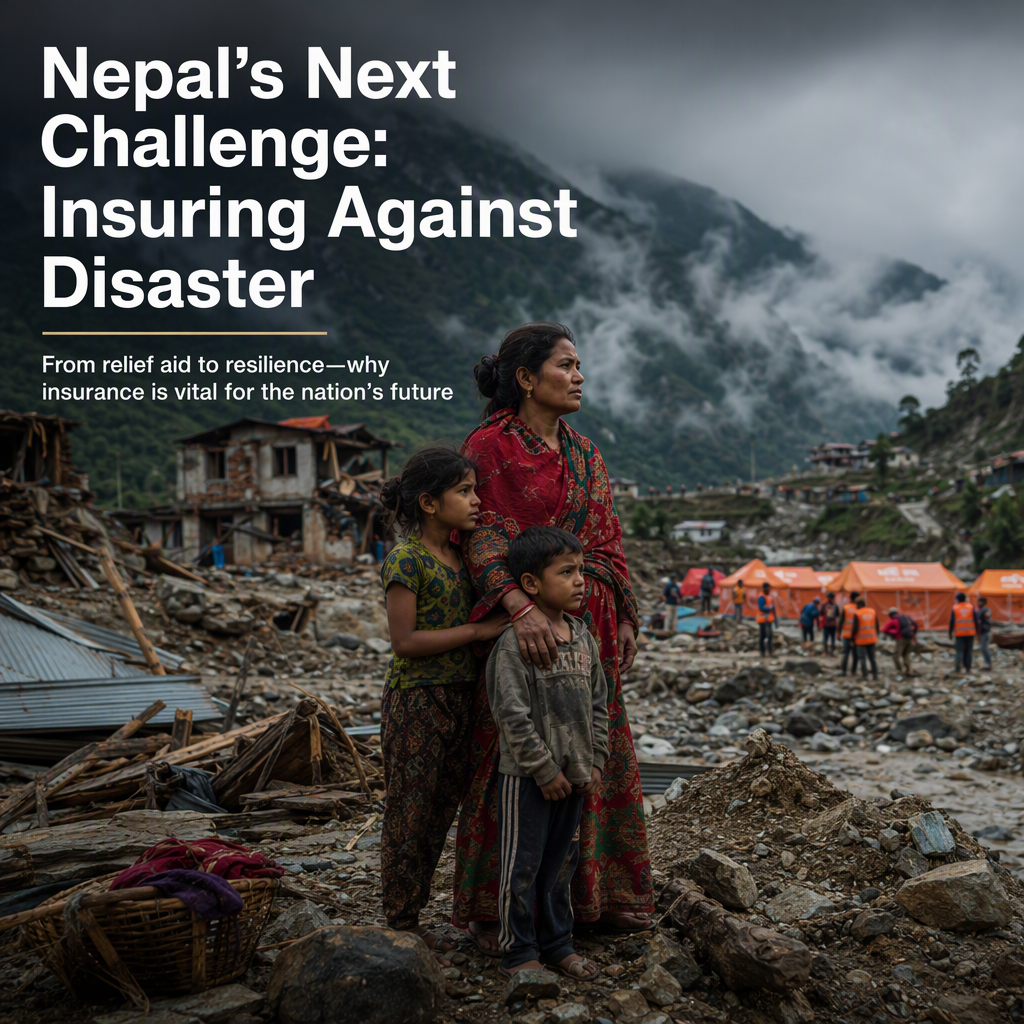
Nepal, identified as one of the world's most disaster-prone countries, continues to face significant economic losses due to frequent earthquakes, landslides, and floods, with recent events such as flash floods and mudslides displacing residents like Shanti Dangol in Betrawati, Nuwakot district [1]. The current approach to disaster recovery relies heavily on donor-backed rebuilding efforts, which have resulted in prolonged debt servicing for the government and highlighted the need for a more sustainable disaster risk management strategy [1].
Despite repeated calamities, Nepal has not yet implemented a comprehensive insurance-based framework to price and transfer catastrophe risk. The absence of such a system means that the true cost of risk is not reflected in housing, infrastructure, and business decisions, reducing incentives for risk reduction measures [1]. The article notes that following the 2015 earthquake, Nepal received billions of dollars in aid and loans, but reconstruction was slow and costly, and many debt obligations remain outstanding [1].
The introduction of disaster insurance is advocated as a means to enable both the government and private sector to pool resources and share the burden of disaster losses, thereby freeing up fiscal space for resilience-building and economic development instead of diverting resources to debt repayment and emergency relief [1]. Additionally, the development of an insurance framework could catalyze domestic capital markets and attract foreign investment, with international reinsurers and catastrophe bond markets cited as potential models for transferring and securitizing disaster risk [1].
As climate change is expected to increase the frequency and severity of extreme weather events, the article emphasizes the urgency for Nepal to transition from reactive disaster relief to proactive risk management by establishing a robust insurance system to reduce vulnerability, protect fiscal stability, and foster sustainable economic growth [1].
CONCLUSION
Nepal's continued reliance on donor aid and loans for disaster recovery has exposed fiscal vulnerabilities and underscored the need for a comprehensive insurance-based approach to catastrophe risk. Implementing such a framework could improve financial resilience, incentivize risk reduction, and attract investment, positioning Nepal for more sustainable economic growth in the face of increasing climate risks.