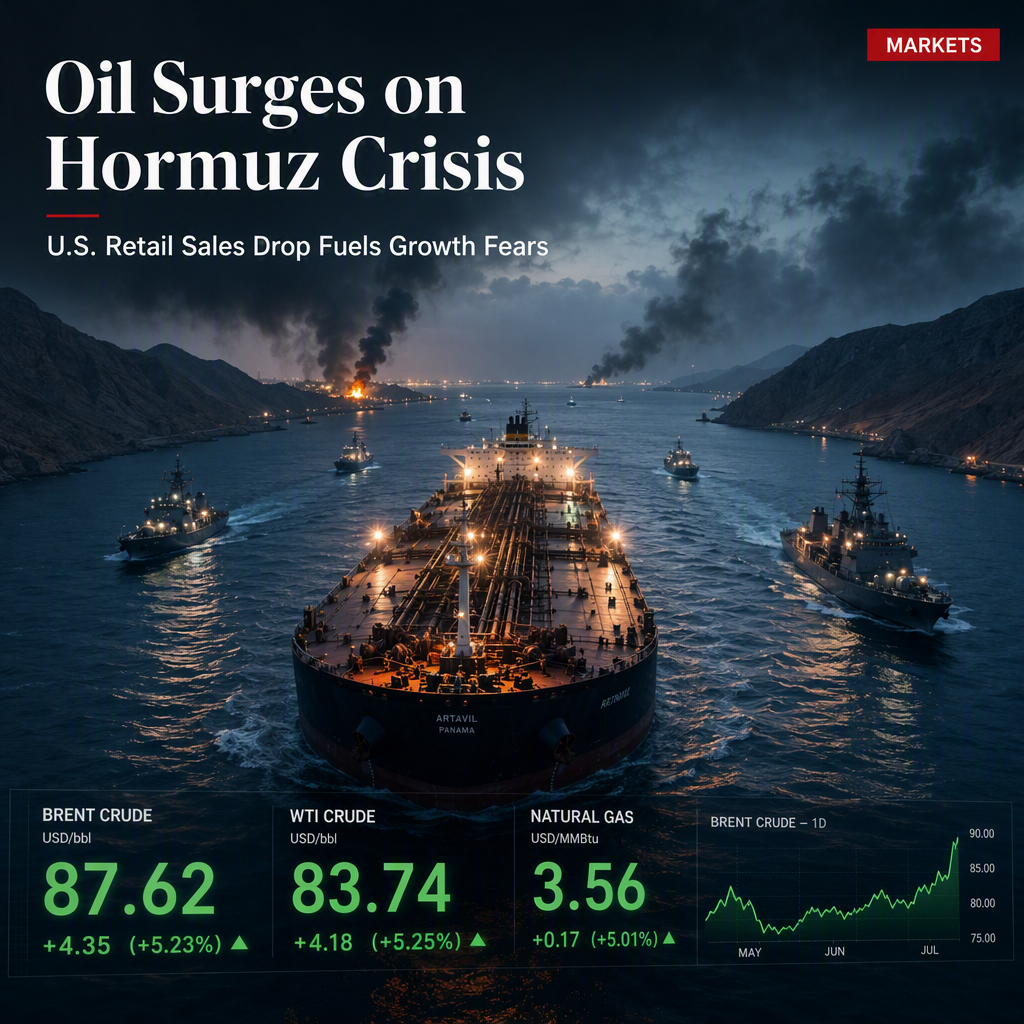
Oil prices surged at the Sunday market reopen following a disruption in the Strait of Hormuz and a Houthi strike, breaking through the $82.82 resistance level on Tuesday and maintaining gains despite a significant 17.42 million barrel inventory build, resulting in a 4.5% increase for the week [1]. The U.S. Consumer Price Index (CPI) was released on Wednesday and matched expectations, leaving the outlook for a September rate hike uncertain [1].
Market sentiment shifted towards a more dovish stance in the final two sessions of the week, not due to inflation data but rather a softer Producer Price Index (PPI) and a 'growth scare' on Friday. U.S. retail sales fell by 0.6%, and consumer sentiment registered at 51, leading to a decline in the probability of a rate hike to below 40% [1]. The article also references a 'full scorecard,' the first forward Rule 16 grade, and Rule 17, but does not provide further details [1].
CONCLUSION
Oil markets reacted strongly to geopolitical disruptions, while softer U.S. economic data and declining retail sales raised concerns about growth. As a result, expectations for a near-term rate hike diminished, reflecting increased market caution.