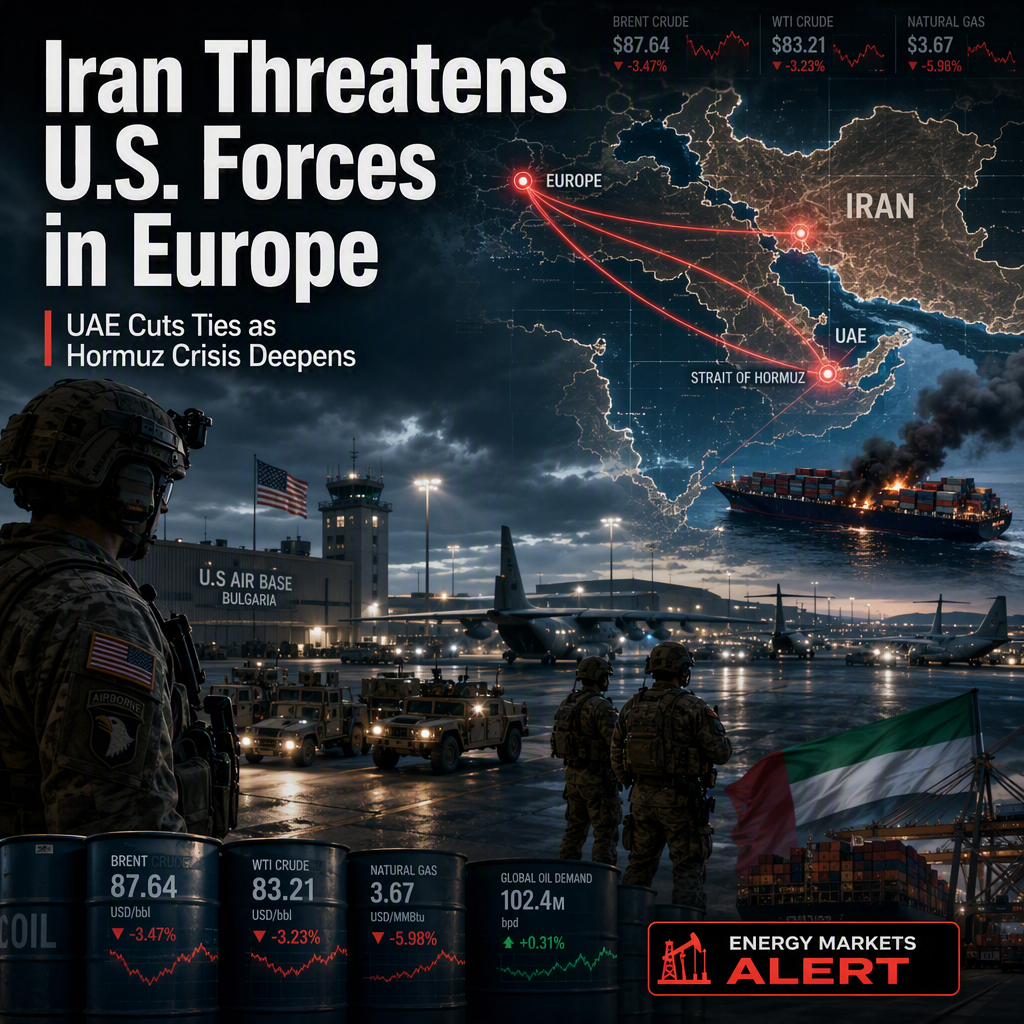
Iranian officials have reportedly considered targeting U.S. military assets in Europe, specifically in Bulgaria and Cyprus, if the ongoing war escalates, according to the Financial Times as cited by CNBC. This development comes amid a breakdown in negotiations between Washington and Tehran, with President Donald Trump confirming that talks have fallen apart and there are no plans to restart them. The 60-day ceasefire agreement expired on Monday and will not be extended, further deepening the deadlock between the two nations [1].
The United Arab Emirates (UAE) has responded to the escalating tensions by suspending all trade, commercial exchanges, and financial transactions with Iran until further notice. This decision follows the UAE Ministry of Defense's report that two ballistic missiles were launched from Iran toward UAE territorial waters. Additionally, shipping traffic through the critical Strait of Hormuz remains low, despite President Trump's assertion that the waterway is open and under U.S. control. An attack on a cargo vessel transiting the strait earlier in the week resulted in one fatality, highlighting the ongoing risks to commercial shipping and energy exports in the region [1].
Market analysts warn that oil prices could surge above $100 for weeks as the Iran deal remains elusive and the region's supply chains face disruption from escalating military threats and trade suspensions. While some investors have benefited from the oil market boom driven by the Iran war, analysts caution that maintaining long positions will become increasingly challenging if the standoff persists or intensifies. There is skepticism that oil exports through the Strait of Hormuz will return to pre-war levels, and the market's expectation of a swift resolution may prove overly optimistic [1].
An Iranian military spokesperson emphasized the risks for commercial vessels, stating, "Ships attempting passage through the strait will find several beautiful holes in their hulls," underscoring the heightened threat environment for energy exports and global supply chains [1].
CONCLUSION
The situation in the Middle East remains highly volatile, with Iran reportedly considering attacks on U.S. military assets in Europe and the UAE severing trade ties following missile launches. Oil markets face significant uncertainty, with analysts warning of sustained high prices and ongoing risks to shipping through the Strait of Hormuz. Investors and market participants should remain cautious as the conflict shows little sign of resolution.