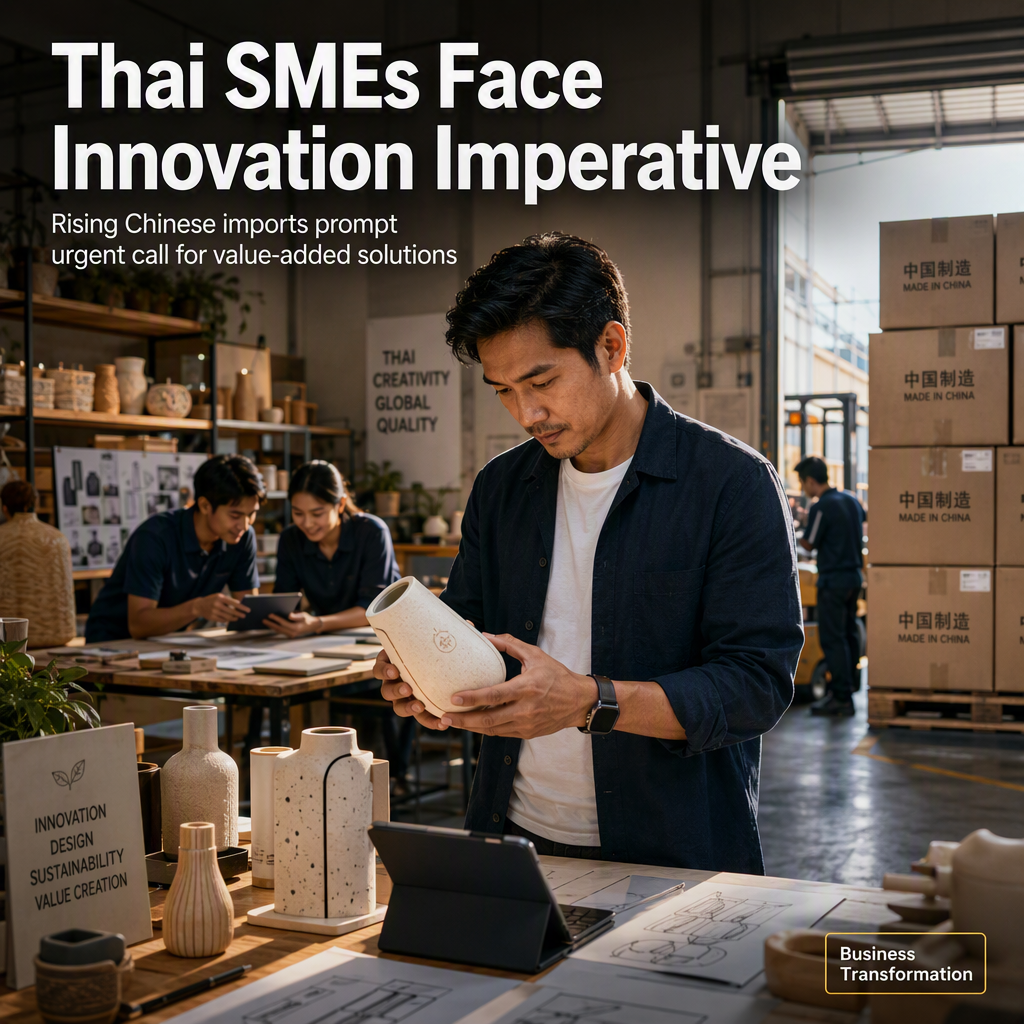
The acting director general of Thailand's Office of Small and Medium Enterprises Promotion, Panita Shinawatra, has called on Thai small and midsize enterprises (SMEs) to focus on creating higher value-added products in response to a surge of inexpensive imports from China [1]. Panita warned that engaging in a 'price war' with Chinese goods is unsustainable and instead urged SMEs to prioritize innovation and product differentiation to maintain their competitiveness [1].
Panita stated, 'The current situation calls for Thai SMEs to move up the value chain,' emphasizing that competing solely on price is not a viable long-term strategy [1]. She highlighted the importance of investing in product and process upgrades, as well as enhancing quality, creative design, and branding, to help local businesses withstand the mounting pressure from low-priced Chinese imports [1].
The government is considering various support measures to assist SMEs in upgrading their capabilities and accessing new markets, but Panita stressed that the ultimate responsibility for long-term competitiveness lies with the businesses themselves and their ability to innovate and add value [1].
No specific market reactions, analyst opinions, or forward-looking financial projections were provided in the article [1].
CONCLUSION
Thai SMEs are facing increased competition from a growing influx of affordable Chinese imports, prompting government officials to urge a shift toward innovation and value-added products. While support measures are being considered, the emphasis remains on SMEs' own efforts to differentiate and upgrade in order to secure their market position.