
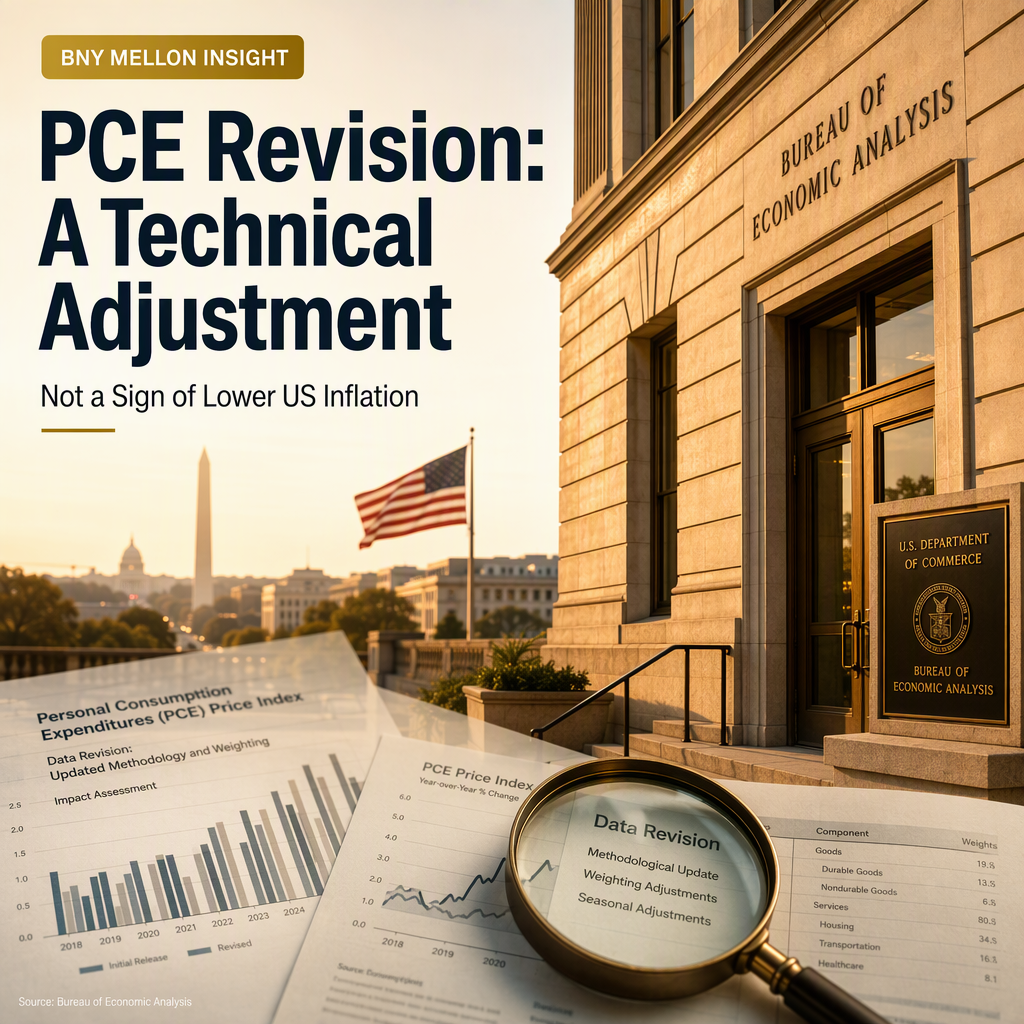
BNY Mellon's Americas Macro Strategist John Velis stated that the upcoming revision to the US Personal Consumption Expenditures (PCE) index is primarily a technical adjustment and should not be interpreted as a change in the broader US inflation narrative [1]. Velis explained that recent discrepancies between the PCE and Consumer Price Index (CPI) were largely due to distortions from portfolio management fees, which increased alongside rising assets under management [1].
The Bureau of Economic Analysis plans to shift to a labor-based methodology for calculating these fees, which is expected to improve the reliability of the Federal Reserve's preferred inflation gauge [1]. Velis emphasized that any subsequent narrowing of the gap between PCE and CPI, or softer core PCE readings, should be viewed as statistical corrections rather than evidence of genuine disinflation [1].
He further advised that market participants should interpret any softer PCE prints following the revision as a reduction in statistical noise, not as an indication of a real shift in inflation trends [1]. No specific market reactions, analyst forecasts, or forward-looking statements beyond these clarifications were provided in the article [1].
CONCLUSION
The upcoming PCE revision is expected to clarify inflation data by correcting technical distortions, particularly those related to portfolio management fees. According to BNY Mellon, this adjustment should not be seen as a sign of changing inflation trends, and any softer readings should be interpreted as statistical corrections rather than real disinflation.