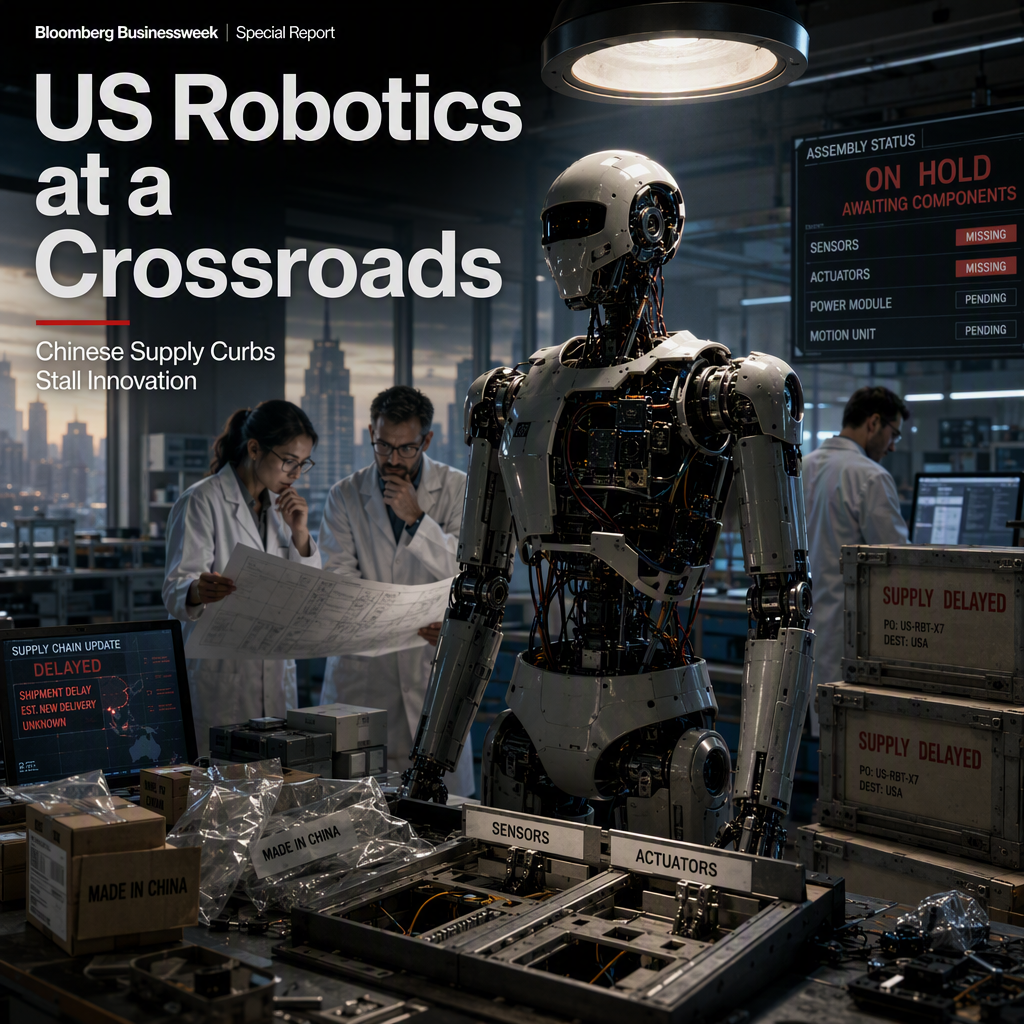
The United States has introduced new restrictions on advanced robots, highlighting the significant dependence of American manufacturers and researchers on Chinese-made hardware components such as sensors and actuators [1]. These measures are part of a broader strategy to limit China's access to cutting-edge technology and encourage the reshoring of production to the US [1]. However, industry stakeholders warn that the current supply chain is heavily dominated by Chinese suppliers, and shifting away from these sources could result in substantial increases in costs and project delays for US-based robotics companies [1].
An executive from a leading US robotics firm described the industry as being "at a crossroads," facing a choice between absorbing higher costs and longer lead times to build a domestic supply chain or risking a loss of global competitiveness [1]. Efforts to diversify supply chains are underway but are described as slow and expensive, with some companies already reporting delays in product development and deployment due to the new restrictions [1]. There is concern that innovation could suffer if alternative sources for key components are not secured [1].
Financial analysts have noted that the increased costs associated with these restrictions may ultimately be passed on to consumers, which could slow the adoption of robotics across various sectors, including manufacturing and logistics [1]. Additionally, there is apprehension that venture capital investment in US robotics startups may decrease if profit margins are squeezed by higher input costs [1].
The restrictions come at a time when the global robotics market is experiencing rapid growth, particularly in the areas of humanoid and industrial robots [1]. Investors are closely monitoring the situation, as the long-term effects on market share and growth prospects for US robotics firms remain uncertain [1].
CONCLUSION
The new US restrictions on advanced robots have exposed the industry's heavy reliance on Chinese components, raising costs and causing delays for American robotics firms. These challenges could slow innovation and adoption, with potential downstream effects on investment and market growth. The long-term impact on US competitiveness in the global robotics market remains uncertain.