
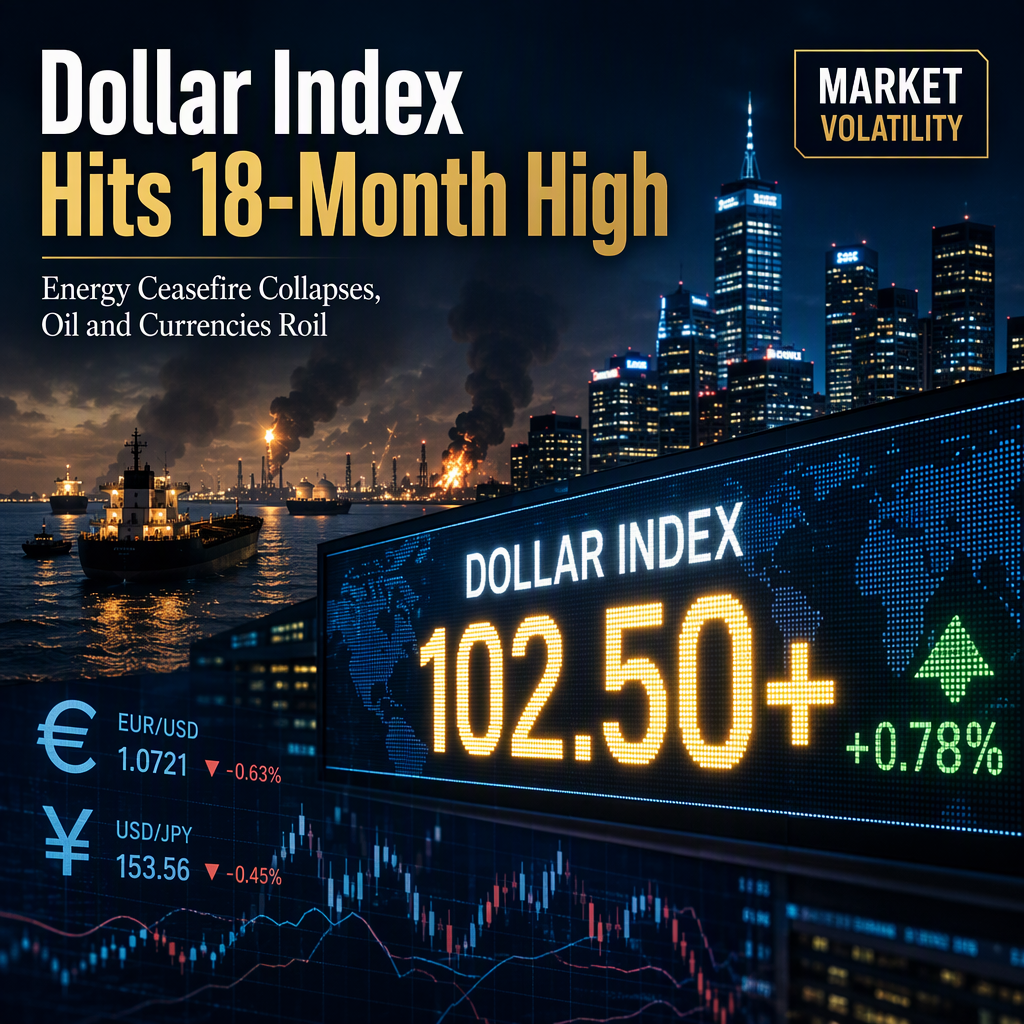
The Dollar Index reached an 18-month high as geopolitical tensions escalated and an energy ceasefire between Russia and Ukraine failed to hold [1]. US President Trump announced on Friday that Russia and Ukraine had agreed to stop targeting each other's energy sites, which initially caused Brent crude oil prices to fall below $103 a barrel when markets reopened [1]. However, Brent prices rebounded as Russia continued to strike Ukrainian energy facilities, with Ukrainian President Zelenskyy reporting six such attacks on Monday [1]. The Kremlin stated that ceasefire talks were still ongoing [1].
The rise in Brent crude was further fueled by Iran's Revolutionary Guards claiming to have set a third supertanker on fire in the Strait of Hormuz within two days, pushing Brent above $107, its highest level in more than two weeks [1]. This development contributed to the Dollar Index's climb, as Europe and Japan, which import nearly all their oil and pay for it in dollars, saw their currencies weaken. The Euro and Yen, which make up 71% of the Dollar Index, accounted for about three-quarters of its climb from the Monday low [1].
The Dollar Index dropped to near 102.10 as Brent fell at the weekly open, then climbed in steps to just above 102.50, its highest since April 2025. The last leg of the climb began with the tanker incident and continued as the Euro slid further [1]. On the charts, the index is holding at its high, with every pullback since Monday's low holding above the previous one. The index has surpassed the 102.50 level, which previously capped it on October 5, 7, and 8. The climb from the September 9 low is approximately 4% and follows four consecutive weekly gains [1].
The US cash bond market was closed for Columbus Day, so the 10-year Treasury yield remained unchanged at 5.24% from Friday [1].
CONCLUSION
The Dollar Index's surge reflects heightened geopolitical risks and ongoing disruptions in global energy markets, with oil prices and currency movements closely intertwined. The persistent strength in the Dollar Index signals continued market volatility and risk aversion, especially as ceasefire talks remain unresolved and energy infrastructure attacks persist.