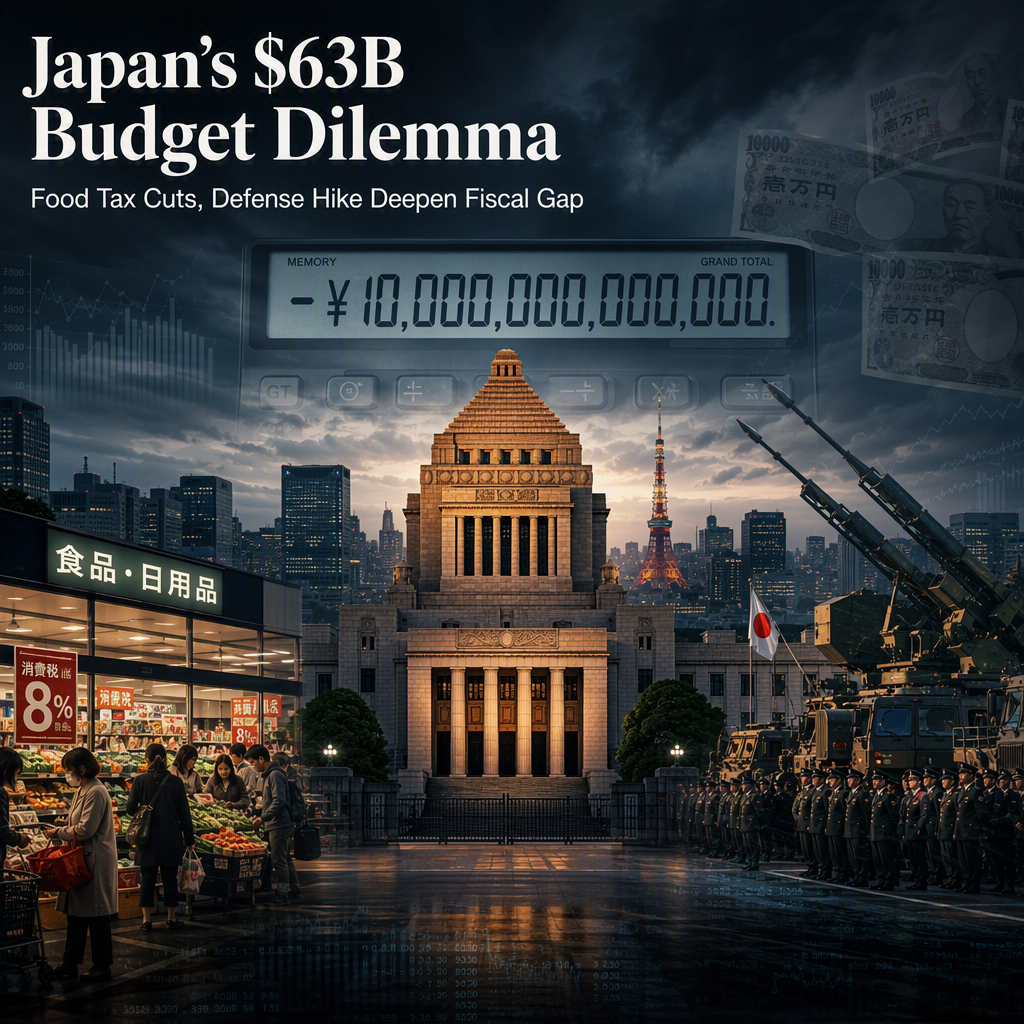
Japan is confronting a significant fiscal shortfall as budget requests for fiscal 2027 are projected to far exceed the previous year's level, driven by a tax cut on food and a substantial increase in defense spending [1]. The government is expected to require more than 10 trillion yen ($62.9 billion) in additional funding to cover these initiatives [1]. Prime Minister Sanae Takaichi has advocated for an expansionary fiscal policy, emphasizing the importance of these measures for the country's economic and security objectives [1]. However, the government has not specified the sources for the additional funding needed to bridge the fiscal gap [1]. The lack of clarity regarding funding sources may prompt concerns among investors and market participants about Japan's fiscal sustainability and potential impacts on government debt levels [1].
CONCLUSION
Japan's plans for a food tax cut and increased defense spending have created a $62.9 billion fiscal shortfall, with funding sources yet to be identified. This development signals potential market uncertainty regarding Japan's fiscal trajectory and government debt management.