
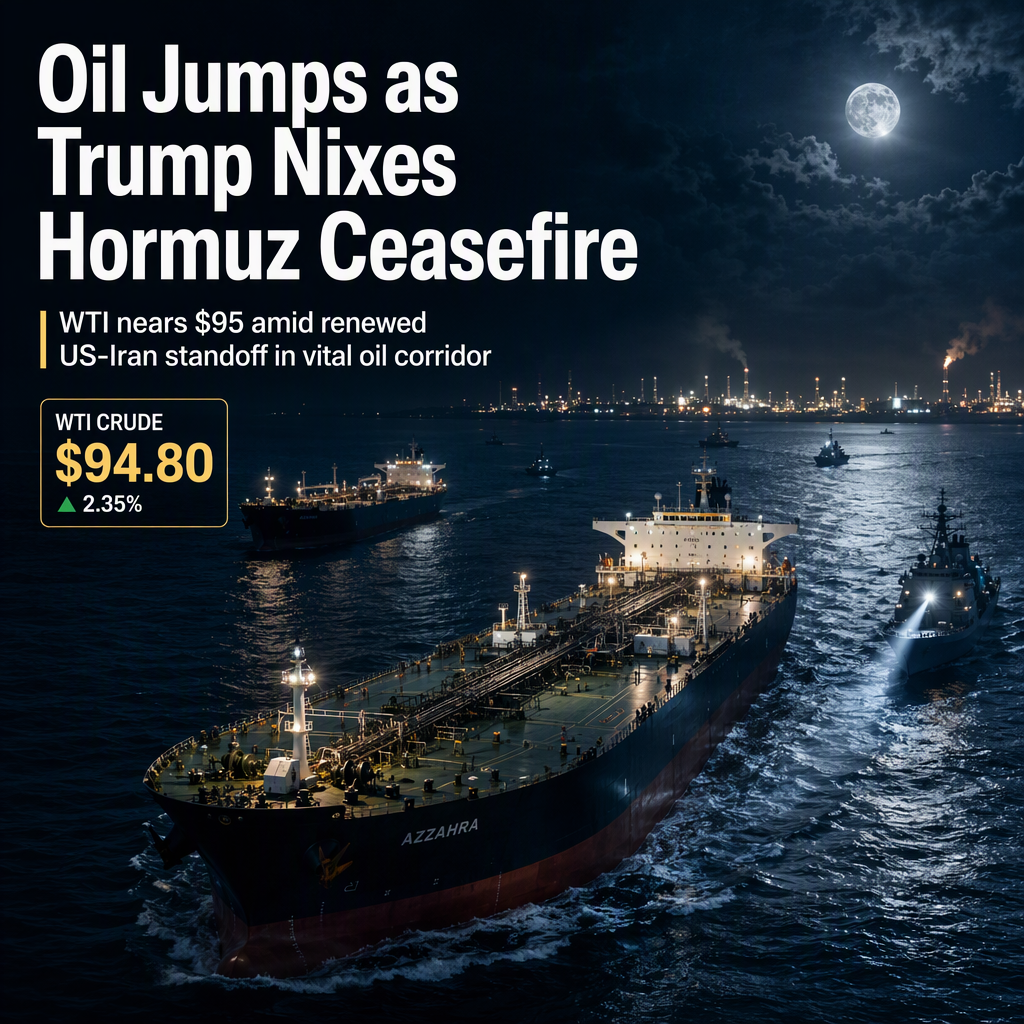
West Texas Intermediate (WTI) Oil prices extended their gains on Monday, trading at $94.60 per barrel, marking an increase of nearly 3.5% for the day, after US President Donald Trump rejected Tehran’s latest proposal to cease hostilities and reopen the Strait of Hormuz [1]. Trump dismissed a seven-day ceasefire proposal and stated his intention to resume attacks on Iran after the US midterm elections, while also claiming that the US was 'winning tremendously' in the ongoing conflict and that 'massive amounts of Oil' are passing through the Strait of Hormuz [1].
According to Kpler ship-tracking data, oil traffic through the Strait of Hormuz rose to 12.8 million barrels per day in September, the highest level since the war began on February 28. However, this figure remains significantly below the pre-war average of 20 million barrels per day, fueling ongoing concerns about a global oil supply shortage [1].
Iranian Foreign Minister Abbas Araghchi stated that Iran is prepared for a 'doomsday' war with the US but remains open to 'real diplomacy.' A senior Iranian military official asserted that Tehran has 'complete control' of the Strait of Hormuz and will act decisively to prevent unauthorized passage in the region [1].
Deutsche Bank analysts noted that, despite the possibility of US-Iran talks resuming this week, there was little indication of progress over the weekend. They highlighted that bond yields and oil prices have climbed amid persistent tensions, as Iran reiterated it would not soften its conditions for reopening the Strait of Hormuz, including demands for sanctions relief, access to frozen assets, and an end to US blockade measures [1].
CONCLUSION
WTI Oil prices surged on heightened geopolitical tensions after President Trump rejected Iran's ceasefire proposal and the reopening of the Strait of Hormuz. With oil flows still well below pre-war levels and no diplomatic breakthrough in sight, market concerns over global supply shortages remain elevated.