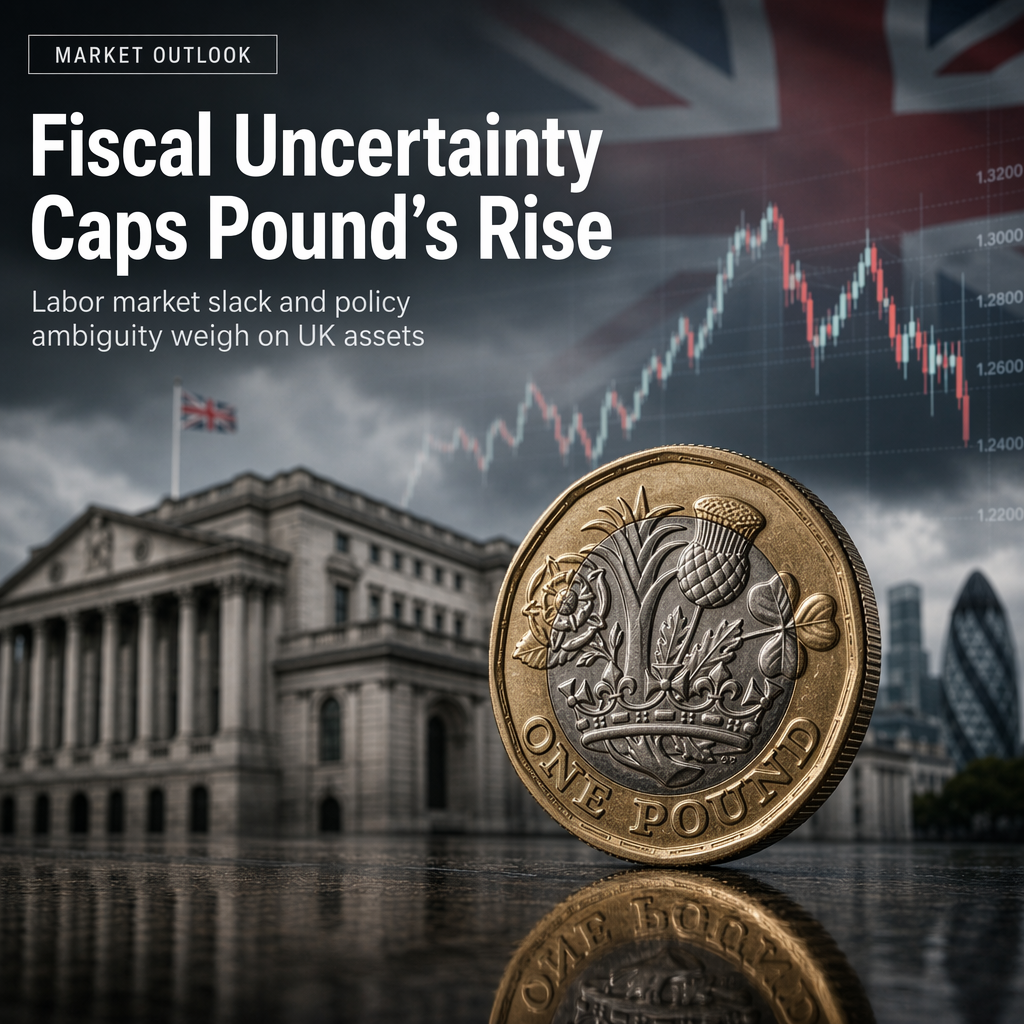
The British Pound (GBP) and UK government bonds (gilts) have stabilized following recent sell-offs, which occurred after Prime Minister Andy Burnham appointed John Healey, the former Defense Secretary, as Chancellor of the Exchequer. Burnham has pledged to adhere to fiscal rules while utilizing any available flexibility, but the specifics of his fiscal policy are not expected to be revealed until the October budget. This ongoing uncertainty regarding fiscal policy is anticipated to limit relief rallies in both gilts and the GBP in the near term [1].
UK labor market data for May was largely in line with expectations, with the unemployment rate remaining unchanged at 4.9% for the second consecutive month. The vacancies-to-unemployment ratio held steady at 0.4, which is below the estimated equilibrium level of 0.50, signaling persistent labor market slack [1].
Market pricing indicates expectations for a 25 basis point Bank of England (BoE) rate hike to 4.00% in November, with a total of 60 basis points of tightening anticipated over the next twelve months. This would place the policy rate above the BoE’s estimated neutral range of 2.00%-4.00%. However, the combination of restrictive monetary policy and an economy operating below potential increases the likelihood of a downward adjustment to BoE rate expectations, which could weigh on the GBP [1].
Analyst Elias Haddad from Brown Brothers Harriman (BBH) expects that until fiscal policy details are clarified, uncertainty will continue to cap upside potential for the British Pound and gilts, and may prompt a dovish repricing of BoE expectations [1].
CONCLUSION
The stabilization of the British Pound and gilts is tempered by ongoing fiscal uncertainty and labor market slack. Until the October budget provides clarity on fiscal policy, upside for GBP is likely to remain capped, with potential for a dovish shift in Bank of England rate expectations.