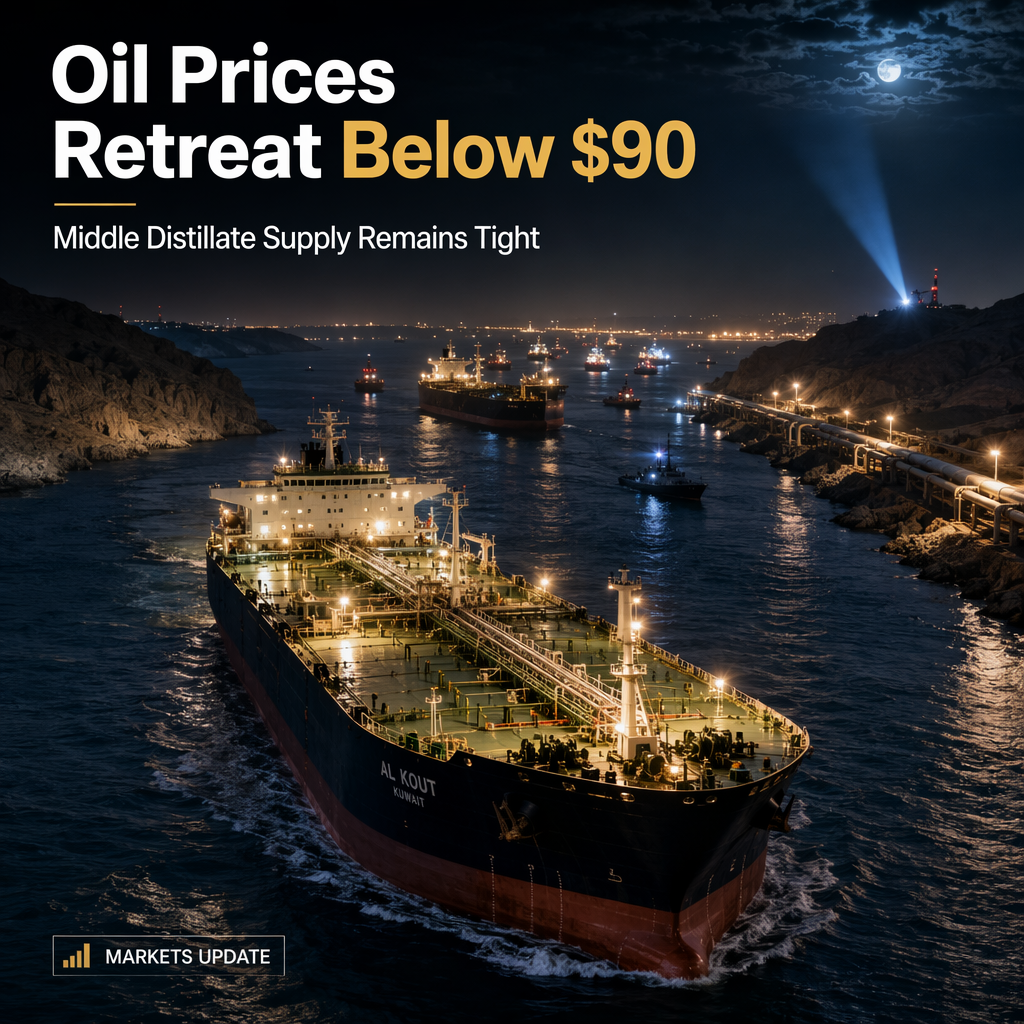
Oil prices experienced a notable decline, with ICE Brent settling 1.9% lower and falling below the $90 per barrel mark, despite persistent tensions between the US and Iran [1]. ING analysts Warren Patterson and Ewa Manthey attribute this price weakness to several factors, including a slight increase in oil flows through the Strait of Hormuz, as indicated by ship tracking data [1]. According to the US energy secretary, approximately 13 million barrels per day (b/d) of oil are currently being exported from the Persian Gulf, with about half passing through the Strait of Hormuz and the remainder utilizing pipelines to bypass the strait [1].
The US appears to have ruled out further releases from its Strategic Petroleum Reserve (SPR) after the ongoing release of 172 million barrels is completed. The SPR now stands at just under 308 million barrels, raising concerns about how much more can be withdrawn without reaching operational minimum levels [1].
Despite the recent price pullback, middle distillate markets remain tight. This is due in part to Russia's decision to extend its ban on diesel exports until 1 September. Russia, the world's second-largest diesel exporter, is projected to ship more than 700,000 b/d in 2025 [1]. Additionally, European supply risks persist due to ongoing issues in the Red Sea [1].
Overall, while increased oil flows and the absence of further SPR releases have contributed to downward pressure on prices, supply constraints in middle distillates and geopolitical risks continue to support the market's underlying tightness [1].
CONCLUSION
Oil prices have retreated below $90 per barrel amid increased flows from the Persian Gulf and the absence of further US SPR releases. However, ongoing tightness in middle distillate markets, driven by Russia's extended diesel export ban and European supply risks, continues to provide support for prices.