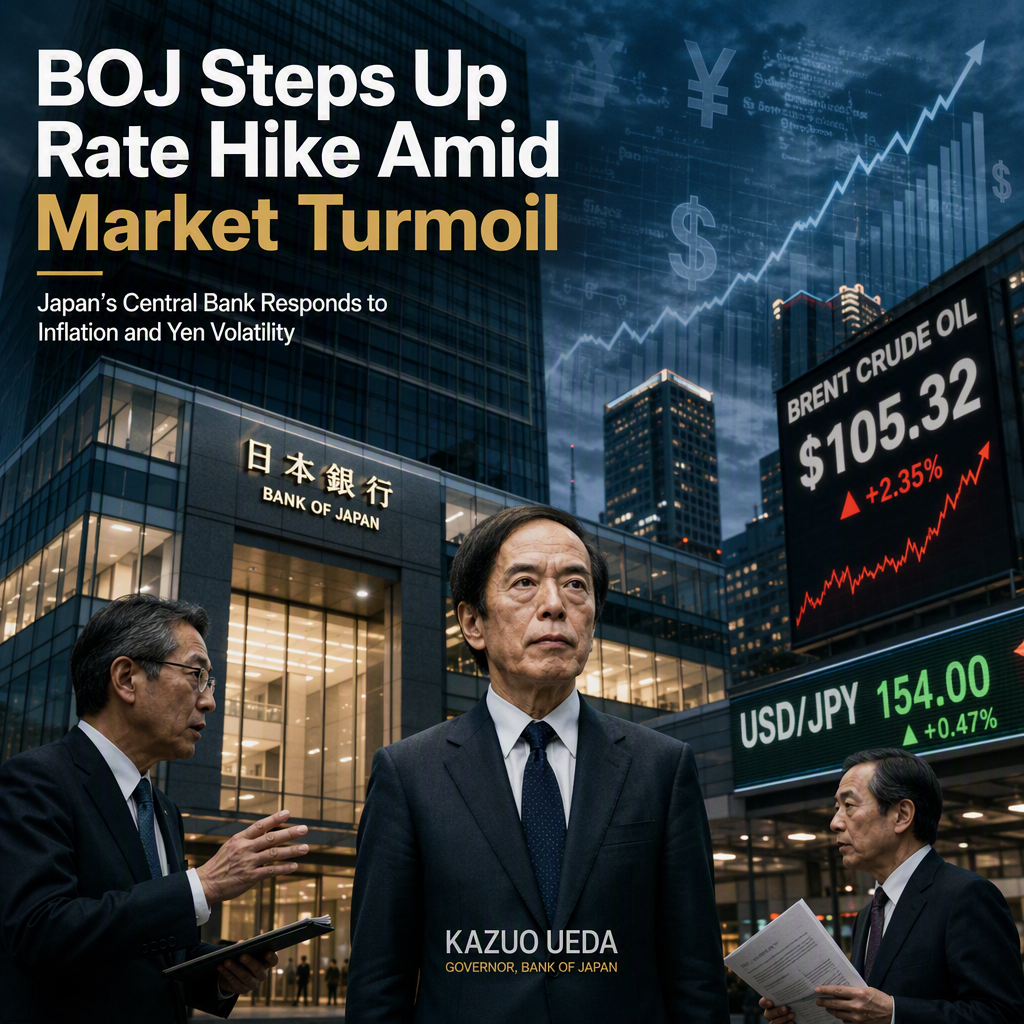
The Bank of Japan (BOJ) is preparing to raise its key interest rate to 1.25% from the current 1% at its upcoming policy board meeting scheduled for September 17 and 18, 2026, in response to mounting inflationary pressures driven by rising crude oil prices and a depreciating yen [1]. This move, last seen in June, marks the shortest interval between rate hikes since the current tightening cycle began in March 2024, reflecting the central bank's accelerated approach to monetary policy adjustments [1].
Recent market developments have seen Brent crude oil prices surpass $100 per barrel, pushing commodity prices to near 18-year highs and intensifying global inflation concerns [1]. These inflationary trends threaten to end Japan's seven-month streak of real wage growth, highlighting the domestic economic impact [1]. Currency markets have also experienced volatility, with the yen abruptly strengthening to the 154 range against the US dollar, sparking speculation about a reversal in carry trade strategies and affecting the export competitiveness of Japanese manufacturers [1].
BOJ Governor Kazuo Ueda has emphasized that rate hikes are being considered at every policy meeting, including the upcoming one, as the central bank weighs the effects of rising commodity prices and currency fluctuations [1]. Board member Tamura's attendance at the Jackson Hole conference, in place of Ueda, underscores the importance of international perspectives in shaping BOJ policy decisions [1]. Technical analysis points to the 154 and 155 yen per dollar range as critical support and resistance levels, with market participants adopting a cautious stance and closely monitoring signals for further tightening [1].
The anticipated rate hike is expected to significantly influence trading strategies across Asia, prompting investors to adjust their positions in anticipation of tighter monetary policy and the possibility of currency interventions [1].
CONCLUSION
The Bank of Japan's expected rate hike to 1.25% signals a more aggressive stance against inflation and currency volatility, with substantial implications for financial markets and trading strategies in Asia. Market participants remain cautious, closely watching for further policy tightening and potential interventions as the BOJ responds to evolving economic pressures.